
Storrier Stearns Japanese Garden
A faithfully restored 1930s Japanese estate garden in Pasadena, with koi ponds, stone bridges, a 25-foot waterfall, and a rebuilt teahouse.
- See
Storrier Stearns Japanese Garden Details
- SELECT Fridays & Saturdays: 4pm – 8pm
- SELECT Sundays: 10am – 4pm
- Closed Mon–Thu · Check Events Calendar for specific open dates
Overview
Details
Experiencing Storrier Stearns Japanese Garden / Curious LA Field Notes
Quick Take
The Storrier Stearns Japanese Garden sits in a quiet Pasadena neighborhood with no fanfare at the gate. Inside, a 1.45-acre hill-and-pond stroll garden unfolds through winding paths, four bridges, and the sound of falling water. It's one of the last surviving pre-WWII Japanese-style estate gardens in the country and the only one of its kind in Southern California. The historical weight of the place, combined with careful restoration and a walking pace built to slow you down, makes it one of the more satisfying garden visits in the greater LA area.
Walking up the long driveway at 270 Arlington Drive, there’s no sign telling you what to expect. The neighbors’ houses are close. The residential street is quiet. Then the path opens up, and the garden is just there: two koi ponds, a hillside with water coming down it, stone bridges, old oaks, and a hush that takes a few seconds to register.
This is a hill-and-pond stroll garden, a style of Japanese garden design built to be experienced while moving. The paths curve through 1.45 acres, leading from the lower pond up toward the waterfall and across four original bridges that offer different vantage points with each crossing. There’s no central open space to take it all in at once. The layout requires walking.
What You’ll Find
The two koi ponds are irregularly shaped and large enough that the reflections of the surrounding trees change completely depending on where you’re standing. The water is still except where the 25-foot waterfall feeds into the lower pond. From there, stone lanterns, boulders, and granite statuary appear at intervals along the paths, some placed prominently and others easy to walk past.
A 15-foot granite bridge, referred to as the “devil’s bridge,” connects two sections over the lower pond. It’s one of four original crossings and one of the better spots for looking back across the water. The plantings are intentionally green year-round, built around trees rather than seasonal blooms, so visits in any month have roughly the same feel.
The Teahouse
The Niko-an Teahouse stands near the upper garden. The original was built in Japan according to Kinzuchi Fujii’s precise specifications, shipped to Pasadena, and reassembled on-site. It served as a gathering place for the local Japanese community for decades before burning down in 1981. The rebuilt version follows Fujii’s original drawings, photographs, and architectural plans closely, down to the 12 tatami mats covering the floor.
For general visits, the teahouse is closed. It opens for tea ceremonies and special events, which are scheduled a few times per year. Worth checking the events calendar before visiting.
Evening vs. Daytime
Sunday visits run from 10am to 4pm. Select Friday and Saturday evenings open from 4pm to 8pm. The two experiences are noticeably different. Morning Sunday visits are good for photography, and the garden tends to be quieter early in the day. Evening visits in warmer months bring softer light and cooler air, and the ponds catch colors that don’t show up the same way in full sun.
The garden also hosts cultural programming throughout the year: tea ceremony demonstrations, live music performances, the annual Pasadena Festival of Tea in May, and occasional events tied to Japanese cultural traditions. These add to a visit but aren’t required.
A Few Things to Know
Parking on-site is limited to a couple of driveway spaces. Street parking in the neighborhood handles the overflow, but arriving early on busy Sundays helps. The self-guided visit uses informational brochures and storyboards at key points. Plan for 45 minutes to an hour at an easy pace, longer during special programming.
Directly across the street is Arlington Garden, a free public garden maintained by the City of Pasadena. Many visitors walk through both in the same trip.
What Others are Saying
Nearby Curious Los Angeles Destinations
Galco’s Old World Grocery (Soda Pop Stop)
Family-owned Highland Park soda shop stocking 700+ independent sodas alongside vintage candy, craft beer, and deli sandwiches.
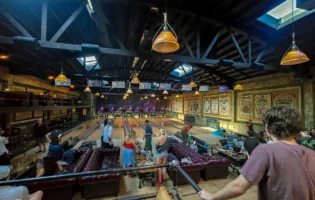
Highland Park Bowl
Los Angeles's oldest operating bowling alley, restored to its 1927 Prohibition-era glory with vintage lanes and exposed pin-setting machinery.
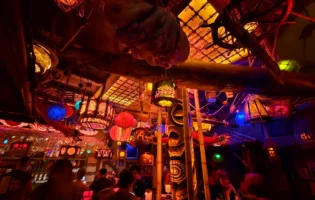
The Lucky Tiki (Highland Park)
Hidden speakeasy tiki bar tucked behind Highland Park Bowl serving theatrical rum cocktails in a vintage Polynesian hideaway.
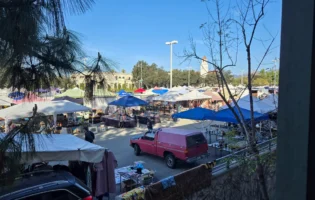
PCC Flea Market
Charming monthly open-air market with 400+ vendors selling antiques, vintage clothing, and Southern California's largest vinyl record swap.

Chicken Boy
The Statue of Liberty of Los Angeles: a 22-foot rooftop guardian (half man and half chicken) who stands over the…
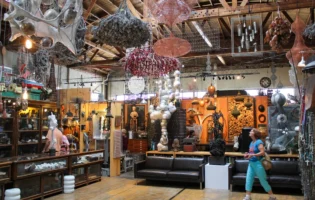
MorYork
Clare Graham's 7,000-square-foot Highland Park studio filled with sculptural works made from millions of buttons, pop tops, and found objects.

Bob Baker Marionette Theater
America's longest-running puppet theater, where hand-crafted marionettes have performed for families since 1963.

Remainders Creative Reuse
Non-profit arts and crafts thrift store where donated supplies find new life at thrift-store prices.
The Steepest Road in California (Eldred Street & Stairs)
California's steepest drivable street with a 33% grade and historic wooden stairs leading to sweeping city views.
Vidiots
Legendary video rental store reborn at a restored 1929 theater, combining 60,000+ titles with daily repertory screenings.
Pasadena Model Railroad Museum
One of the world's largest HO scale model railroads, built by a volunteer club that has been running trains in…
Storrier Stearns Japanese Garden on Other Sites