
Watts Towers
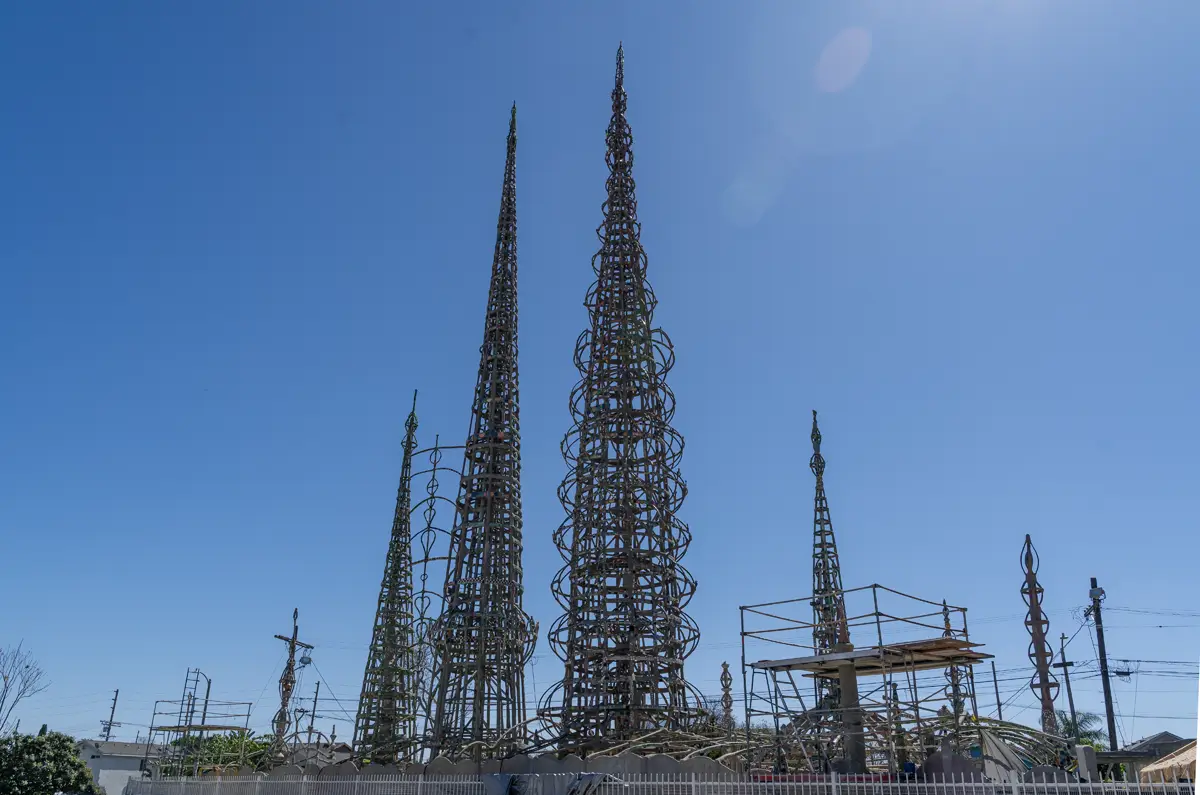
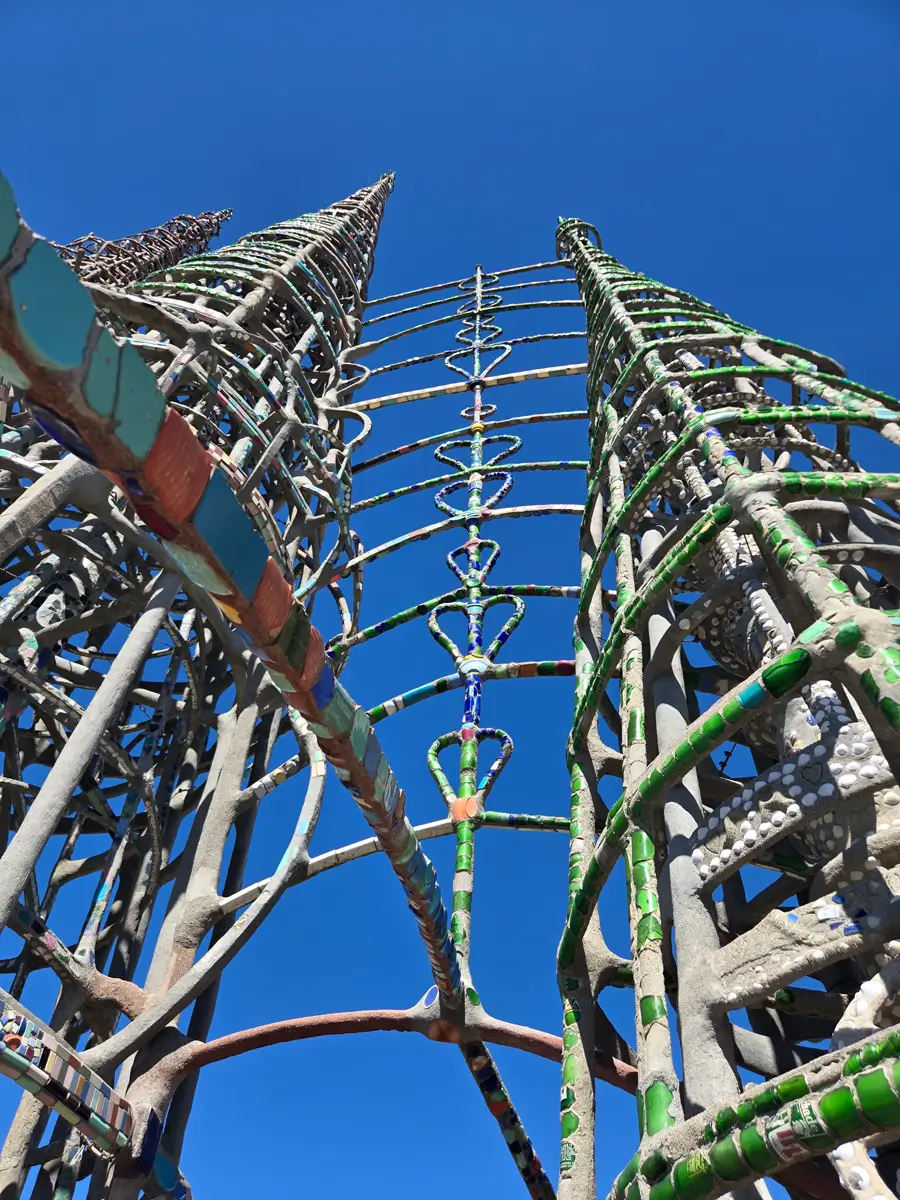
Seventeen interconnected folk art towers reaching 99 feet high, hand-built over 33 years by Simon Rodia using steel, mortar, and found objects.
- Do
- See
Watts Towers Details
- Towers Tours: Thursday-Saturday 10:30am-3:30pm • Sunday 12:30-3:30pm
- Arts Center: Wednesday-Friday 10am-4pm
Overview
Details
Experiencing Watts Towers / Curious LA Field Notes
Quick Take
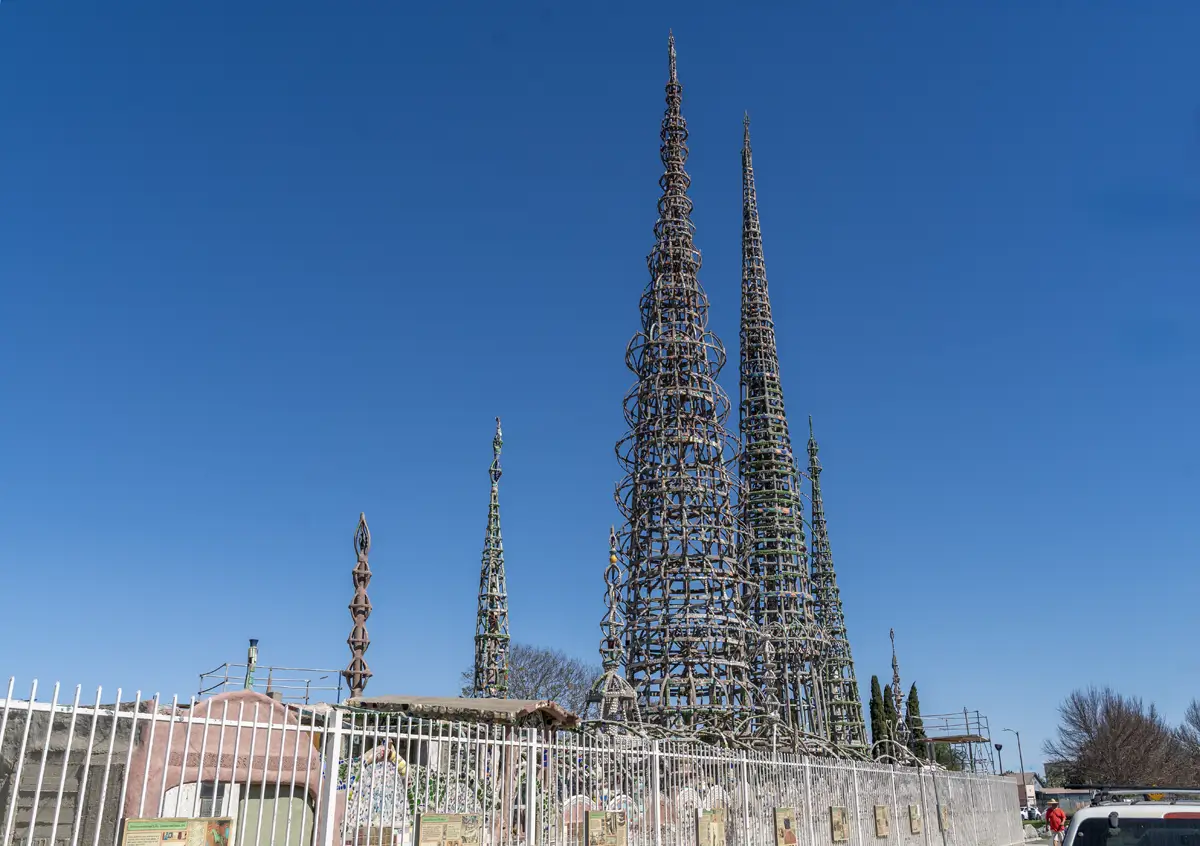
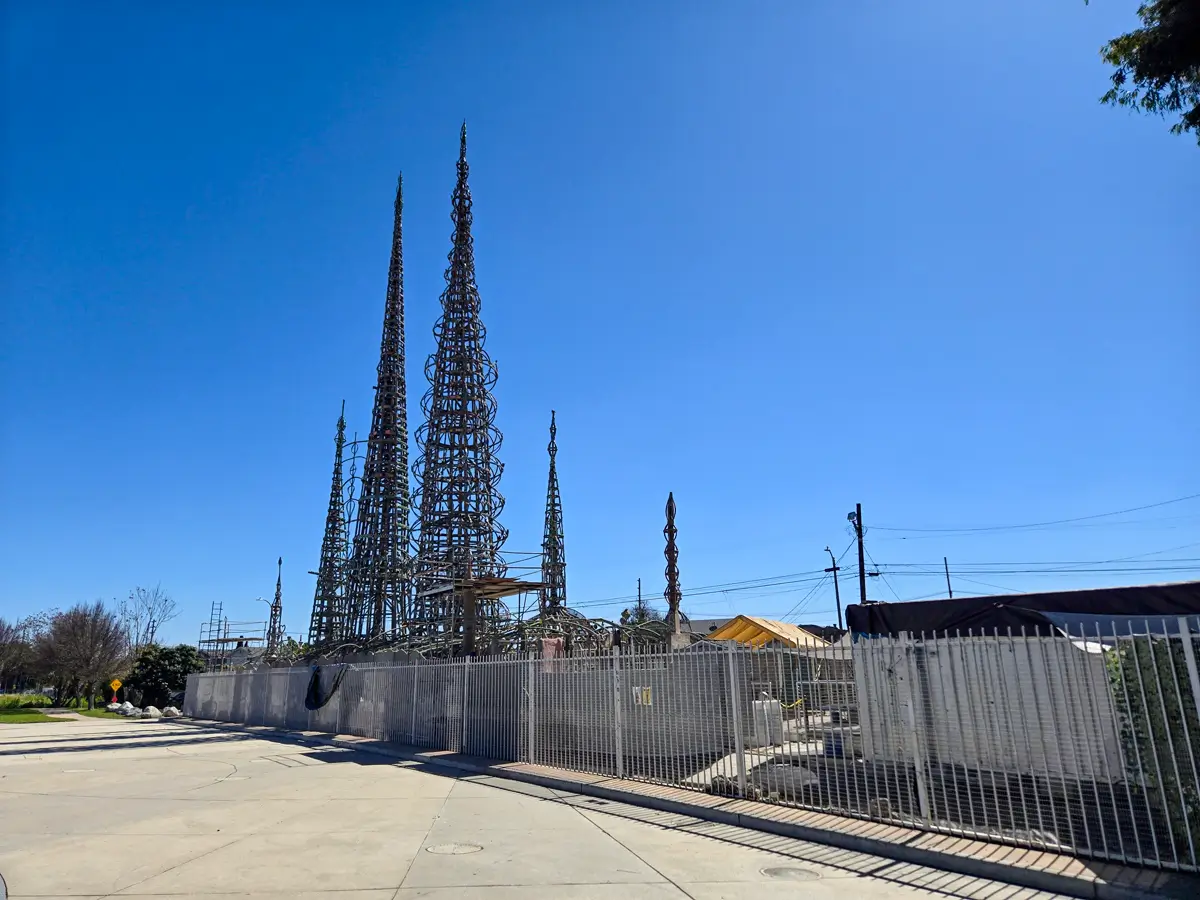
Between 1921 and 1954, Italian immigrant Simon Rodia built seventeen steel and mortar towers in his Watts backyard, decorating them with whatever materials he found while walking miles along railroad tracks: broken bottles, pottery shards, seashells, vintage California tiles. The tallest reaches 99.5 feet. Rodia never explained why he built them, and in 1955 he simply handed the deed to a neighbor and left Los Angeles for good. The city tried to demolish them in 1959, but engineers proved the towers could withstand extreme stress. Today they stand as one of America's most significant works of outsider art, accessible only through guided tours that take you inside the soaring structures.
Walking Into Nuestro Pueblo
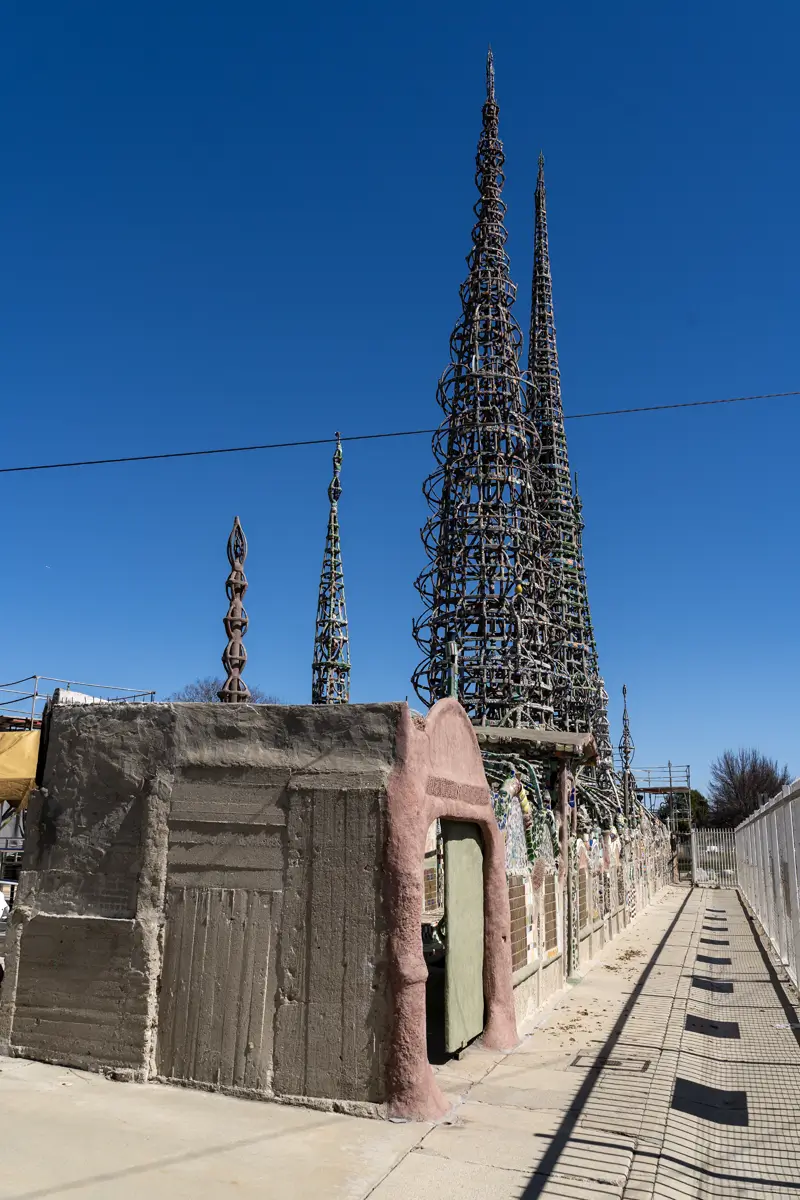
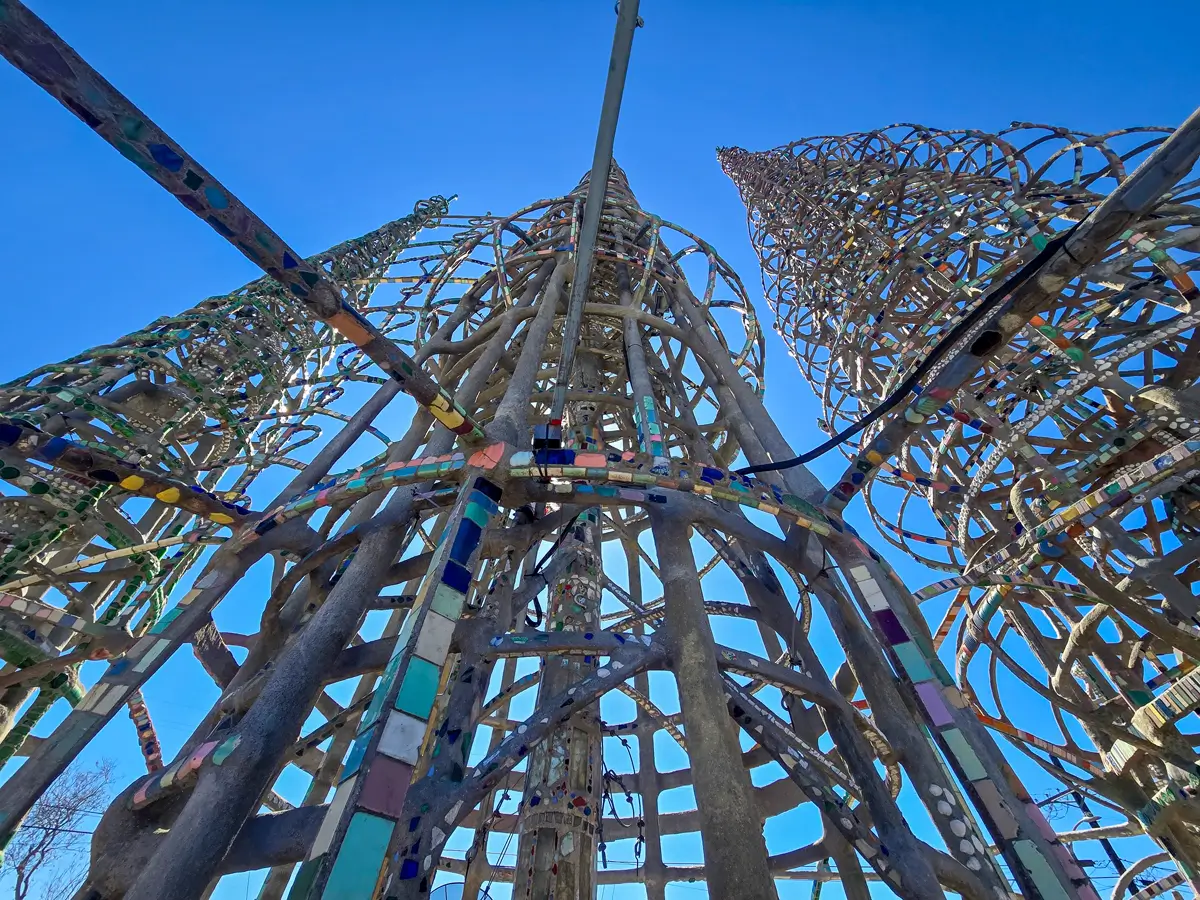
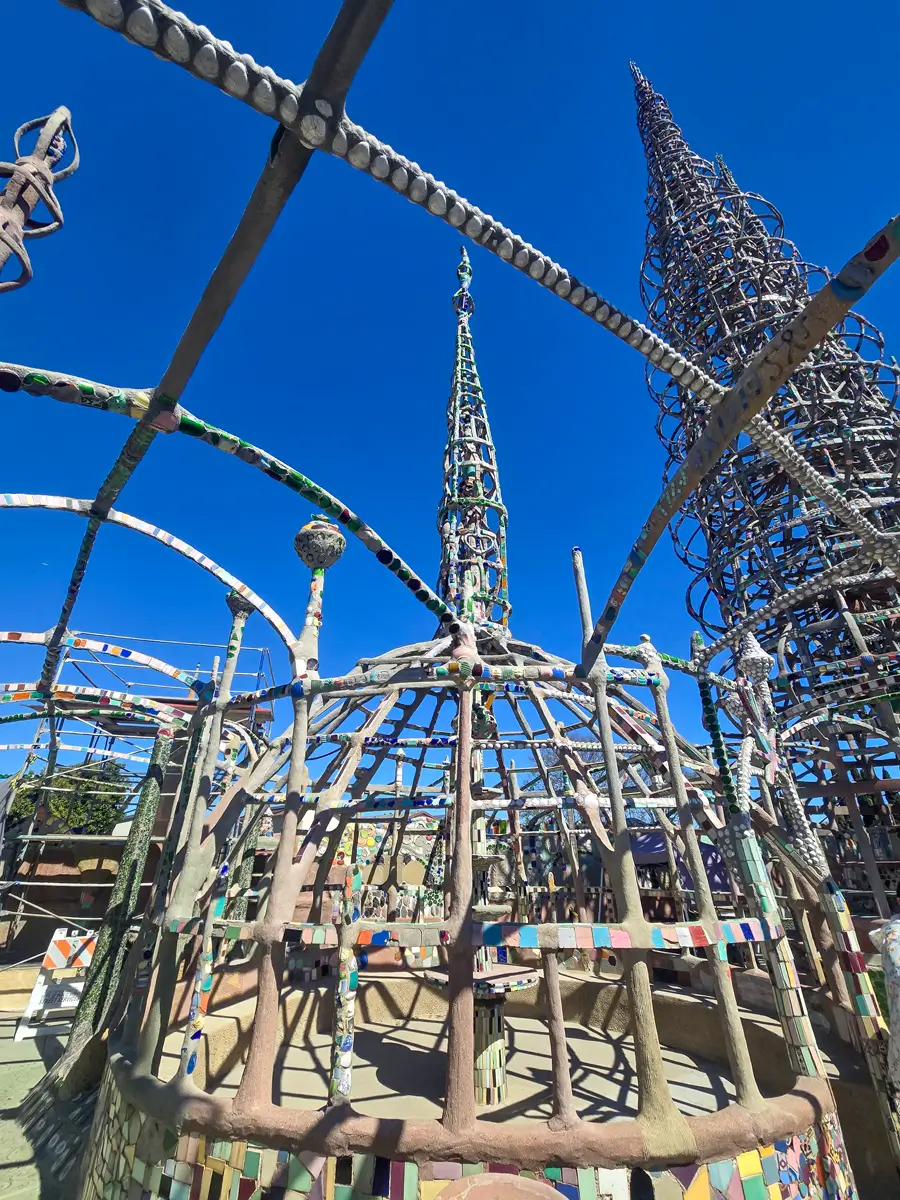
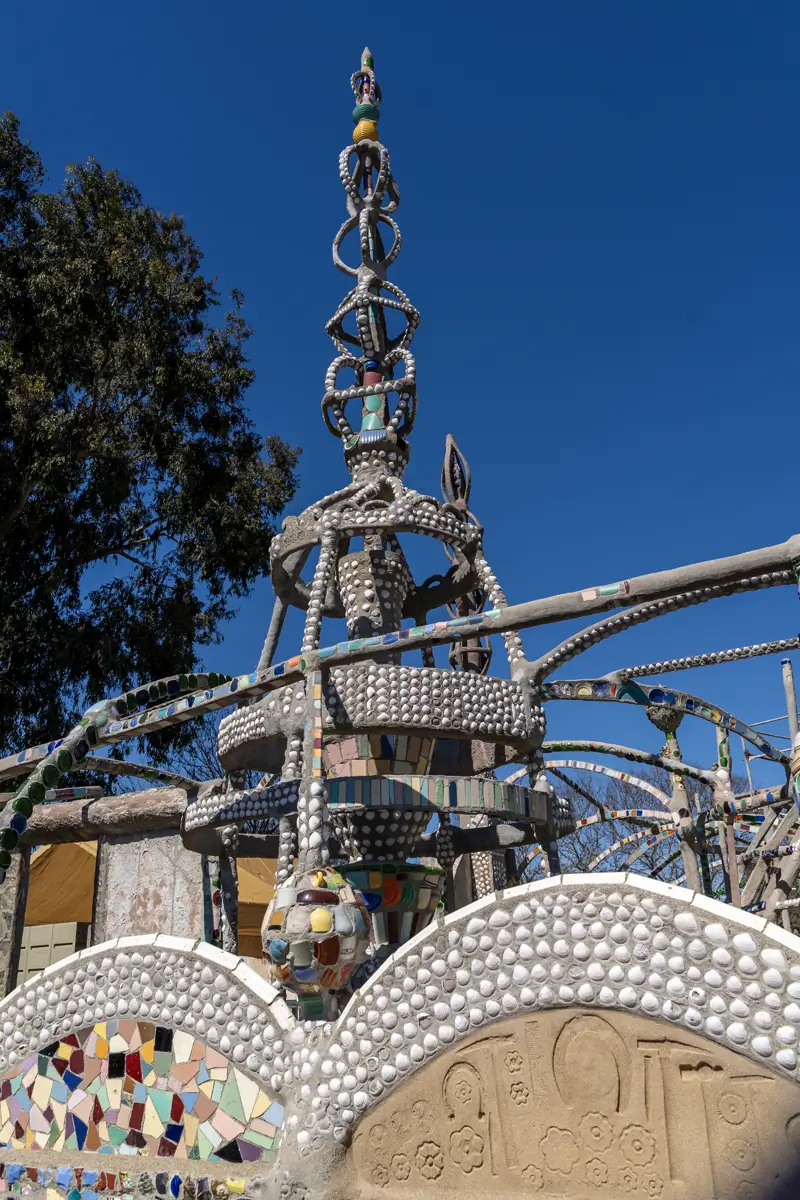
The towers appear skeletal and impossibly tall from the street. Seventeen interconnected steel spires rise from a triangular lot, their surfaces glittering with thousands of embedded objects. The tallest climbs 99.5 feet into the air. This is what one Italian immigrant construction worker built by hand over 33 years, working alone every evening after his day job and all through the weekends.
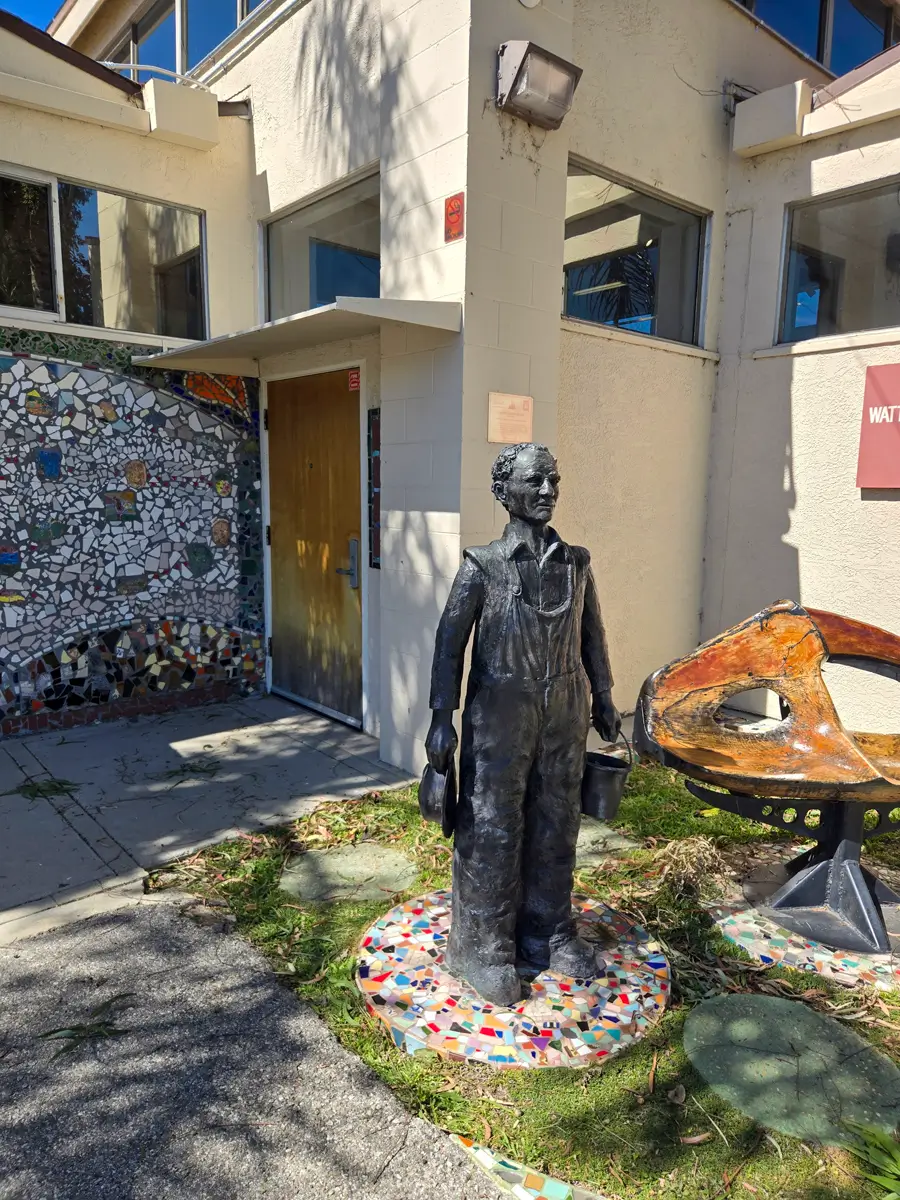
Simon Rodia called his creation “Nuestro Pueblo” (our town). He never wrote down plans or explained his vision. He just built.
The Guided Tour Experience
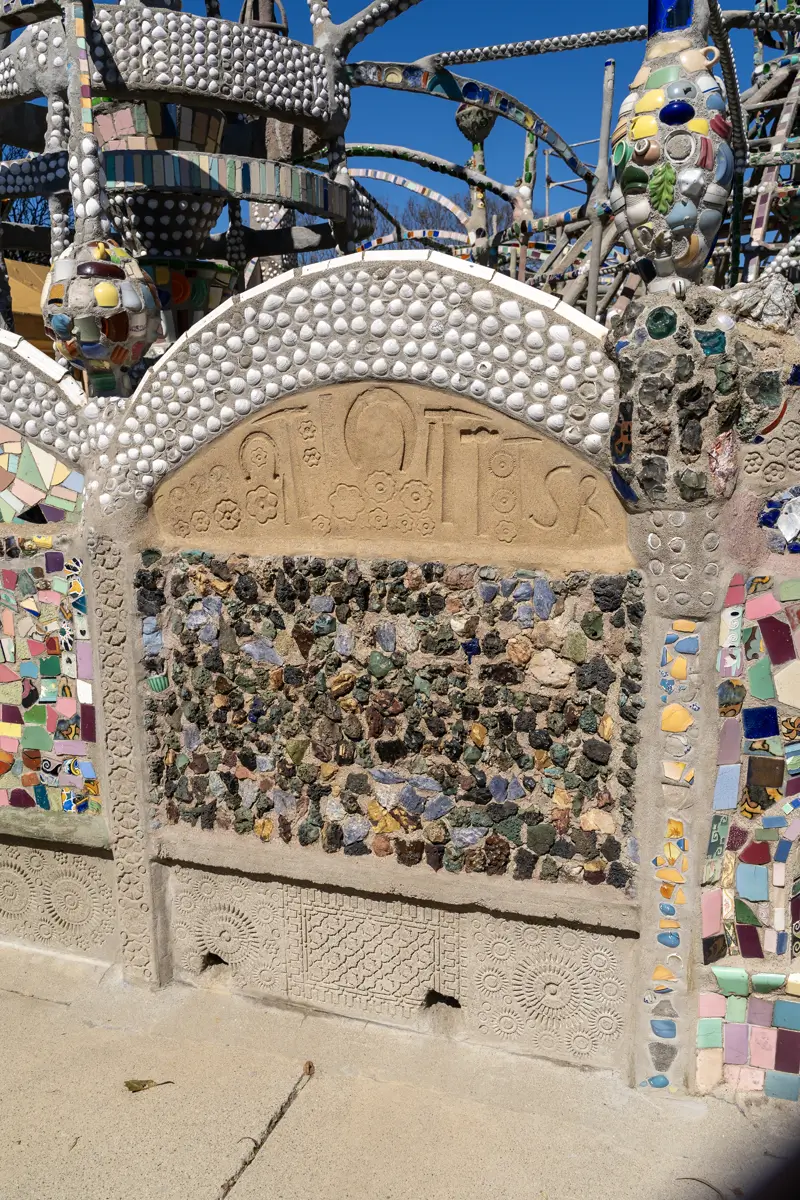
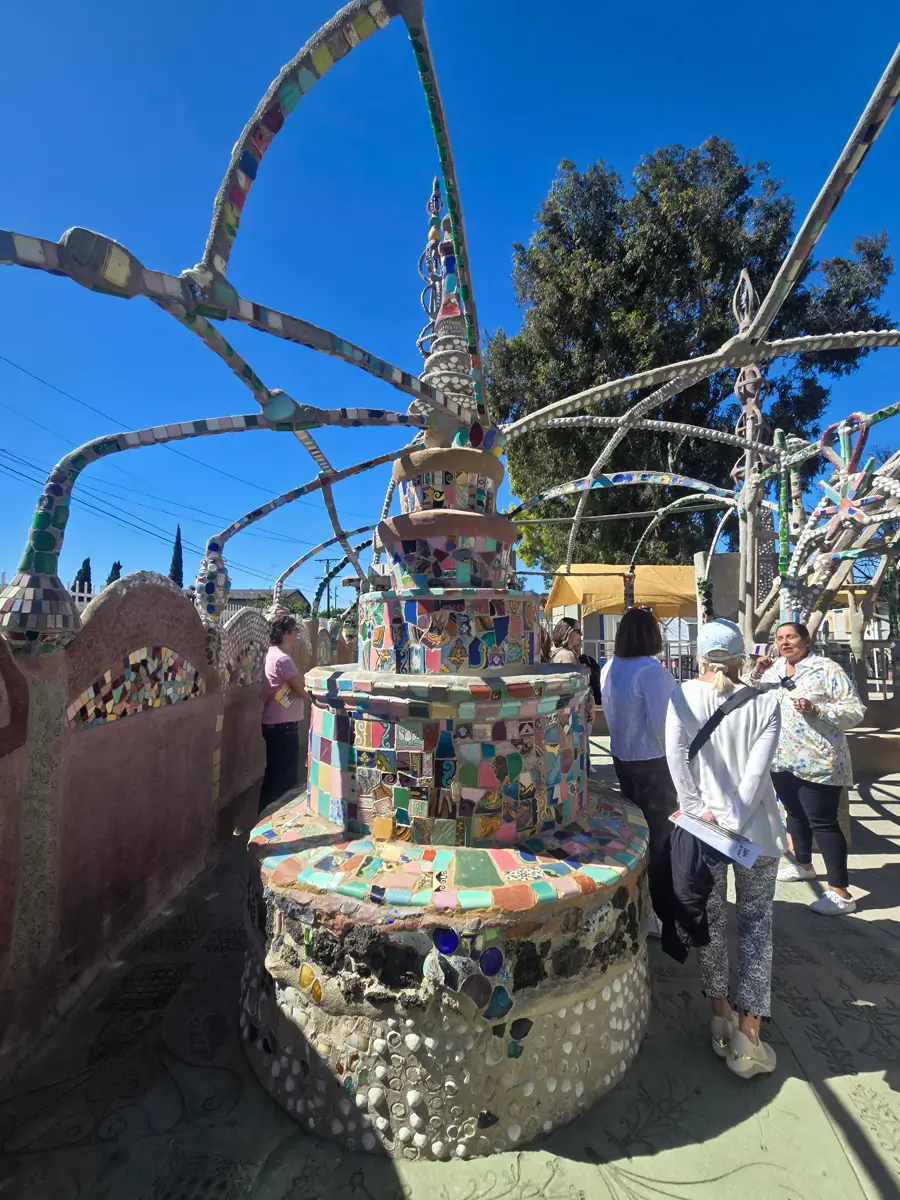
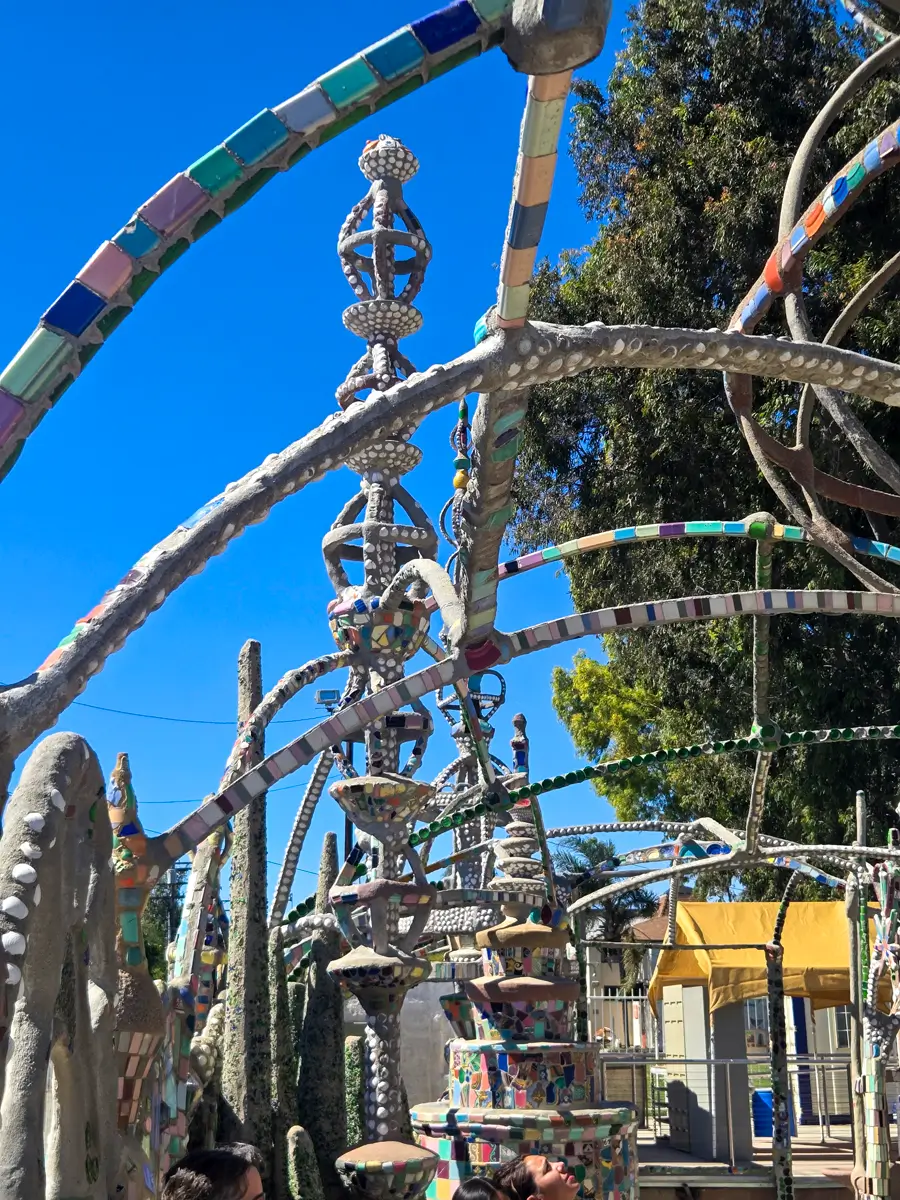
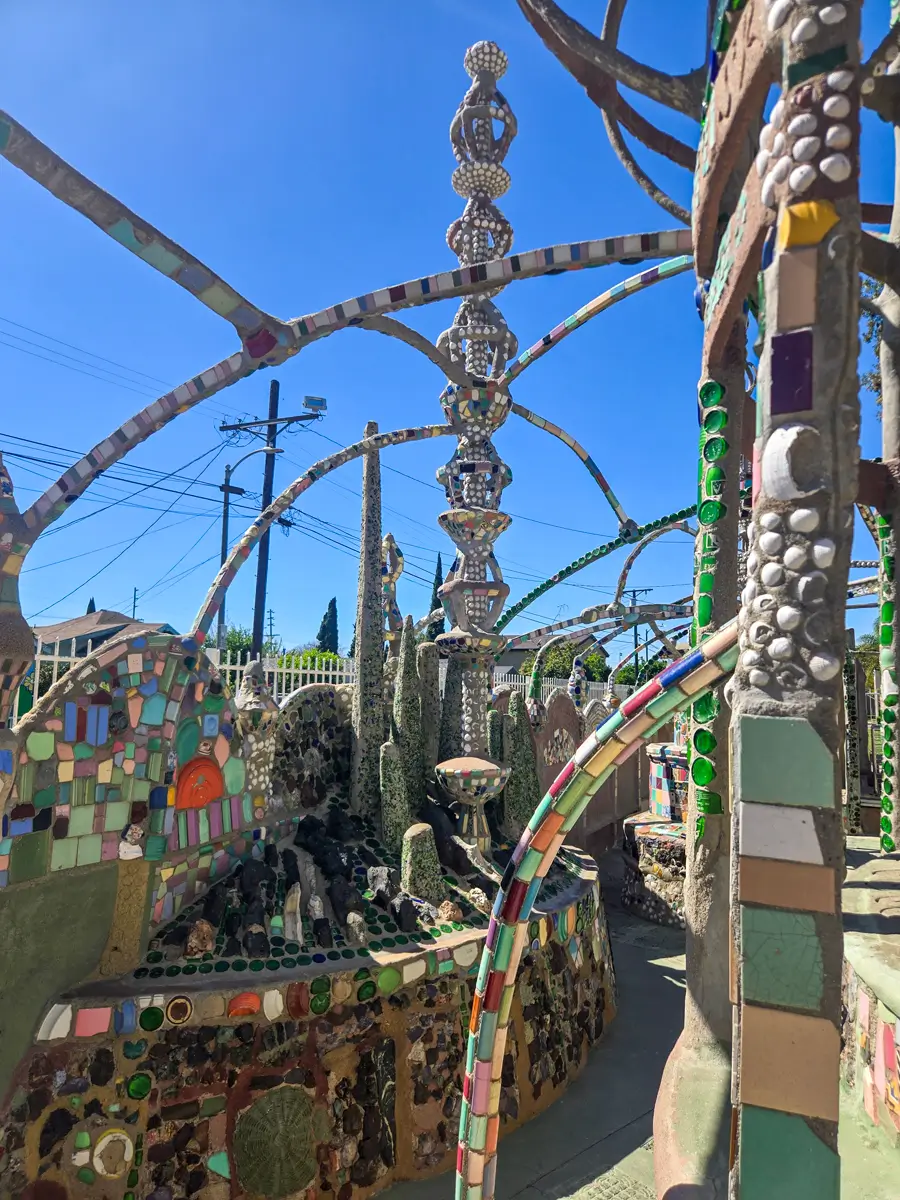
You can only enter the gates through a 30-minute guided tour, limited to 20 people. Tours run Thursday through Saturday from 10:30am to 3:30pm, and Sundays from 12:30pm to 3:30pm. Your guide leads you through the tight passages between towers, pointing out details you would miss on your own: vintage Malibu Potteries tiles, shards of Fiesta dishware, abalone shells arranged in patterns, glass bottle bottoms that catch the light.
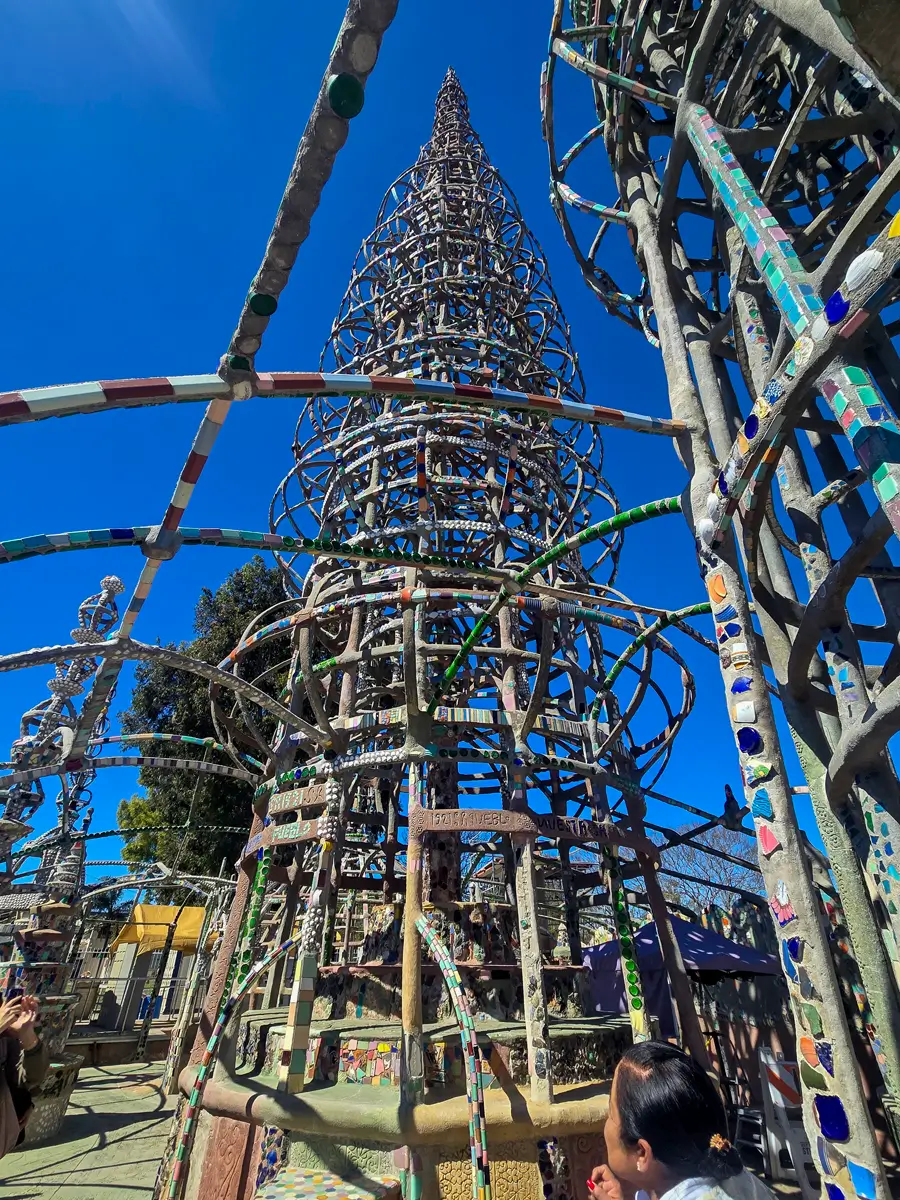
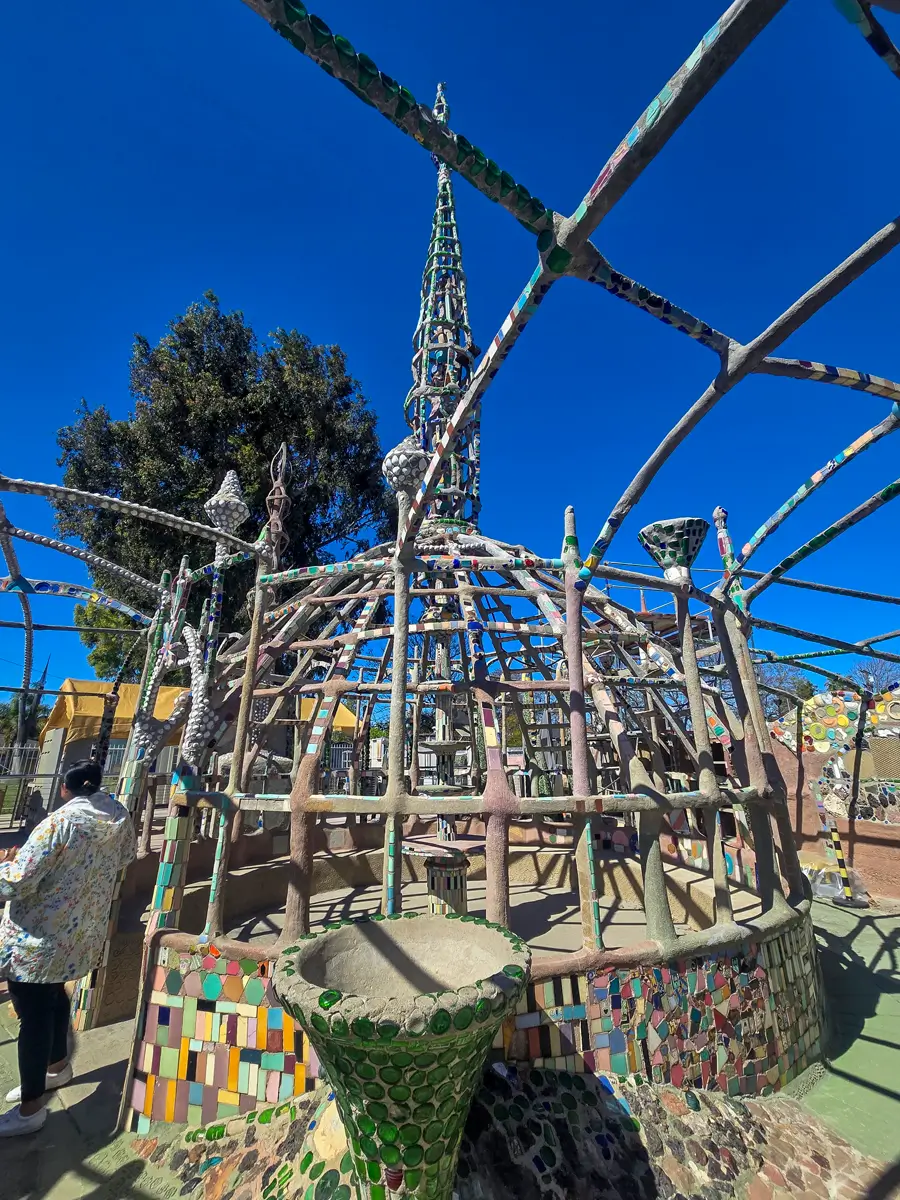
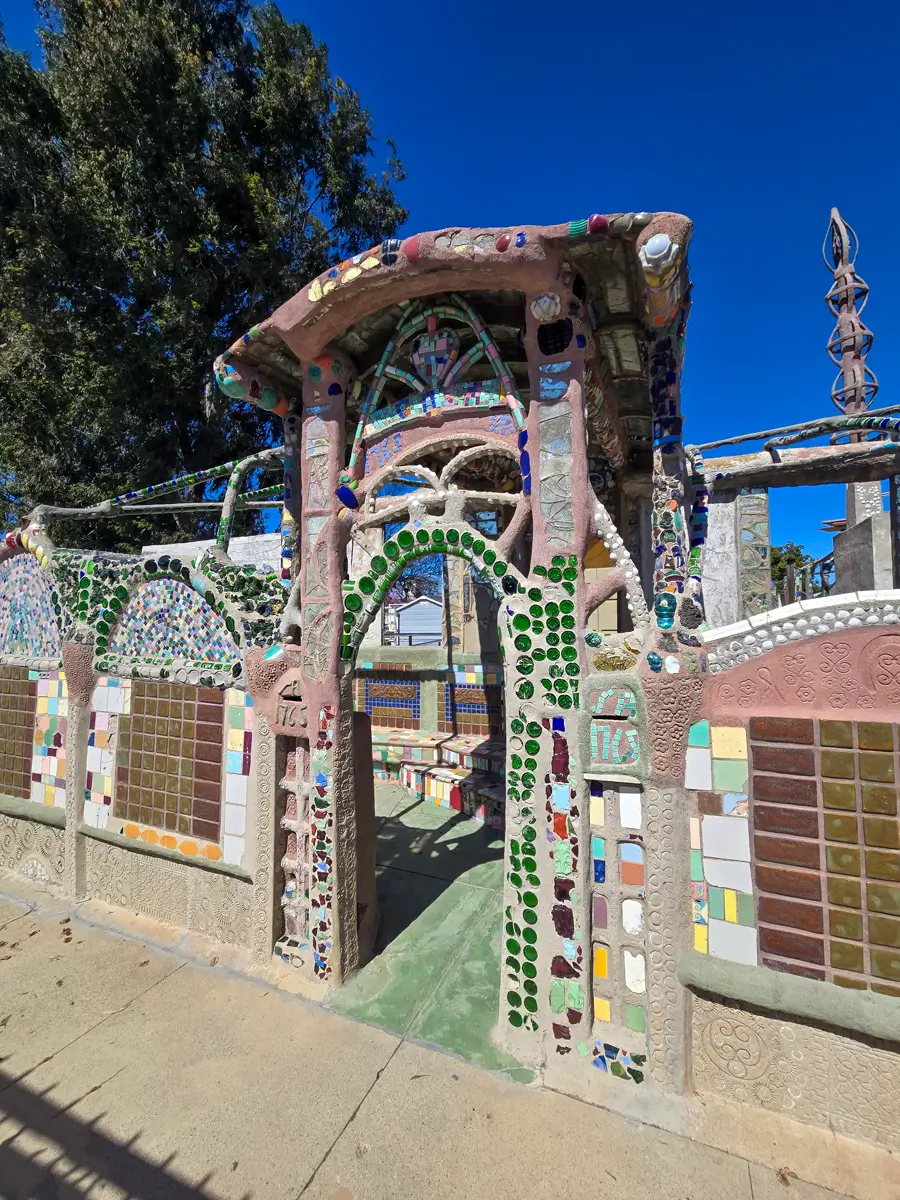
The structures are narrow. You walk through arched entryways decorated with mosaic patterns, under a gazebo-like structure Rodia built, past the “Ship of Marco Polo” sculpture. The tour guide explains how Rodia bent rebar using nearby railroad tracks as a makeshift vise, how he climbed the towers using only a window washer’s belt, how he continuously strengthened the columns after the 1933 Long Beach earthquake.
Close up, you see the hand-packed mortar, the wire mesh underneath, the way thousands of found objects create coherent decorative patterns. Rodia walked miles along Pacific Electric Railway tracks collecting materials. Children from the neighborhood helped him gather seashells and bottles. He worked without scaffolding, machine equipment, or helpers.
What Rodia Left Behind
The towers demonstrate a singular obsession. Rodia changed his mind frequently, tearing down sections that didn’t meet his vision and rebuilding them. His third wife left him because of his dedication to the project. In 1954, after suffering a mild stroke and falling from a tower, he finished his work. A year later, he gave the property to a neighbor and took a bus to Northern California to live near his sister. He never returned to see the towers again.
When the city ordered them demolished in 1959, calling them unsafe, actors, architects, and community members formed a committee and purchased the property. Engineers conducted tests that proved the towers could withstand 10,000 pounds of lateral force. The structures have stood firm through decades of earthquakes.
The Arts Center Campus
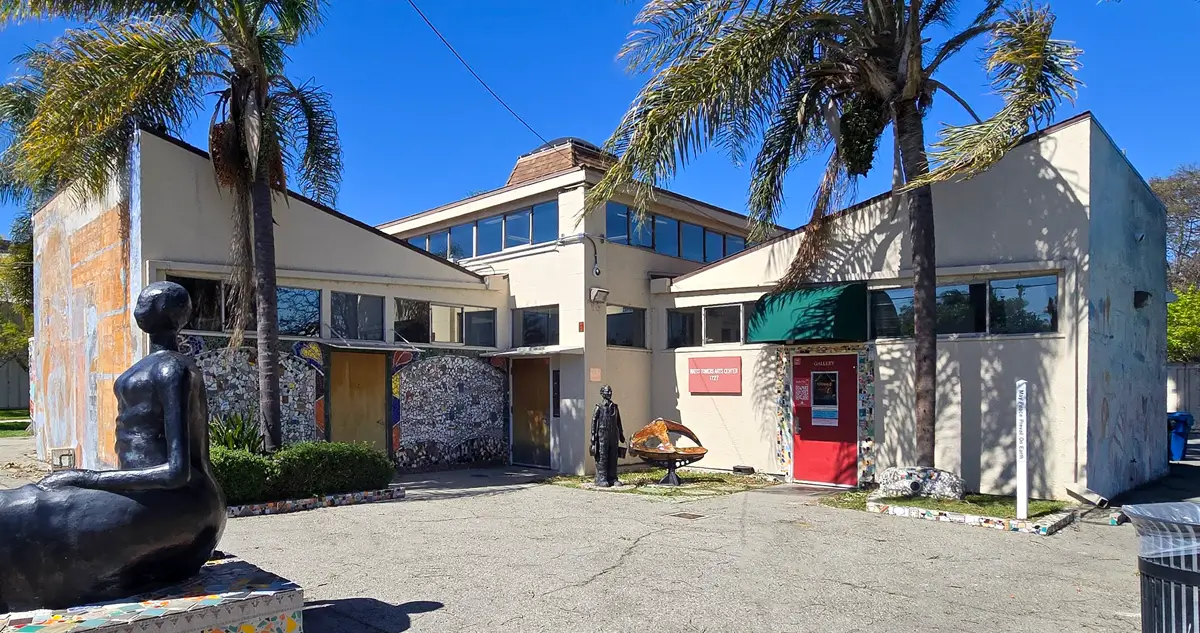
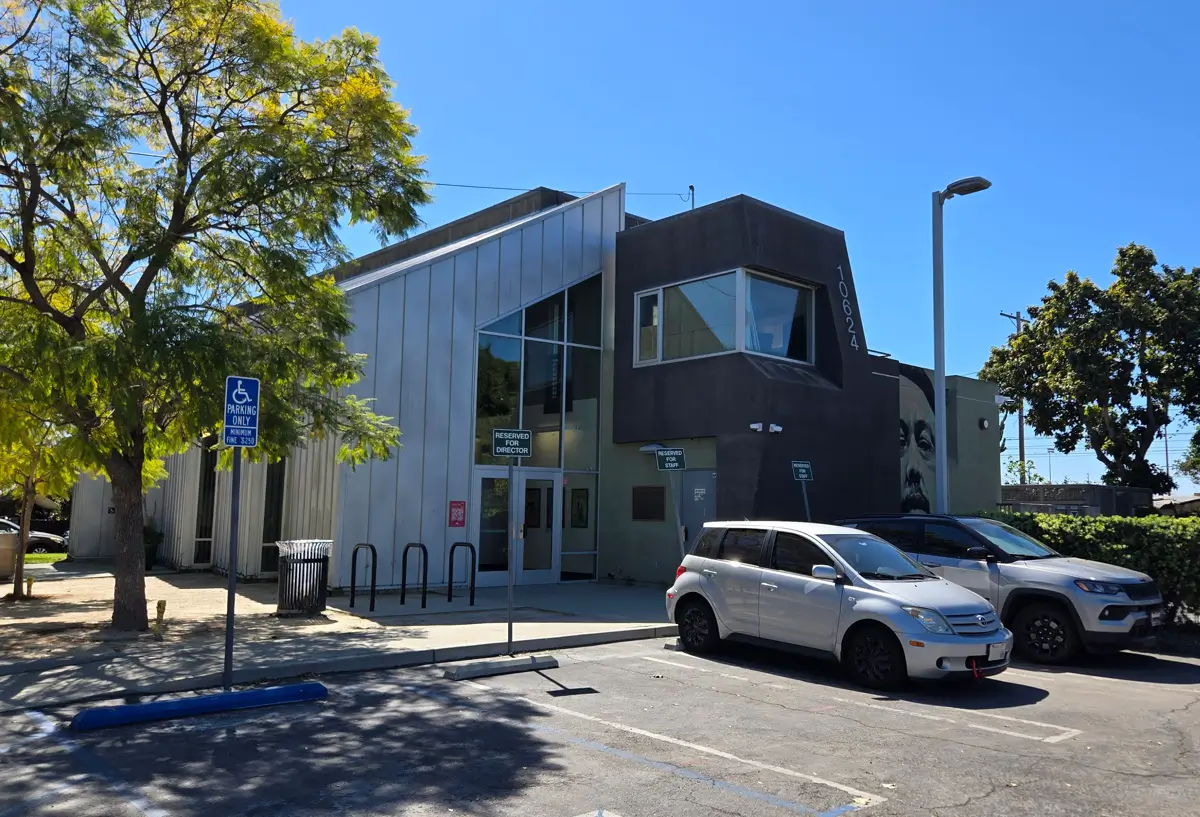
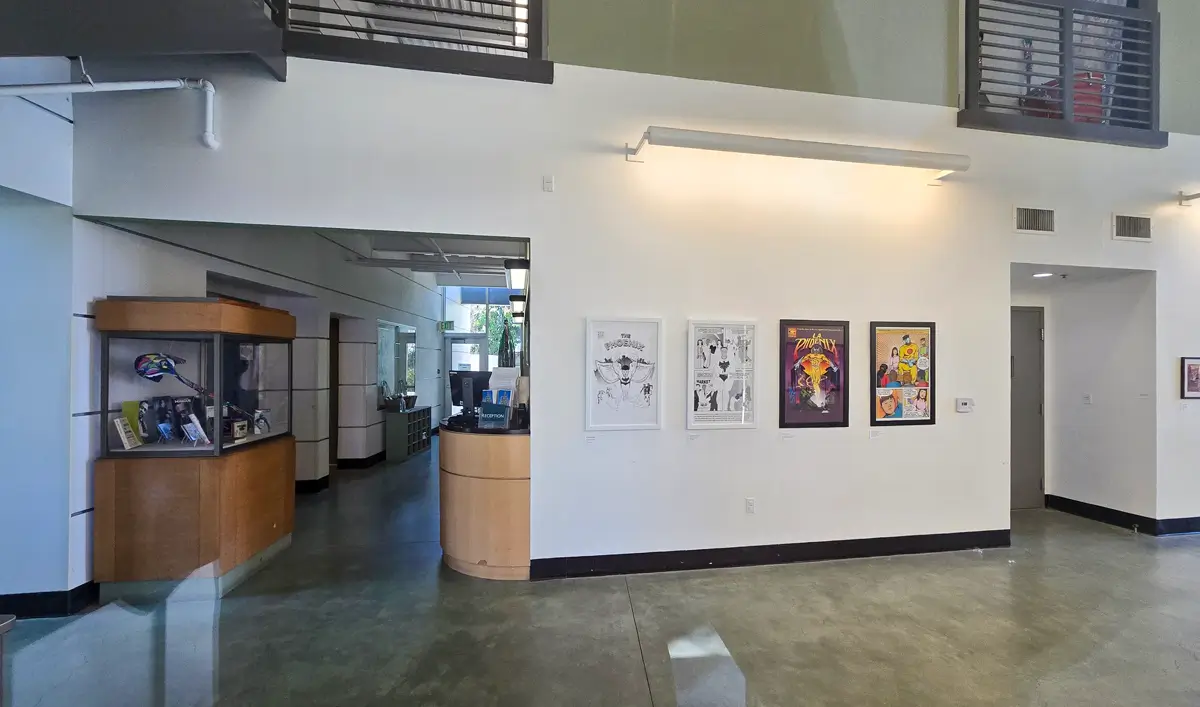
The adjacent Watts Towers Arts Center, established in 1961, operates the site and offers rotating exhibitions in three galleries: the Noah Purifoy Gallery, Charles Mingus Gallery, and Dr. Joseph and Bootsie Howard Gallery. The Arts Center provides year-round classes in painting, sculpture, photography, music, and other media arts. Admission to the Arts Center is free and it’s open Wednesday through Friday from 10am to 4pm.
Each September, the campus hosts two major festivals: the Day of the Drum Festival celebrating percussion traditions, and the Simon Rodia Watts Towers Jazz Festival, Los Angeles’s oldest jazz festival. Both events draw thousands of visitors from around the world.
What Makes Them Remarkable
The International Conference of Museum Curators declared in 1959 that “Rodia’s Towers are a unique combination of sculpture and architecture and the paramount work of folk art of the 20th century in the United States.” The towers appear on the cover of The Beatles’ “Sgt. Pepper’s Lonely Hearts Club Band” (Rodia himself is in the crowd of faces, next to Bob Dylan). Jazz legend Charles Mingus, who grew up in the shadow of the towers, drew inspiration from them throughout his life.
These aren’t polished monuments. They show the hand of their maker in every surface. The mortar is lumpy where Rodia pressed it around the wire mesh. The embedded objects sit at odd angles. The whole structure looks like it shouldn’t stand, yet it has survived for seven decades in earthquake country. That combination of apparent fragility and proven strength captures something about the immigrant experience Rodia embodied: taking American castoffs and transforming them into something new that reaches for the sky.
What Others are Saying
Nearby Curious Los Angeles Destinations
No nearby destinations found within 5 miles.
Watts Towers on Other Sites