
The Museum of Contemporary Art, Los Angeles
Los Angeles's only museum dedicated exclusively to contemporary art, showcasing 8,000+ works from 1940 to today in a striking red sandstone building.
- See
The Museum of Contemporary Art, Los Angeles Details
- Tuesday-Wednesday 11am-5pm
- Thursday 11am-8pm
- Friday 11am-5pm
- Saturday-Sunday 11am-6pm
- Closed Mondays
Overview
Details
Experiencing The Museum of Contemporary Art, Los Angeles / Curious LA Field Notes
Quick Take
MOCA is LA's only museum focused exclusively on art created between 1940 and the present. The collection reads like a who's who of contemporary art history, from abstract expressionists like Rothko and Pollock to pop artists like Lichtenstein and contemporary figures like Betye Saar. The free admission removes barriers that keep people away from major art institutions, and the rotating exhibition schedule means repeat visits reveal different perspectives on what contemporary art can be.
The Building and Its Setting
Architect Arata Isozaki designed MOCA Grand Avenue to stand out from the surrounding downtown glass towers. The red Indian sandstone exterior and geometric forms—pyramids, cylinders, and a barrel vault—create a sculptural presence on Bunker Hill. Only four of the building’s seven levels rise above street level. The rest descend into a sunken courtyard, giving the museum an intimate scale despite its substantial square footage.
Eleven pyramid-shaped skylights punctuate the roof, flooding the galleries below with natural light. The entrance through an arch leads visitors down into this terraced courtyard, where the administrative barrel-vault structure hovers overhead on red sandstone pillars. The architecture itself became part of MOCA’s story when Isozaki won the 2019 Pritzker Prize, cementing the building’s place in contemporary design history.
Inside, the galleries branch off from the central courtyard in a layout that encourages discovery rather than following a prescribed path. The spaces feel contemplative, with enough room for large-scale installations while maintaining sight lines that let you see across multiple galleries at once.
The Collection and Exhibitions
MOCA’s permanent collection grew to over 8,000 works through an unusual model—more than 90% came through donations from artists themselves or from private collectors on the museum’s board. This created a collection heavy with seminal pieces that might otherwise have stayed in private hands.
The abstract expressionist holdings include major canvases by Mark Rothko, Franz Kline, and Jackson Pollock. The pop art collection features Roy Lichtenstein, Claes Oldenburg, and Robert Rauschenberg. Contemporary sections showcase Betye Saar, Cindy Sherman, Ed Ruscha, and Jean-Michel Basquiat, among hundreds of others.
Exhibitions rotate regularly, mixing selections from the permanent collection with contemporary shows. Recent programming has included everything from installations examining American monuments to solo presentations by emerging artists. The museum’s curatorial approach tends toward ambitious, sometimes challenging exhibitions that ask visitors to engage with difficult questions about art’s role in society.
Galleries dedicated to works on paper showcase drawings, prints, and photographs, while larger spaces accommodate installations and multimedia works. The rotating schedule means two visits months apart will show completely different faces of the collection.
Practical Visitor Experience
General admission costs nothing, though the museum recommends reserving timed tickets online to guarantee entry at your preferred time. A limited number of same-day tickets might be available, but advance booking removes the uncertainty. Special temporary exhibitions sometimes require paid tickets ($18 adults, $10 seniors and students, free for children under 12).
Plan for one to two hours to see the main galleries at a comfortable pace. Art enthusiasts could easily spend three hours or more when compelling temporary exhibitions are on view. The museum provides wheelchairs at the reception desk and welcomes ADA service animals. Gallery attendants in all black are available to answer questions or provide assistance.
Lemonade café operates inside the museum, serving seasonal dishes and drinks from 10am to 5pm most days (check hours before visiting). The MOCA Store sells art books, exhibition catalogs, artist-designed objects, and contemporary design items.
Photography for personal use is generally allowed in permanent collection galleries, though special exhibitions may have restrictions. Always check signage in each gallery and be considerate of other visitors.
Getting There
The museum sits at the intersection of Grand Avenue and Kosciuszko Way in downtown’s Bunker Hill neighborhood. Metro’s Civic Center/Grand Park station (Red and Purple lines) or Grand Av Arts/Bunker Hill station (Blue and Expo lines) both provide walking access to the museum in under ten minutes.
Parking is expensive in this area. California Plaza garage at 351 S. Olive Street charges $4.75 per 10 minutes with a $45 maximum, or a flat $16 rate weekday evenings and all weekend. Street parking on Grand Avenue has meters. SpotHero offers advance reservations at nearby lots with discounted rates.
The location places you within walking distance of The Broad museum, Walt Disney Concert Hall, Grand Central Market, and Little Tokyo. Many visitors combine MOCA with one or more of these destinations for a full day of downtown exploration.
What Others are Saying
Nearby Curious Los Angeles Destinations
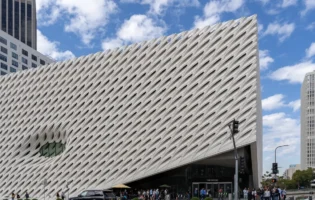
The Broad
Free contemporary art museum in downtown LA featuring postwar masterworks and Yayoi Kusama's Infinity Mirror Rooms.
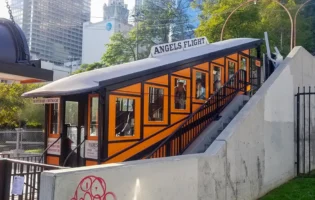
Angels Flight Railway
Historic 1901 funicular railway connecting downtown Los Angeles to Bunker Hill in a 298-foot journey up the city's steepest grade.
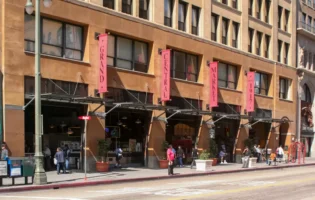
Grand Central Market
Downtown's oldest food hall serving up LA's multicultural flavors since 1917 in a historic Beaux-Arts landmark
Bradbury Building
A Victorian light-filled atrium hidden behind a plain brick facade, famous as the setting for Blade Runner's climactic scenes.
Bonaventure Hotel & BonaVista Lounge
Downtown's only revolving cocktail lounge inside five iconic cylindrical glass towers that redefined futuristic architecture in 1976.
Octavia Lab & DIY Memory Lab
Free public makerspace with 3D printers, laser cutters, recording studios, and tools for creating everything from music to fashion.
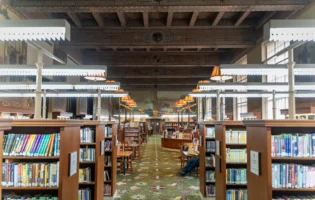
Los Angeles Central Library
Downtown's 1926 architectural landmark combining historic Art Deco design with modern library services across two connected buildings
The Last Bookstore
California's largest new and used bookstore housed in a 1914 bank building with book tunnels, literary labyrinths, and artist studios.
Cathedral of Our Lady of the Angels
Downtown's postmodern architectural statement serves five million Catholics with alabaster light, saint tapestries, and a crypt beneath.
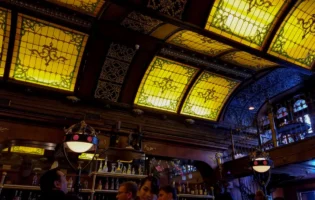
The Wolves
Belle Époque cocktail bar inside the historic Alexandria Hotel, featuring house-made ingredients and period-authentic 1900s design.
Triforium
Towering 1970s sculpture adorned with 1,494 multicolored glass prisms intended to sync light and music but plagued by technical failures.
The Museum of Contemporary Art, Los Angeles on Other Sites