
Picnic at The Getty
World-class art museum (& unique picnic spot!) perched atop the Santa Monica Mountains with great works, architecture & views
- Do
- See
Picnic at The Getty Details
- Tuesday-Friday: 10:00 AM - 5:30 PM
- Saturday: 10:00 AM - 8:00 PM
- Sunday: 10:00 AM - 5:30 PM
- Closed Mondays
Overview
Details
Experiencing Picnic at The Getty / Curious LA Field Notes
Quick Take
The Getty Center delivers an instant escape from LA without leaving the city. Three minutes on an automated tram takes you from a parking garage to a hilltop campus where world-class European art, modernist architecture, and 86 acres of gardens create a complete retreat. Free admission and a policy that welcomes outside food make this one of the city's best-kept picnic destinations—pack a lunch, claim a lawn with mountain views, then spend hours wandering galleries filled with Van Gogh, Rembrandt, and Monet between bites. It's the rare museum that functions equally well as an art destination, an architectural landmark, and an elevated park where you can spend an entire day without the usual museum fatigue or cost barriers.
The Approach
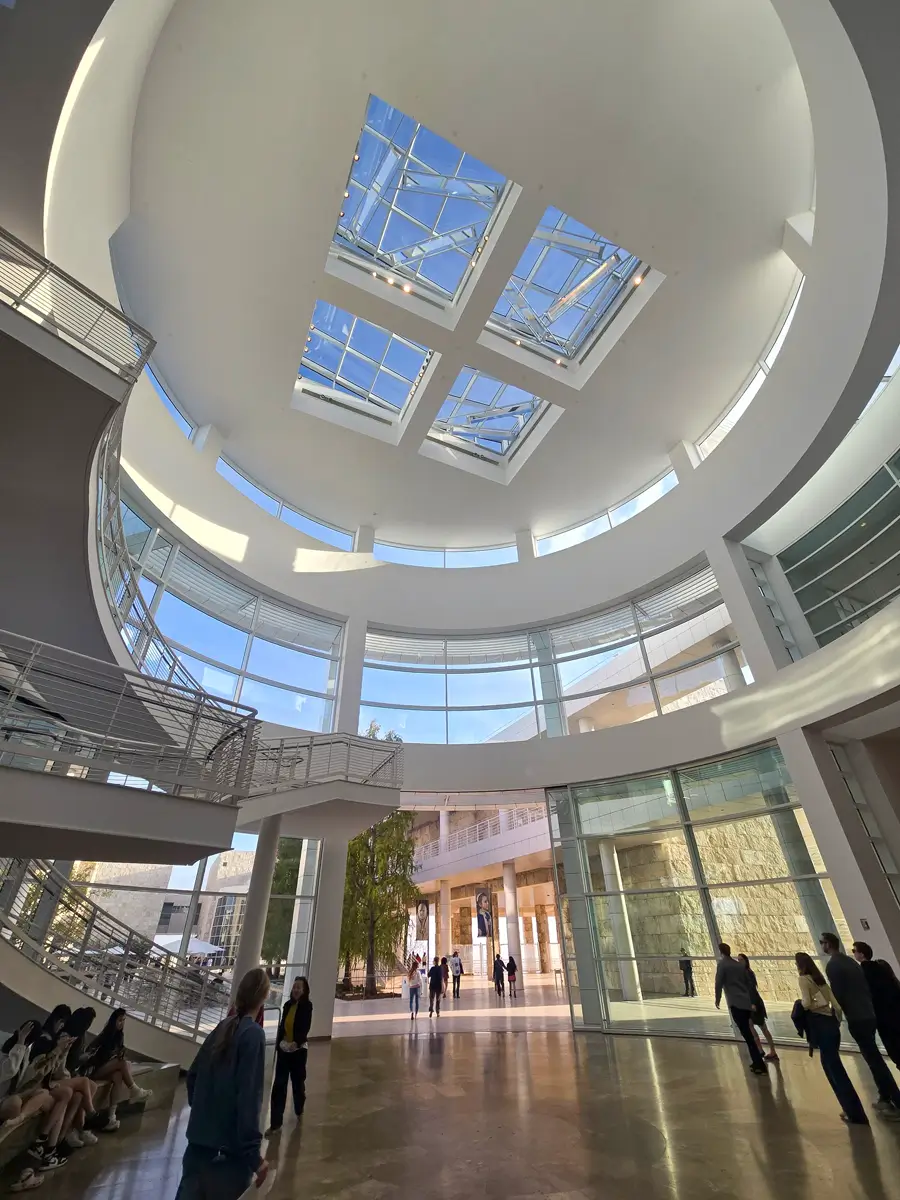
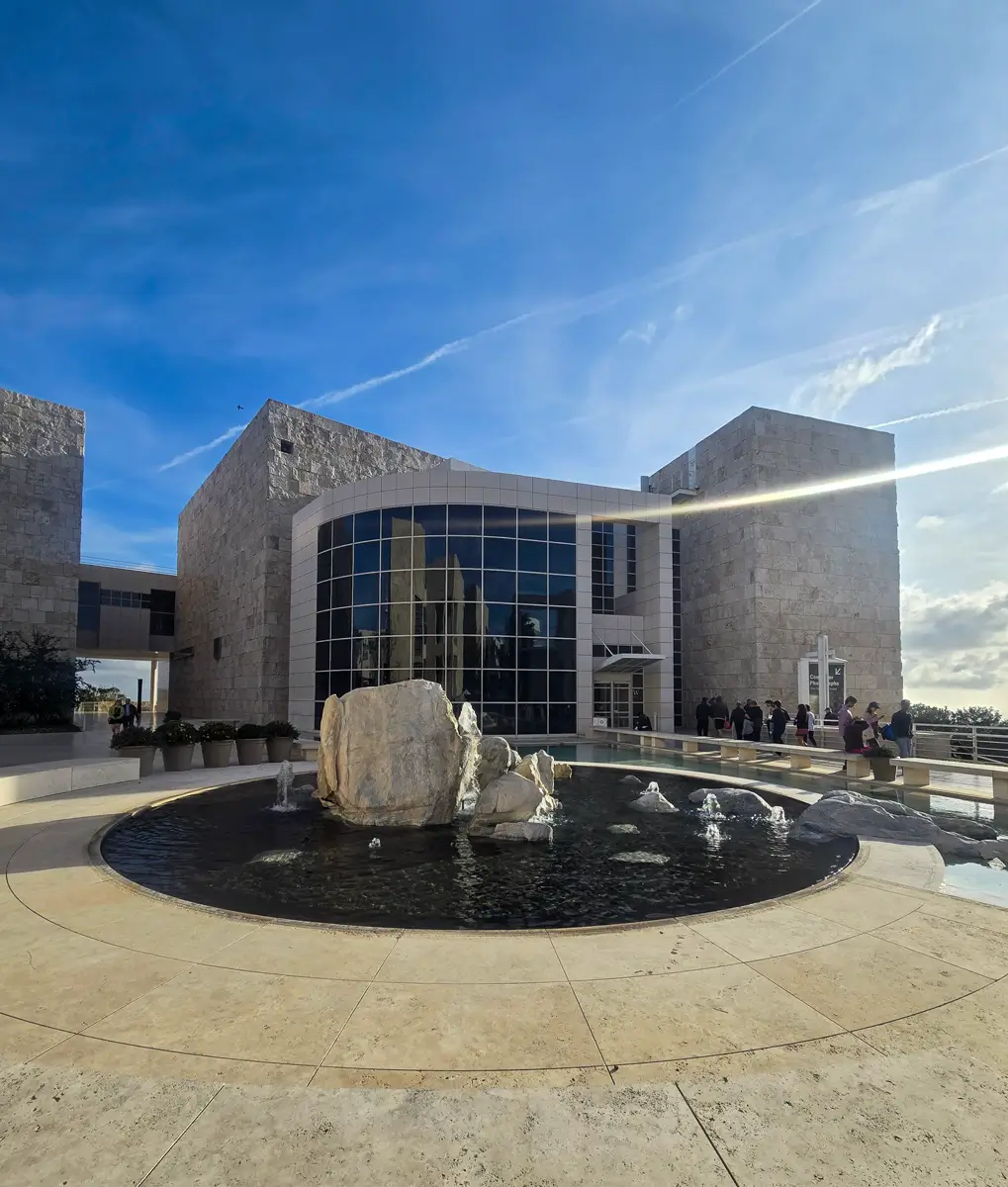
Your visit begins before you enter a single gallery. After parking, you board an automated tram that climbs the hillside in a three-minute ride. The ascent offers changing views of the San Gabriel Mountains and Los Angeles basin. The tram deposits you at a central plaza where the scale of the complex becomes clear: five museum pavilions arranged around courtyards, research buildings to one side, and terraces opening to views in multiple directions. The campus spreads across the ridgeline with walking paths connecting gardens, galleries, and overlooks.
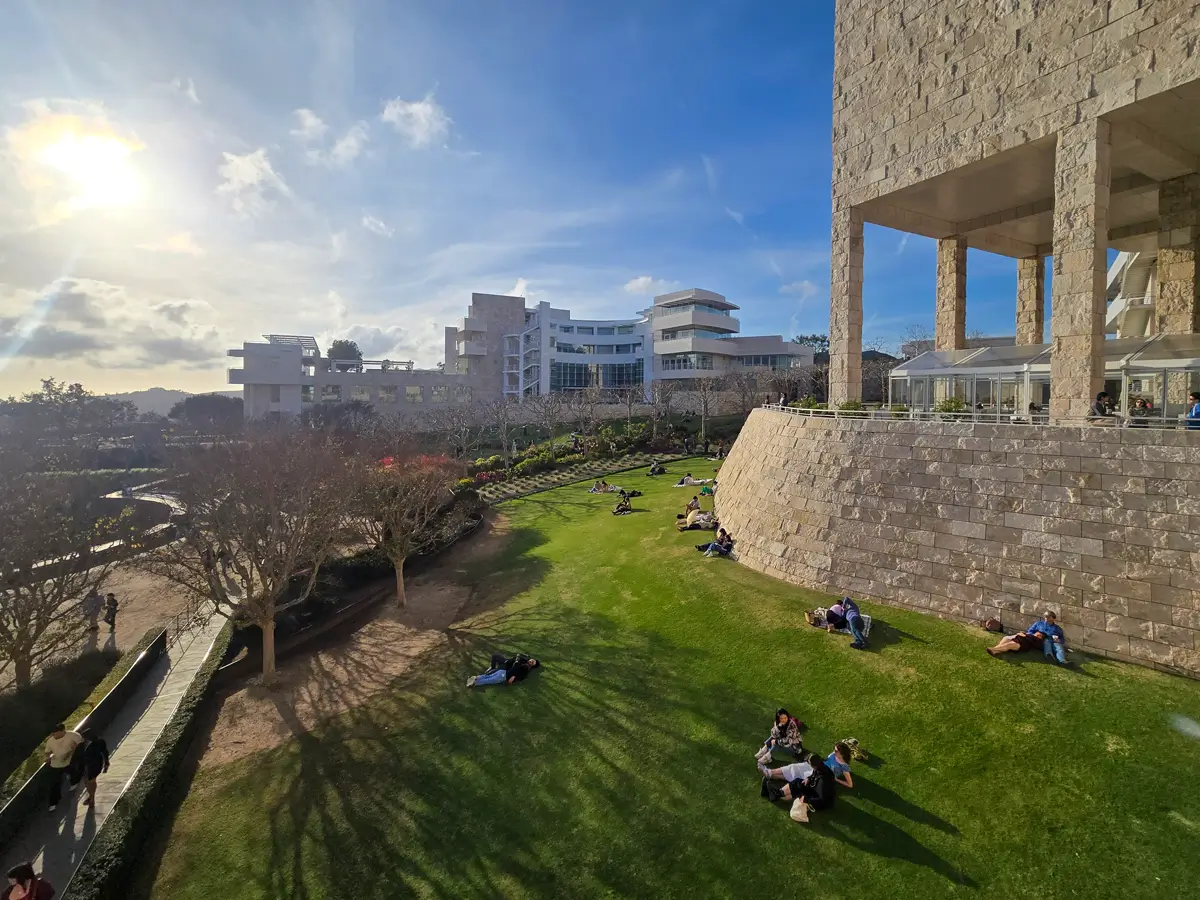
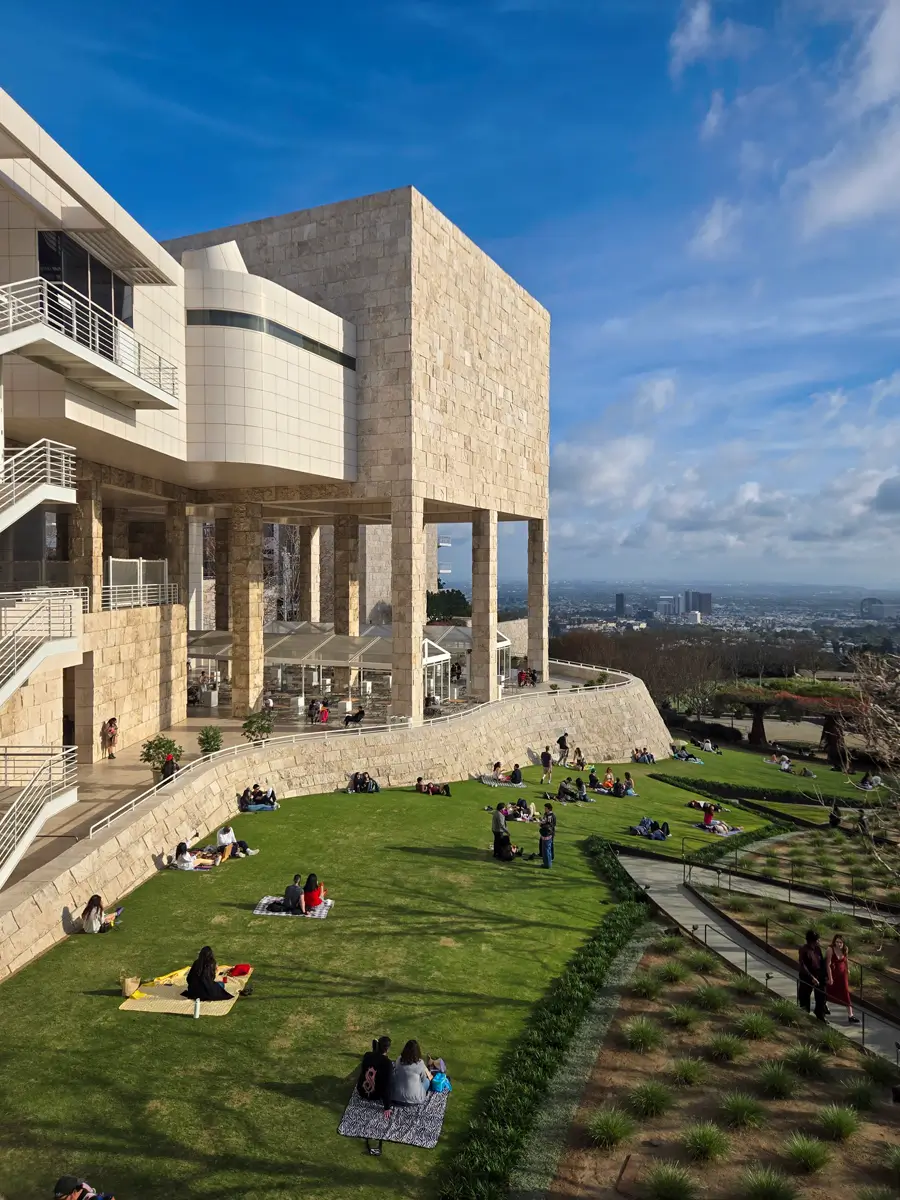
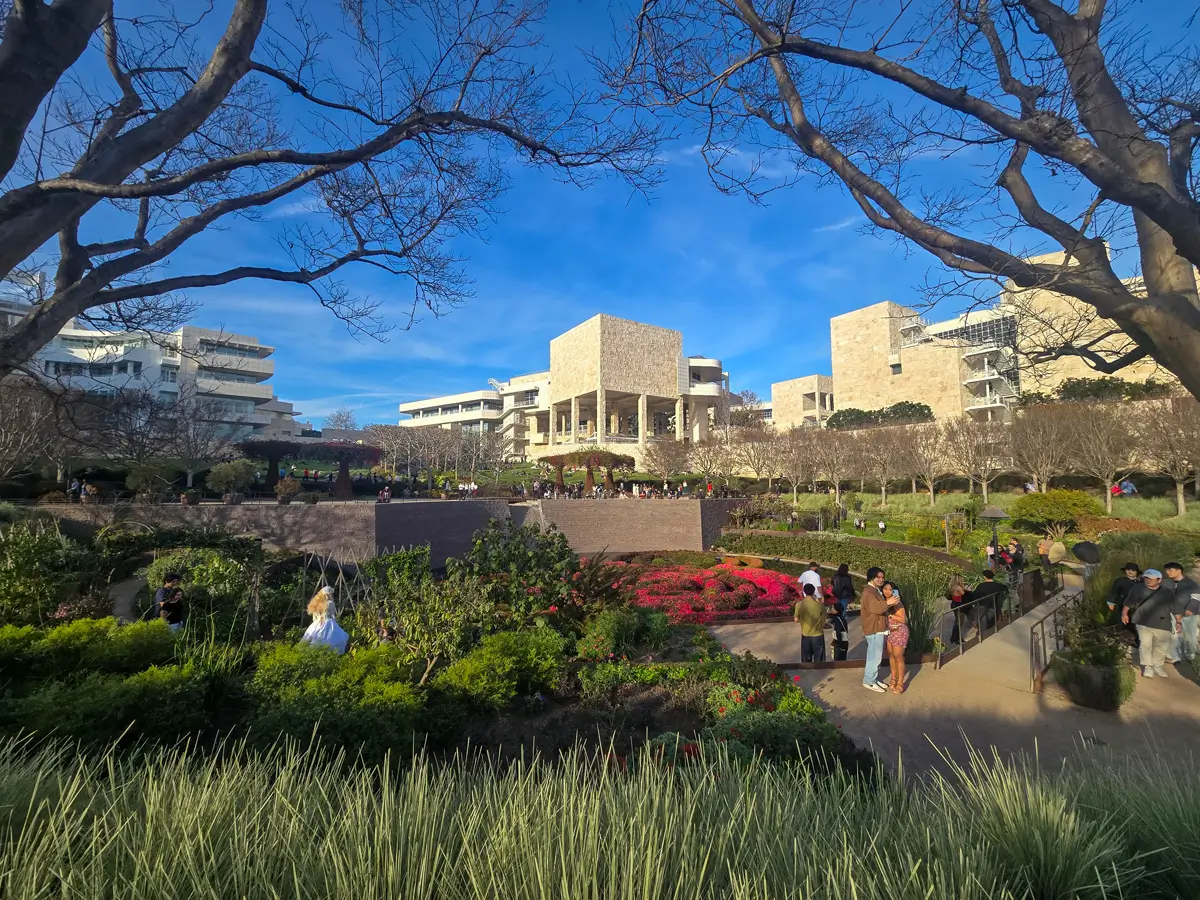
The travertine stone covers nearly everything. Architect Richard Meier chose fossilized limestone from quarries near Rome, and the stones reveal their ancient history: embedded leaves, feathers, and branches appear in the cleft-cut surfaces. The beige color shifts throughout the day, reflecting sharply in morning light and glowing warm in late afternoon. Between the angular pavilions, curved elements and planted gardens soften the geometry.
The Galleries
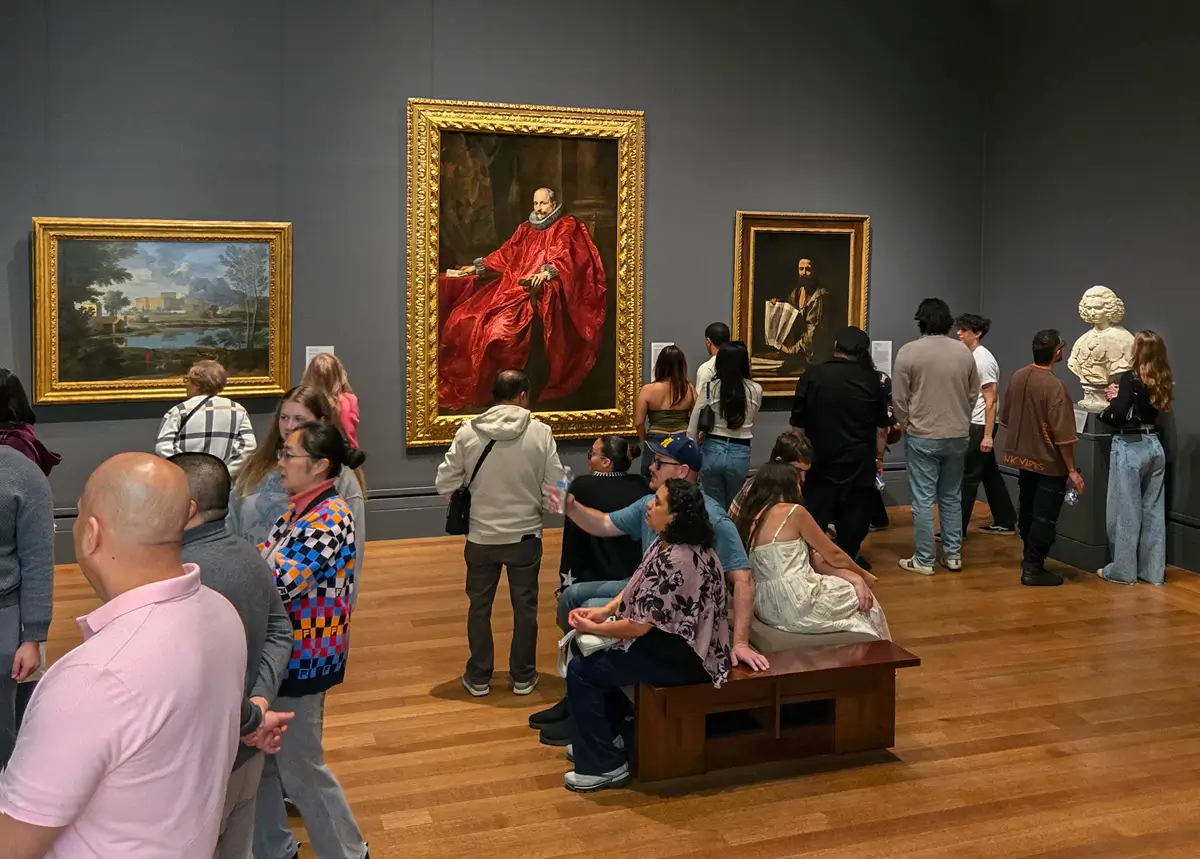
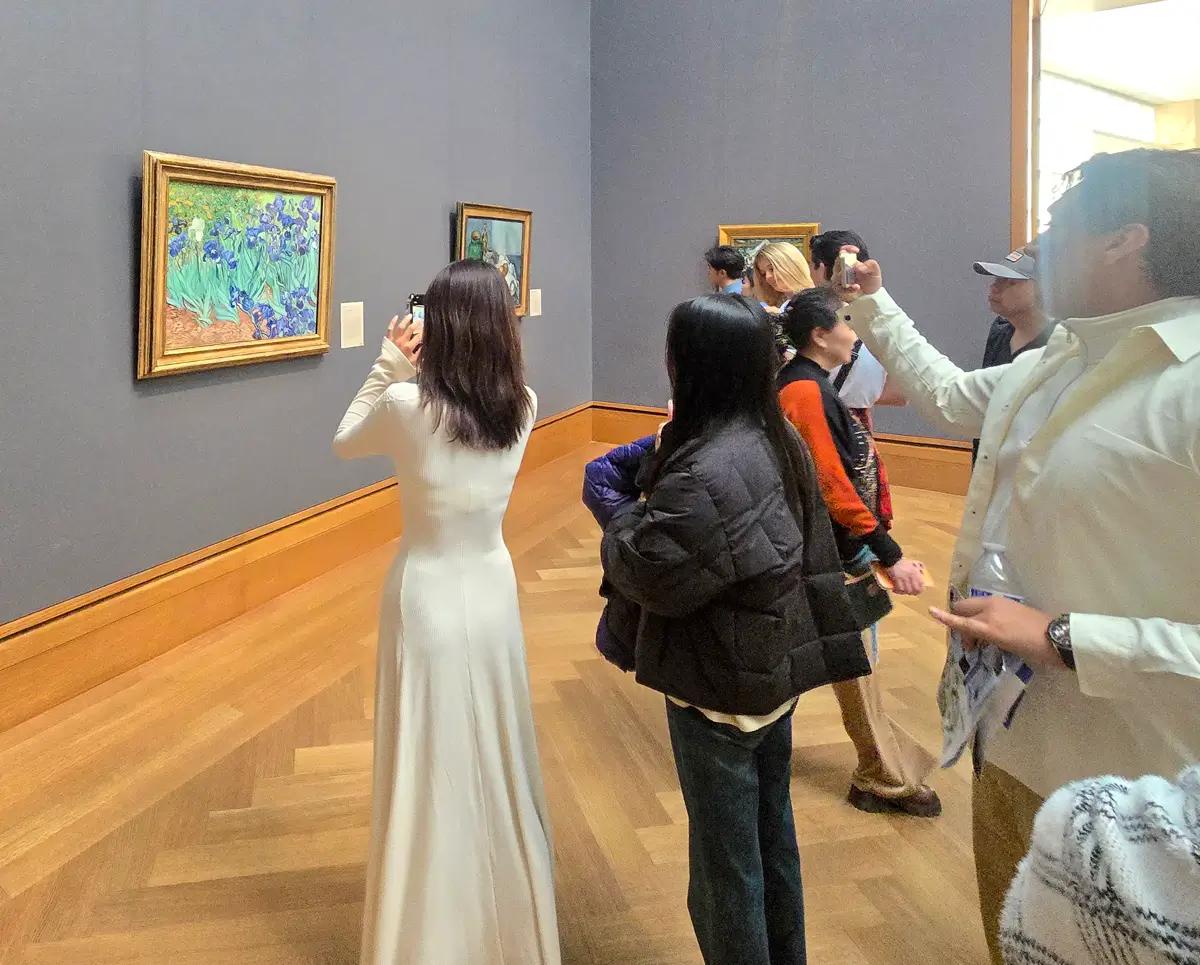
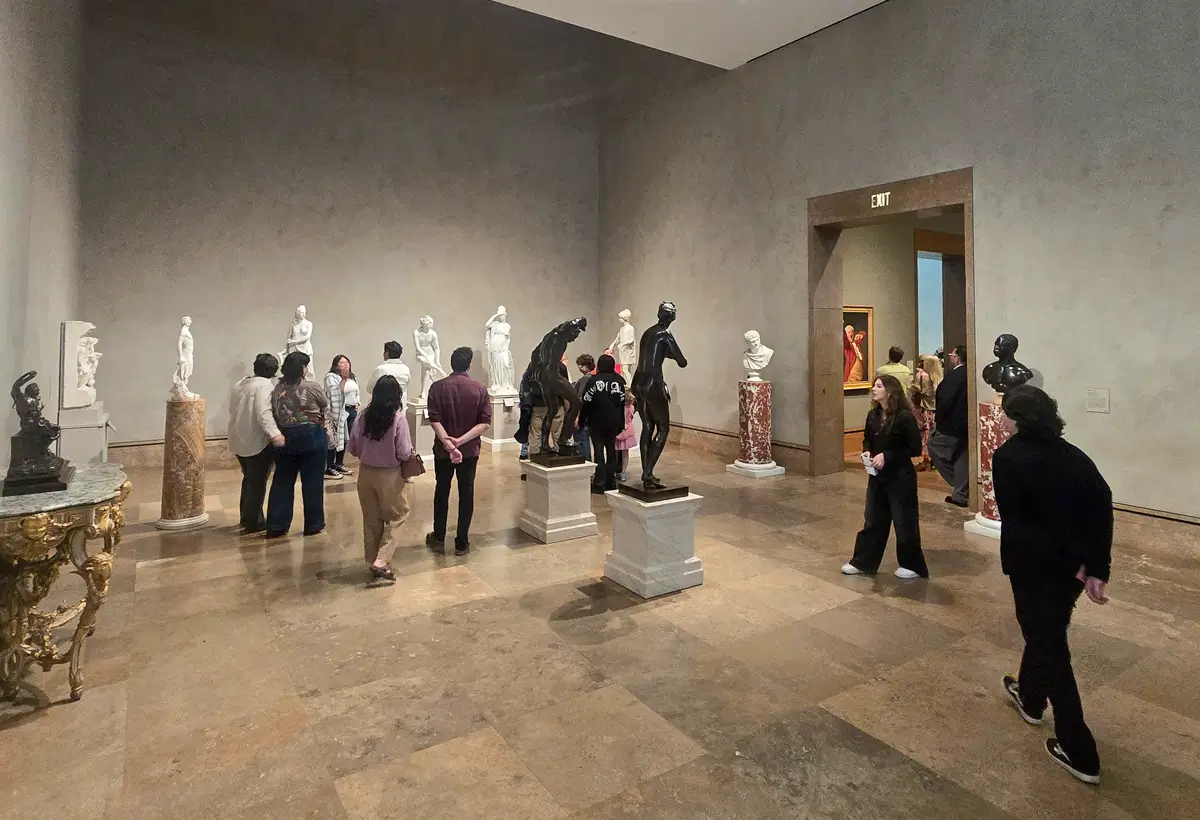
The museum’s European paintings fill the upper-level galleries, where natural light filters through computerized skylights. Van Gogh’s “Irises,” painted in 1889 during his stay at a psychiatric hospital, draws consistent crowds. The flower stems twist and curve across the canvas in thick paint strokes. Nearby rooms hold works by Rembrandt, including his laughing self-portrait on copper, and French Impressionist paintings by Monet, Renoir, and Pissarro. The decorative arts galleries showcase ornate French furniture, tapestries, and porcelain from the Renaissance through the 19th century.
Lower-level galleries protect light-sensitive works: illuminated manuscripts with gold leaf and detailed miniatures, old master drawings, and the photography collection. The photography holdings span from William Henry Fox Talbot’s earliest experiments in the 1830s through contemporary work. Rotating exhibitions prevent damage from prolonged light exposure while keeping the collection fresh for repeat visitors.
Moving between pavilions means stepping outside onto terraces and walkways. The layout prevents gallery fatigue by breaking up the indoor experience with outdoor transitions. Benches placed at viewpoints invite you to sit and take in the cityscape or mountain backdrop.
The Central Garden
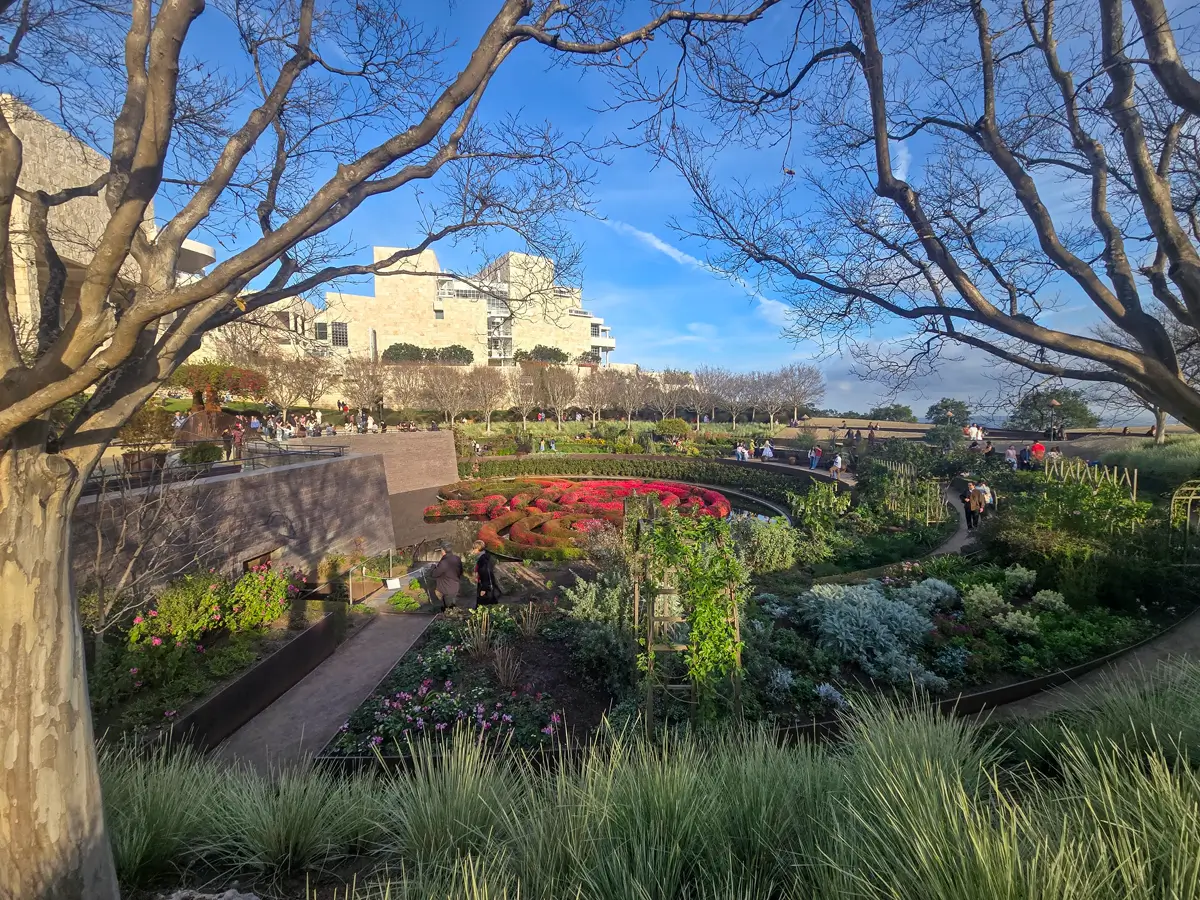
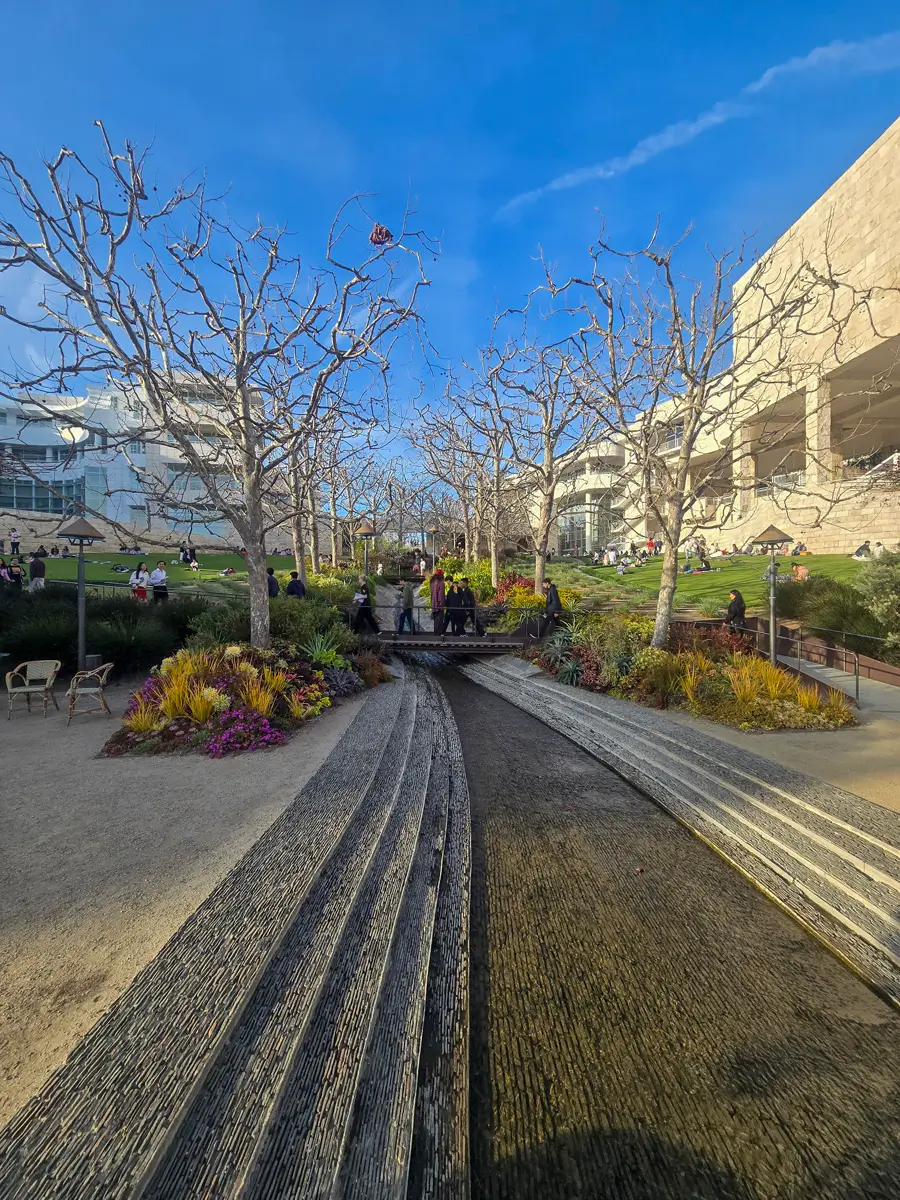
Artist Robert Irwin designed the Central Garden as a living sculpture that changes with seasons. A stream runs down the center, ending in an azalea maze surrounding a pool. More than 500 plant varieties fill the space, from California natives to specialty cultivars chosen for color and texture. Stone paths wind through the plantings, passing rock formations and crossing small bridges. The garden sits in a natural ravine below the museum level, creating a separate world within the complex.
On the east side, a cactus garden displays desert plants against the city view. Both gardens provide seating areas where visitors rest between gallery visits.
A Hidden Picnic Destination
Most LA residents don’t realize the Getty is one of the city’s best picnic spots. The museum encourages outside food, and multiple lawn areas offer places to spread out. The Central Garden has grassy patches where people sit with packed lunches, surrounded by seasonal blooms and the sound of flowing water. Other lawn areas near the arrival plaza give you open sky and mountain views while you eat.
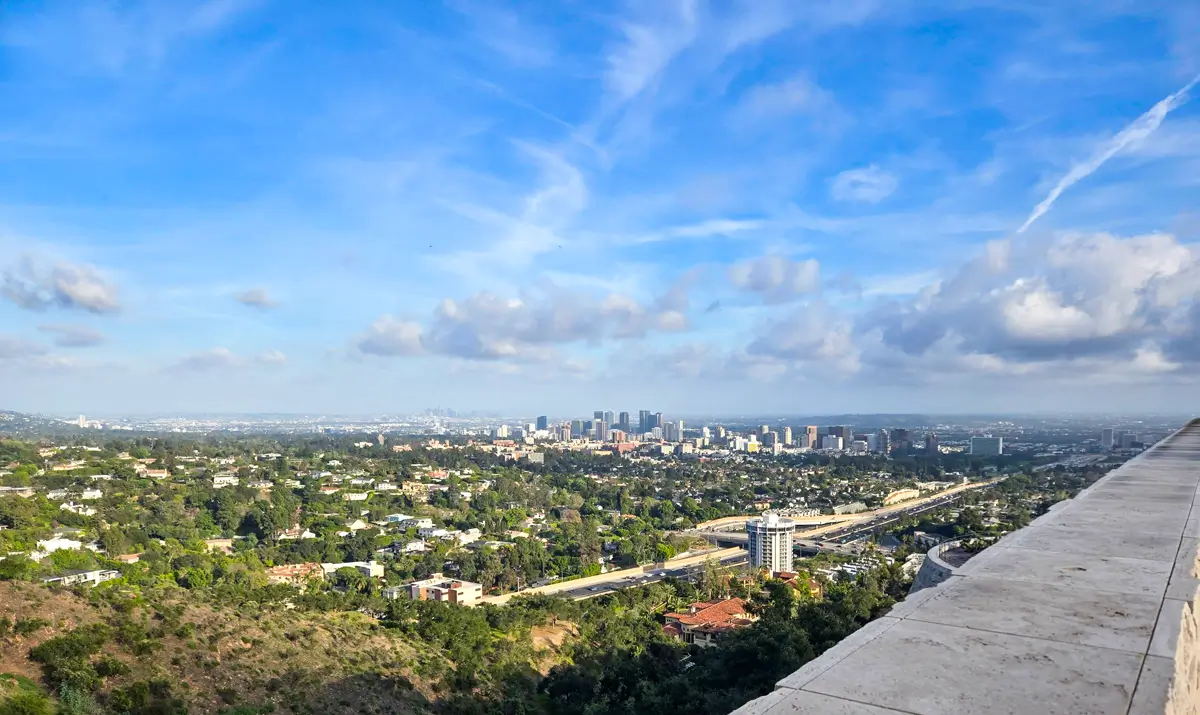
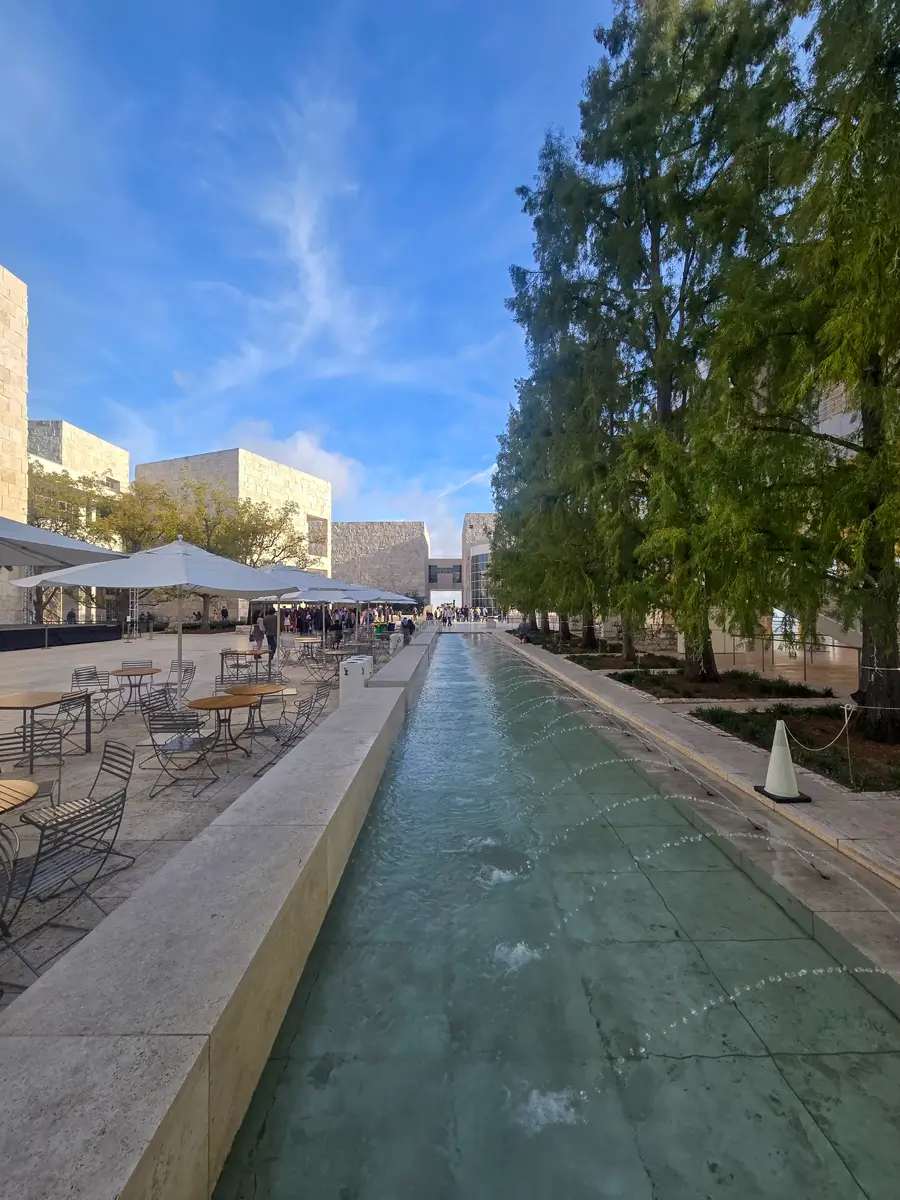
What makes this work: you’re at elevation with constant breezes, even on hot days. The travertine plazas provide shaded spots under trees. Tables and benches scatter throughout the grounds if you prefer not to sit on grass. The setting feels worlds away from typical LA park picnics — you get museum-quality landscaping, architectural backdrops, and views that stretch for miles.
Families set up on weekends with full spreads. Couples bring cheese boards for sunset hours on Saturdays when the museum stays open until 8 PM and parking becomes free after 6 PM. Solo visitors claim benches with sandwiches between gallery visits. The free admission means your only cost is parking, making it cheaper than most paid attractions where outside food is banned.
The museum requests you use provided trash receptacles and stay in designated picnic areas (not the formal garden beds). Beyond that, they’ve designed the space for this exact use. It’s a working art museum that doubles as an elevated park with world-class views.
Practical Matters
The Restaurant offers full-service dining with floor-to-ceiling windows framing the mountain views. Reservations help during lunch hours. The Cafe serves grab-and-go options: salads, sandwiches, pizza, hot entrees. Garden Terrace Cafe sits adjacent to the Central Garden with pastries and light fare. Coffee carts throughout the campus provide quick refreshments.
Free daily tours depart from the entrance hall: architecture tours explain Meier’s design choices, garden tours detail Irwin’s plantings, and collection tours highlight major works. Tour times appear on the daily schedule at the information desk. The GettyGuide app provides audio tours for self-guided visits.
The galleries stay cool year-round, so bring a light layer even on warm days. Comfortable shoes matter here: the complex covers significant ground with stairs, ramps, and outdoor pathways. Wheelchairs are available free at the coat check for those who need them.
Plan at least three hours for a first visit. Many people spend a full day, breaking up gallery time with garden walks, meals, and view-gazing from various terraces. Since admission is free (parking is not), you can return to finish what you missed or see new temporary exhibitions without financial pressure.
What Others are Saying
Nearby Curious Los Angeles Destinations
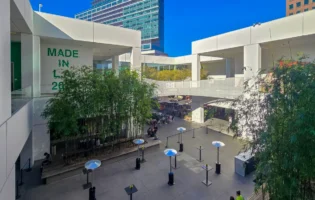
Hammer Museum
Free contemporary art museum presenting bold exhibitions, the acclaimed Made in LA biennial, and 300+ annual programs.
Bergamot Station Arts Center
Former 1875 train depot converted into Santa Monica's largest concentration of contemporary art galleries with free admission.
McCabe’s Guitar Shop & Venue
Historic Santa Monica guitar shop and intimate 150-seat listening room hosting acoustic music legends since 1958.
Eames House
Mid-century modern landmark where Charles and Ray Eames lived, worked, and proved prefab could be beautiful.
Greystone Mansion & Gardens: The Doheny Estate
55-room Tudor Revival mansion and 18-acre estate built by an oil tycoon in 1928, now a public park and one…
Annenberg Community Beach House
Historic Gold Coast estate with restored 1920s pool, splash pad, and beachfront amenities open to everyone, no membership needed.
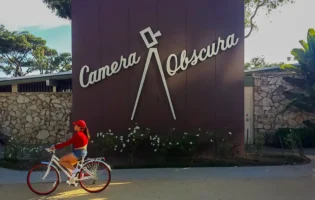
Camera Obscura
Historic 1898 optical device in a mid-century modern building, now home to rotating artist residencies and community workshops.
Chez Jay
Santa Monica's nautical steakhouse where Hollywood history lives on through candlelit dinners, peanut shells, and 66 years of celebrity stories.
Franklin Canyon Park
Six hundred acres of trails, wildlife, and Hollywood history between Beverly Hills and the Valley—where Andy Griffith skipped rocks.
Edwards’ Point (The Center of Los Angeles)
Hand-stamped plaque marking the calculated geographic center of Los Angeles, hidden along a trail in Franklin Canyon Park.
Picnic at The Getty on Other Sites