
Sunken City
Crumbling 1929 landslide ruins perched on San Pedro cliffs, covered in graffiti and offering dramatic Pacific views.
- See
Sunken City Details
Overview
Details
Experiencing Sunken City / Curious LA Field Notes
Quick Take
The Sunken City captures a moment of disaster suspended in time. When the ground beneath a San Pedro neighborhood started sliding into the ocean in 1929 at 11 inches per day, residents evacuated and most homes were moved, but two houses and several blocks of streets fell into the sea. The crumbling concrete ruins have since become a canvas for graffiti artists and a draw for photographers seeking dramatic coastal shots. The site tells a geological story about unstable land meeting ocean forces, and while officially off-limits due to safety concerns, it remains visible from safe vantage points along the clifftop.
The 1929 Disaster
George Peck built bungalows on clifftop land in the mid-1920s, selling oceanfront homes with panoramic Pacific views. Water and gas lines started breaking beneath buildings in January 1929. By April, visible cracks appeared in the ground. The land was sliding seaward at up to 11 inches daily, moving on unstable clay layers beneath the surface. Residents evacuated. Most homes were moved to safe ground, but two houses and approximately five acres of streets, sidewalks, and infrastructure tumbled into the ocean. The land dropped more than 50 feet below its original elevation before stabilizing in the mid-1930s.
Geologists studying the collapse discovered the fundamental problem: the rock structure and seaward-dipping strata created inherent instability that will continue for years. Similar landslides occur along this stretch of coast, with Rancho Palos Verdes spending an estimated $500,000 annually on repairs to roads that constantly shift and drop toward the ocean.
What Remains Today
Broken streets end abruptly at cliff edges. Concrete foundations sit at odd angles. Metal pipes and rebar protrude from fractured slabs. The entire area has become an outdoor gallery of graffiti art, with layers of tags, murals, and street art covering nearly every surface. Some pieces reflect local culture and community, others display abstract designs and political statements. The artwork changes constantly as new artists add their work.
The ruins sprawl across uneven terrain with steep drops and unstable footing. Sharp concrete edges and loose rocks make the area treacherous. About two dozen deaths have occurred here over the decades from falls and accidents. The ground remains geologically active with ongoing movement, though far less severe than the original 1929 slide.
Viewing Options
The area is officially closed to the public and surrounded by chain-link fencing with “No Trespassing” signs. Entry can result in fines up to $1000. Many people still enter through gaps in the fence, particularly at the western end near Point Fermin Park, but doing so carries legal and safety risks.
Safe viewing is possible from Point Fermin Park, which sits immediately adjacent to the fenced area. The park offers ocean views and paths along the cliff edge where you can see portions of the ruins below. The Point Fermin Lighthouse stands nearby, and the Korean Friendship Bell sits just north of the park.
Reopening Proposals
City officials have discussed proposals to legally open the upper section of Sunken City with controlled access. Plans under consideration would create a gated entry system that opens during daylight hours, level the top area, remove concrete tripping hazards, and establish a walking trail. The proposal gained renewed momentum in September 2025, with local residents and officials arguing that people enter anyway, and controlled access would be safer than the current situation. Concerns about liability for injuries remain the main obstacle to reopening.
The Bigger Picture
The Sunken City serves as a visible reminder of Southern California’s ongoing geological challenges. The Palos Verdes Peninsula sits in an area of active land movement, with marine erosion continually undercutting coastal bluffs. The site has been featured in numerous geological studies examining landslide mechanics and coastal instability. It represents one dramatic example of what happens when residential development meets unstable geology on oceanfront cliffs.
What Others are Saying
Nearby Curious Los Angeles Destinations
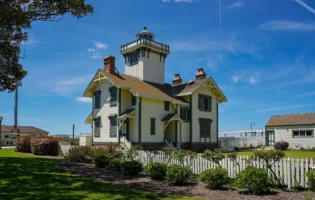
Point Fermin Lighthouse
Historic 1874 Victorian lighthouse with California redwood construction, original Fresnel lens, and guided tours up the tower
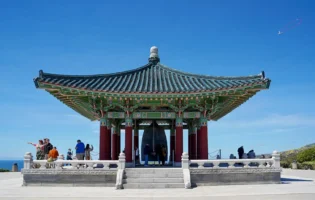
Korean Friendship Bell
17-ton bronze bell and traditional Korean pavilion overlooking the Pacific, honoring U.S.-Korea friendship and Korean War veterans.
Sunken City on Other Sites