
St. Elmo Village
Historic artist commune offering free art workshops, colorful murals, and community creativity in 1920s Craftsman bungalows
- See
- Shop
St. Elmo Village Details
- Saturday workshops: 11:00am-2:00pm
- Grounds accessible during workshop hours
- Call ahead for weekday visits
Overview
Details
Experiencing St. Elmo Village / Curious LA Field Notes
Quick Take
St. Elmo Village has spent five decades proving that art belongs to everyone. Two Midwestern artists bought a cluster of rundown bungalows in 1969 and built a working arts community that still provides free creative workshops to anyone who walks through the gate. The compound's famous ground mural spreads color across every path between studios where resident artists live and work. This is where Black Lives Matter LA held its founding meetings in 2013, where children learn to paint without formal instruction, and where Saturday morning workshops have run continuously since the 1970s.
A Living Art Experiment
Walk down St. Elmo Drive past single-family homes and apartment buildings. You might miss the entrance if you’re not watching carefully. Lush landscaping hides the gate, and only a small sign marks the property. But step through that entrance and color floods your vision.
A massive painted mural covers the ground. Not just a path but the entire courtyard spreads with rainbow swirls, geometric patterns, and abstract designs. The mural connects ten small Craftsman bungalows that date to the 1920s, when this property served as part of actress Mary Pickford’s horse farm. Each structure wears its own paint scheme. Bright murals cover walls. Sculptures made from car parts and reclaimed metal stand between cacti and native plants.
This is no museum. Artists live here. Fourteen residents occupy the bungalows and a larger apartment building on the property. They teach workshops, create new work, and maintain the grounds. Visitors walk past working studios where painters and photographers develop their craft.
The compound operates as a nonprofit that’s owned its property since 1971. That financial independence allows St. Elmo Village to keep rents low for resident artists and offer free programming to the public.
Saturday Workshops
Every Saturday brings free art instruction to anyone who shows up. No registration required. No age limits beyond a minimum of four years old for the youngest class.
From 11:00am to 12:30pm, children aged four through their teens gather for drawing and painting. They work with acrylics, pastels, pencils, and markers. The teaching philosophy rejects formal instruction. Students get materials and freedom to create. Teachers guide but don’t direct. The approach has roots in the founders’ belief that everyone possesses creative ability.
Computer graphics workshops run from 12:30pm to 2:00pm. Students aged ten and up learn Adobe Photoshop and Illustrator. They develop digital projects with hands-on instruction.
Black and white photography and filmmaking workshops teach traditional film techniques alongside digital storytelling methods. Check the website for current scheduling.
Historical Significance
Uncle and nephew Rozzell and Roderick Sykes arrived from the Midwest in the 1960s. Both painters, they worked the Los Angeles gallery circuit but faced indifference and discrimination. They wanted space outside mainstream art world structures.
In 1969 they acquired the bungalows for $60,000. The property was a mess. Rats and roaches infested the structures. Abandoned cars littered the grounds. The artists saw potential. They cleaned, painted, and transformed each building. They invited other artists to join them. They held their first Festival of Creative Survival to raise the down payment.
The compound incorporated as a nonprofit in July 1971. Tom Bradley, then a city councilman, helped secure additional funding. The Sykes brothers built workshop programs, artist residencies, and public events that continue today.
Rozzell Sykes died in 1994. Roderick continued running the Village with his wife Jacqueline Alexander-Sykes until his death in 2021. Jacqueline now serves as director and administrator.
In July 2013, after George Zimmerman’s acquittal in the Trayvon Martin case, a group of organizers met in St. Elmo Village’s art workshop. Artist and activist Patrisse Cullors, then a resident, called the meeting. That gathering laid groundwork for what became Black Lives Matter Los Angeles. The organization held several early meetings at the compound.
The Los Angeles City Council designated St. Elmo Village as a Historic-Cultural Monument on January 7, 2025. The official plaque was unveiled August 14, 2025.
What to Expect
The Village welcomes drop-in visitors during workshop hours. Walk the grounds, view the murals, watch artists at work. The atmosphere stays casual and welcoming. No tour guides lead you around. You explore at your own pace.
The rainbow ground mural dominates the central courtyard. Spend time looking at the details. The design represents diversity and community. Different patterns and colors flow into each other across the painted concrete.
Sculptures dot the gardens. Artists created these pieces from reclaimed materials, car parts, and found objects. A koi pond sits in a gated corner area with surrounding murals.
Look for the “Literacy” mural painted by Roderick Sykes in 1989. The piece was restored and relocated in 2015. It now holds permanent installation on-site.
The compound hosts an annual jazz and blues festival each summer. Drum circles happen throughout the year. These events draw neighborhood residents and visitors from across Los Angeles. Diana Ross, Jeff Bridges, and Edward James Olmos have all visited the Village over the decades.
Plan to spend 30 minutes to an hour walking the grounds. Longer if you attend a workshop or catch a special event. The compact size makes the visit manageable, but there’s plenty to see if you take time to notice the details.
Making the Most of Your Visit
Come on Saturday morning if you want to see the workshops in action. Children fill the painting studio with creative energy. The sounds of instruction and artistic experimentation fill the air.
Bring cash if you want to support the Village with a donation. They operate entirely on contributions and grants. Every dollar funds art supplies, building maintenance, and programming.
Respect that this is both a working arts space and residential community. Keep noise levels reasonable. Ask before photographing resident artists or their work in progress.
The Village keeps no formal visiting hours outside of Saturday workshops. Call ahead at (323) 931-3409 if you want to confirm someone will be available to answer questions.
What Others are Saying
Nearby Curious Los Angeles Destinations
Museum Row
Five world-class museums along one walkable half-mile of Wilshire Blvd — art, fossils, film, cars, and craft all within a…
Marciano Art Foundation
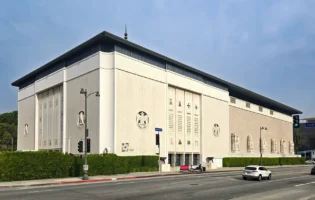
Contemporary art museum in a 1961 Masonic temple, featuring rotating exhibitions from a 1,500-piece collection spanning 1990s to present
Pizzeria Sei
Tokyo-style Neapolitan pizza considered some of the best in the world, served at intimate counter seating around a wood-fired oven.
St. Elmo Village on Other Sites