
SS Dominator Shipwreck
WWII-era freighter wreckage scattered across rocky Palos Verdes coastline, accessible via challenging cliff-to-beach hike.
- Do
- See
SS Dominator Shipwreck Details
- Technically open 24 hours, but visit during the day • Best visited at low tide
Overview
Details
Experiencing SS Dominator Shipwreck / Curious LA Field Notes
Quick Take
The SS Dominator delivers a rare chance to examine a shipwreck up close without scuba gear or a boat. This isn't a pristine vessel frozen in time—it's a rust-stained collection of metal fragments being slowly consumed by waves, which makes it more honest than any museum display. The half-mile trek over loose rocks and slippery cobblestones filters out casual visitors, leaving those who make the effort with a quiet beach, functioning tide pools, and hull sections you can touch. Plan on low tide, wear boots with ankle support, and accept that this hike demands more physical effort than most LA adventures.
Getting There
Two trails descend the cliffs from Paseo Del Mar. The easier route starts near Agua Amarga Canyon (park around 2225 Paseo Del Mar). Look for the trailhead set back from the cliff edge—you’ll see a weathered sign marking the path. The dirt trail drops steeply through loose powder that feels like talcum under your feet. Go slow. The slope catches many hikers off guard.
The alternative route uses the drain pipe trail near the intersection of Paseo Del Mar and Cloyden Road. This path follows a large storm pipe down to the beach and offers slightly more stable footing. Both routes take about 10 minutes down (longer coming back up).
Once you reach the rocky beach at Lunada Bay, turn north and start picking your way around Palos Verdes Point. There’s no maintained trail—just 30 minutes of boulder-hopping and careful steps across cobblestones the size of grapefruits. Stay higher up near the cliff base where the rocks are more stable. Watch for loose stones that shift under weight.
The Wreckage
You’ll spot rust stains on the rocks before you see the actual ship. The main pieces come into view as you round the point: two sections of hull turned orange-brown by decades of salt spray, a large crane with gears fused together but still showing their original teeth and mechanisms, and countless smaller fragments scattered up and down the shore.
The crane is the most intact piece. Walk around it and you’ll see how the lifting mechanism’s parts have rusted into a single mass while maintaining their original shapes. Hooks, chains, and gear teeth remain visible despite years of wave action. The hull sections, each roughly 15-20 feet across, show the interior structure of the ship—rivets, support beams, and layers of metal that have peeled apart like pages in a waterlogged book.
Smaller debris extends hundreds of yards in both directions. You’ll find metal plates, pipes, mechanical components, and even remnants of the bulldozer that was brought in during the failed salvage operation. Everything is sharp—watch your hands and ankles.
Making the Most of It
Go at low tide. Most of the wreckage sits just above the waterline, and high tide submerges much of it or makes access dangerous. Check tide schedules before you drive out. The difference between seeing scattered rust stains and examining actual ship components comes down to timing.
The rocky beach offers good tide pools between wreckage pieces. At low tide, you’ll find anemones, crabs, small fish, and sea stars in the pools near the cliff base. The offshore kelp forest attracts divers and spearfishermen, though visibility varies with sand churn.
Bring water, sunscreen, and food in a backpack. There are no facilities anywhere near the trailheads or beach. The sun reflects off the rocks and water with surprising intensity—shade is nonexistent. Plan for at least two hours round-trip from your car.
What to Know
The terrain works against you. Loose rocks twist ankles, slippery seaweed hides footing hazards, and the constant uneven surface wears out legs faster than a flat trail twice as long. Flip-flops and sandals guarantee a miserable time. Wear hiking boots or trail runners with good ankle support and grip.
Kids can make this hike, but it requires close supervision. The rusty metal has sharp edges everywhere. Pets struggle with the rocks—most sources recommend leaving dogs at home.
The location sees few visitors compared to other Palos Verdes beaches. On weekdays, you might have the wreck to yourself. Weekends bring more hikers but never crowds. The physical barrier filters out most tourists.
This isn’t a quick photo stop. The round-trip demands real effort—steep climbs, careful footing, and acceptance that your legs will be tired afterward. But touching a WWII-era ship’s hull while waves crash behind you beats looking at maritime history through museum glass.
What Others are Saying
Nearby Curious Los Angeles Destinations
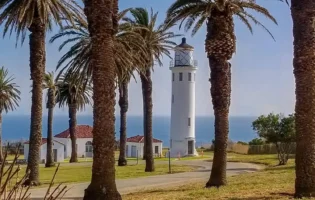
Point Vicente Lighthouse
Historic 1926 lighthouse on dramatic Palos Verdes cliffs, perched 197 feet above the Pacific with century-old Fresnel lens and ghost…
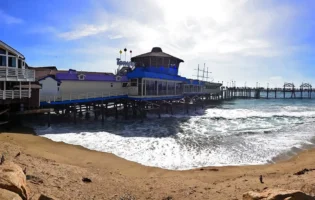
Old Tony’s
Intact mid-century seafood restaurant, (in)famous cocktails, & sweeping Pacific views in a landmark Redondo Beach Pier location
SS Dominator Shipwreck on Other Sites