
Point Vicente Lighthouse
Historic 1926 lighthouse on dramatic Palos Verdes cliffs, perched 197 feet above the Pacific with century-old Fresnel lens and ghost legend.
- Do
- See
Point Vicente Lighthouse Details
- Park grounds: Dawn to dusk
- Point Vicente Interpretive Center: Daily 10am-5pm
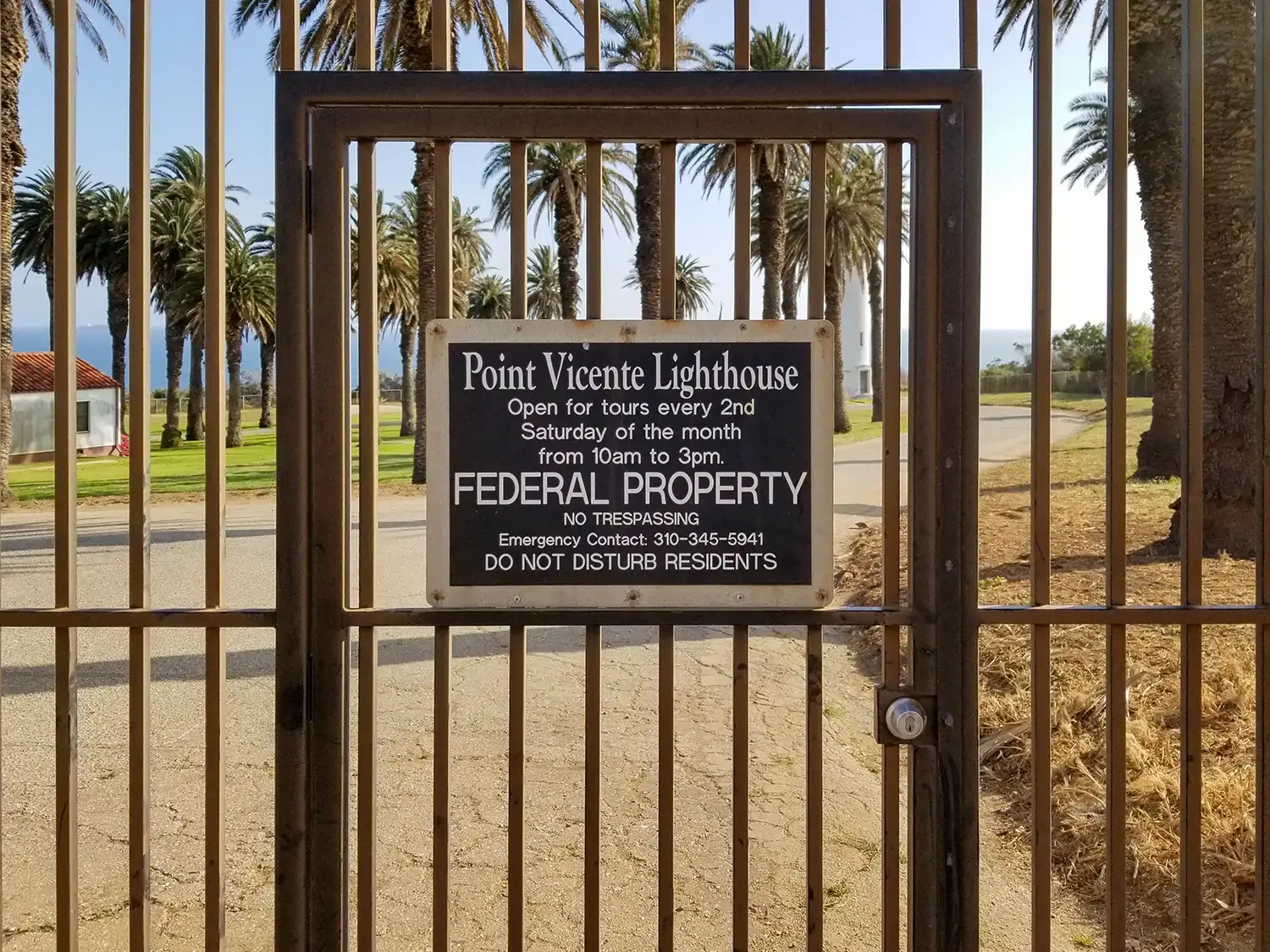
- Lighthouse tours: 2nd Saturday of month, 10am-3pm (except March when tours run 1st Saturday 10am-4pm for Whale of a Day event)
Overview
Details
Experiencing Point Vicente Lighthouse / Curious LA Field Notes
Quick Take
Point Vicente Lighthouse draws photographers and maritime history buffs to its dramatic perch on the Palos Verdes Peninsula's southwestern tip. The 1926 beacon still guides ships through the Catalina Channel, while monthly tours reveal its nearly century-old operation. The adjacent Interpretive Center houses the lighthouse's original Paris-crafted lens and serves as one of Southern California's best land-based whale watching stations, with volunteers tracking Pacific gray whale migrations from December through May. The site's ghost story adds an extra layer of intrigue to what's already a spectacular coastal destination.
Lighthouse Tours and History
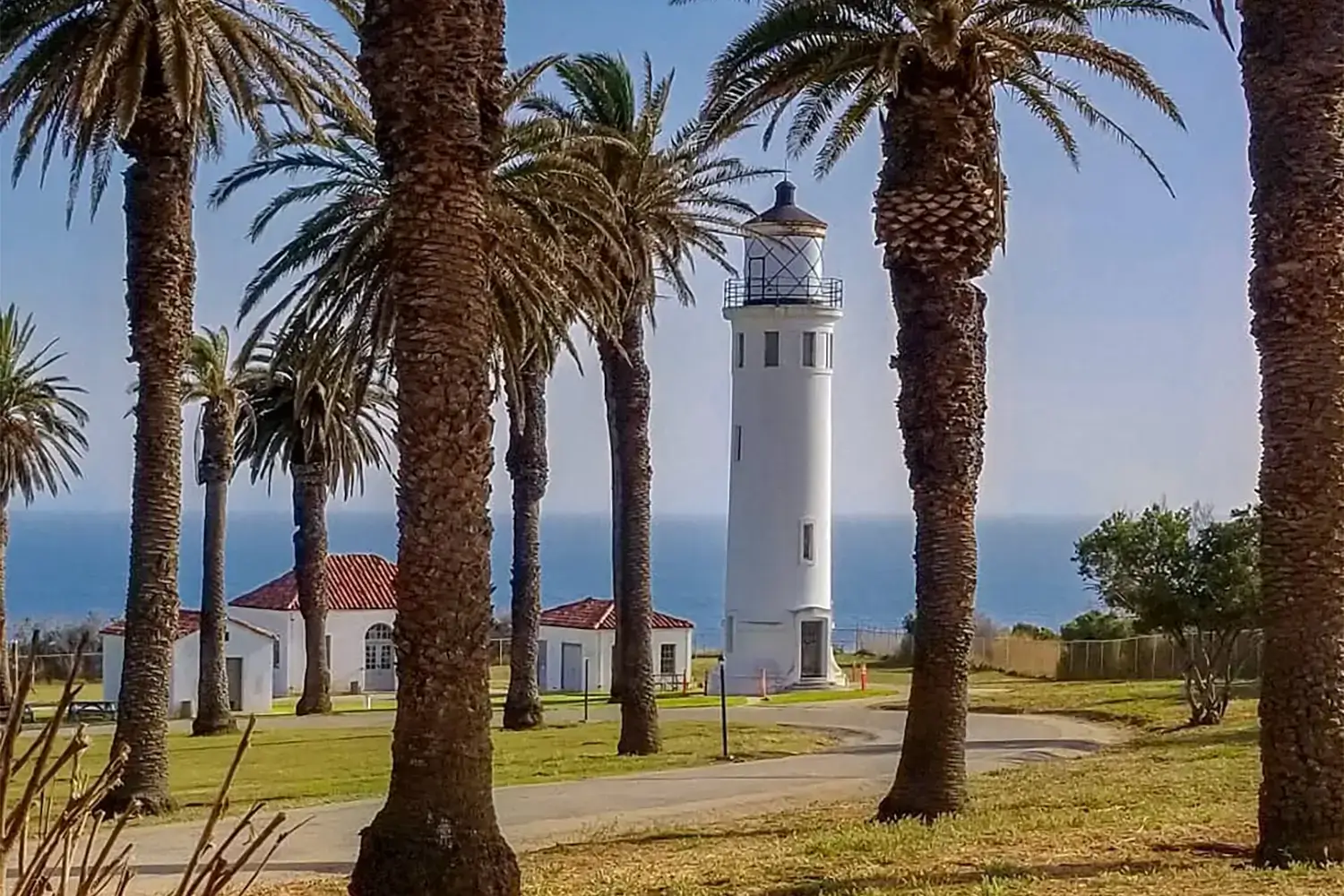
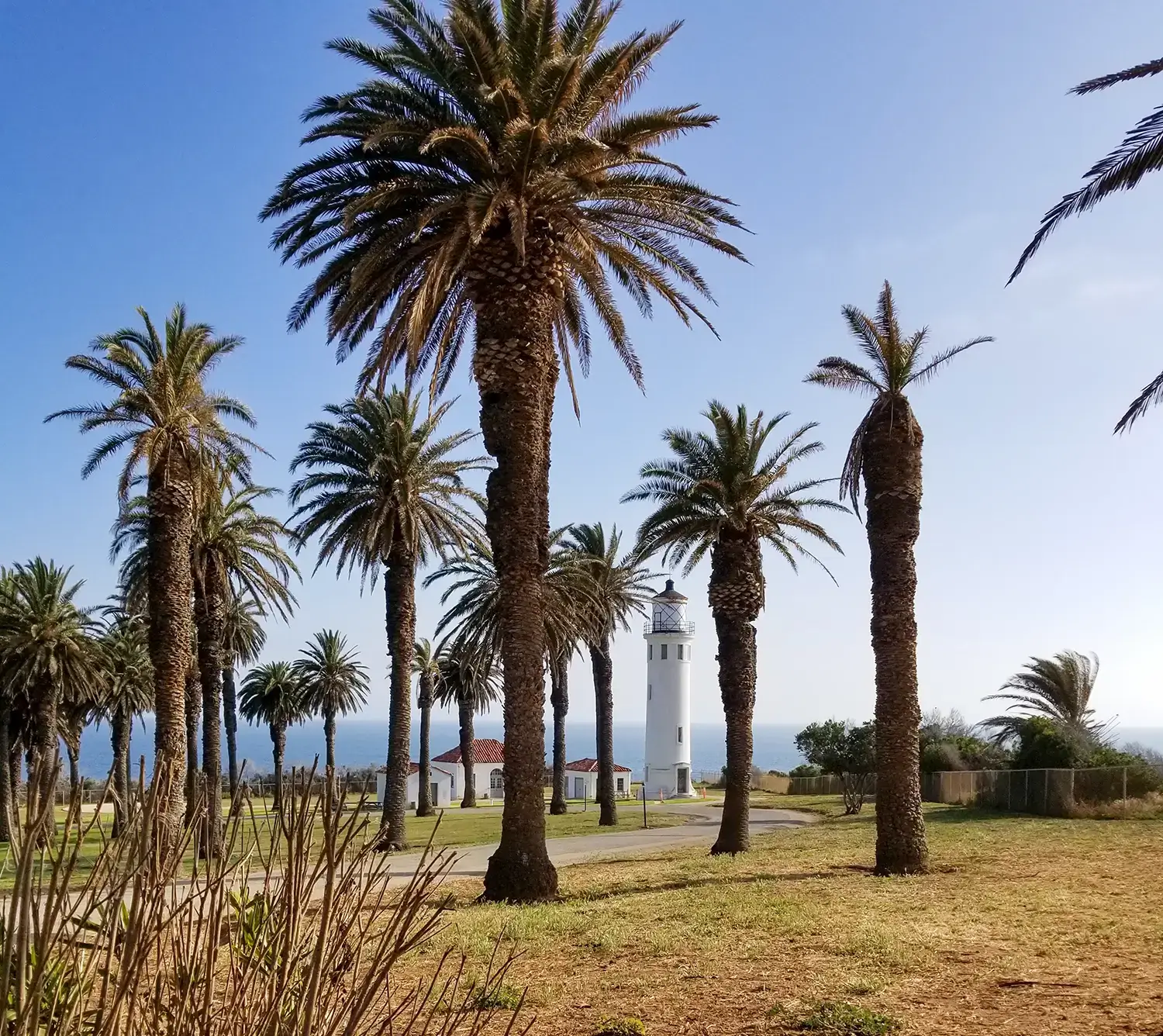
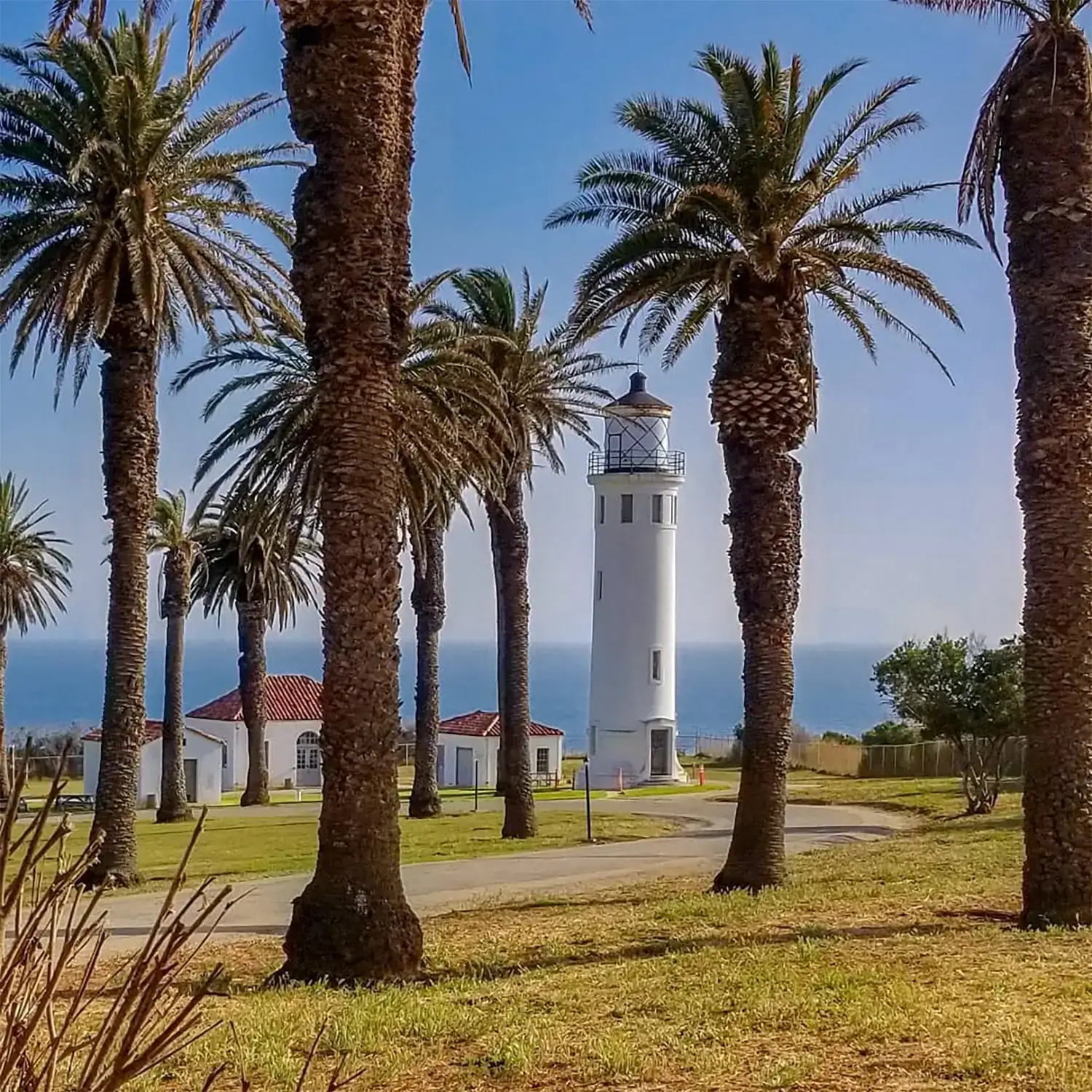
Tours run the second Saturday of each month from 10am to 3pm, when Coast Guard Auxiliary volunteers open the grounds and small museum housed in the old fog signal building. You can’t climb the tower itself anymore, but walking the grounds gives you a sense of what lighthouse keepers experienced from 1926 until automation in 1971. The three Spanish Colonial Revival keeper’s dwellings still stand nearby, though they’re no longer occupied.
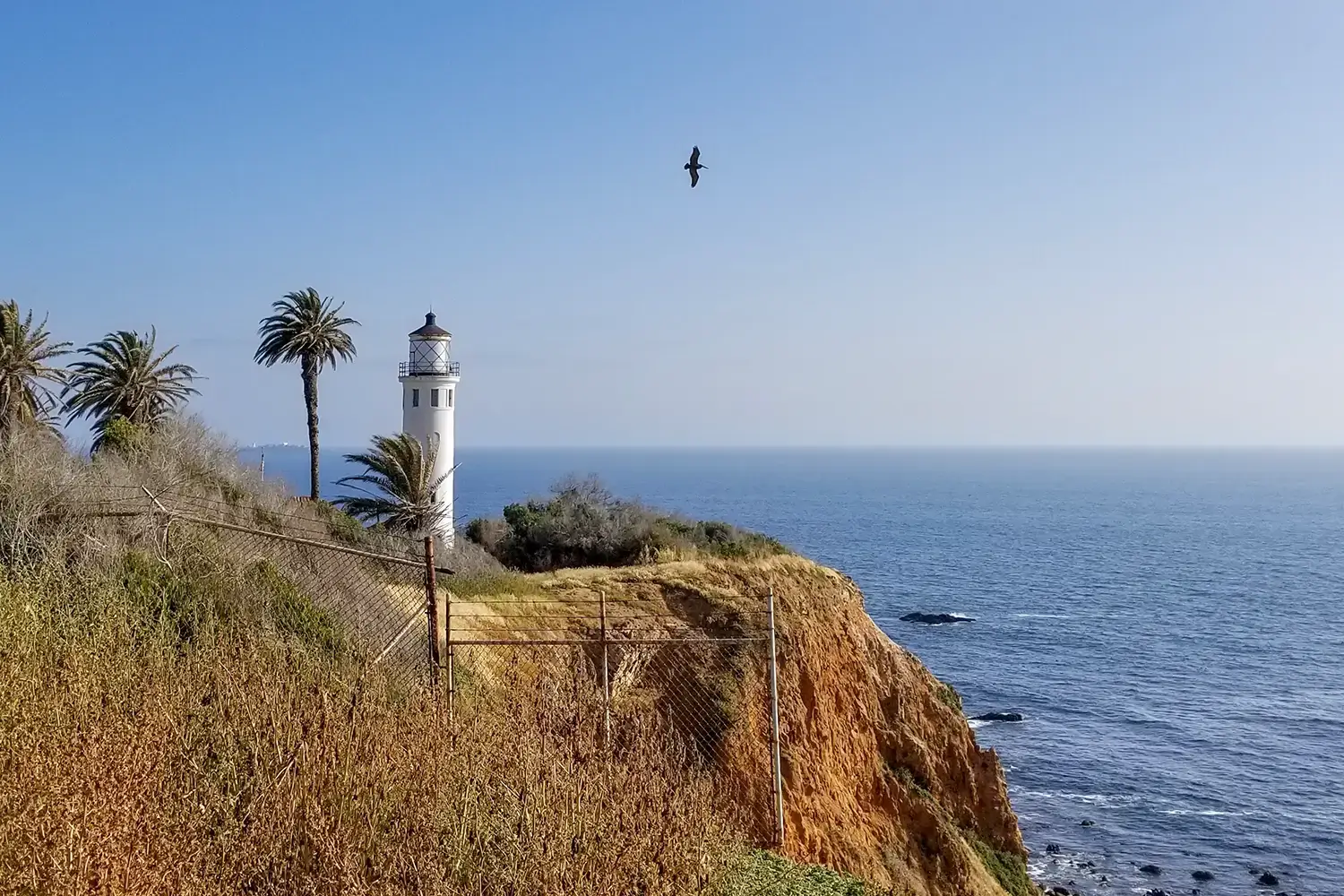
The lighthouse construction came after ship captains repeatedly petitioned Congress, citing the dangerous rocky shoals between Point Fermin and Point Hueneme. When it finally opened in April 1926, newspapers called it “the brightest beacon” in Southern California. The cylindrical tower rises 67 feet from a 130-foot cliff, placing the light source nearly 200 feet above sea level. During World War II, the beam was dimmed to 25 watts to avoid aiding enemy ships. After the war, neighbors complained about the brightness, and the Coast Guard painted the landward windows white. Light refracting through those painted panes created shadow patterns that sparked the legend of a ghostly woman pacing the tower.
The Ghost of Point Vicente
Several versions of the ghost story exist. Some claim she was the widow of the first lighthouse keeper who fell from the cliffs on a foggy night. Others say she leaped into the sea when her sailor lover was killed in a shipwreck. The apparition supposedly appeared most often right after World War II, when the bright beacon returned to full power. In 1955, keeper Joe May suggested the thick white paint on the windows was causing optical illusions as the rotating lens swept past. A thicker coat of paint that year allegedly ended the sightings, though believers insist the Lady still walks the tower.
Point Vicente Interpretive Center
The real treasure sits next door at the Interpretive Center, open daily from 10am to 5pm with free admission. The museum showcases the lighthouse’s original five-foot Fresnel lens, removed from the tower in 2019 after 93 years of service. The hand-ground glass prisms created by Paris craftsmen in 1886 are remarkable pieces of 19th-century engineering. You can see exactly how a 1,000-watt bulb focused through this lens produced a beam visible 20 miles out to sea.
Other exhibits cover the peninsula’s natural and cultural history, from Tongva Indians and Spanish ranchers to Japanese farmers and Portuguese whalers. An 11-foot sperm whale jaw dominates one gallery. Interactive displays follow gray whales and birds along their coastal migrations. A life-sized gray whale model and simulated sea cave appeal to kids.
Whale Watching and Coastal Trails
The clifftop patio outside the Interpretive Center transforms into a whale watching station from December through May. Volunteer spotters from the American Cetacean Society maintain daily logs of gray whale sightings during the annual migration between Arctic feeding grounds and Baja California breeding lagoons. They welcome visitors to look through spotting scopes and share what they’re seeing. Peak season runs late December through April.
The easy Seascape Trail runs about 1.5 miles along the bluffs, offering constant ocean views with minimal elevation change. Benches line the path, and the entire route is paved or packed gravel. You can walk from the Interpretive Center north toward Terranea Resort or south along the cliffs past native plant gardens. Dogs are welcome on leash. The area gets busy on weekends and during whale season, but weekday mornings remain relatively quiet.
Sunset views from these cliffs rank among the best on the peninsula, with Catalina Island visible on clear days. The combination of dramatic geology, maritime history, and active wildlife watching makes this more than just a pretty lighthouse.
Point Vicente Lighthouse on Other Sites