
Olvera Street
Historic Mexican marketplace recreating old Los Angeles, with family-run shops, traditional food, and year-round cultural celebrations since 1930.
- Do
- Eat & Drink
- See
- Shop
Olvera Street Details
- Daily 10am-7pm
- Individual shops and restaurants may vary
Overview
Details
Experiencing Olvera Street / Curious LA Field Notes
Quick Take
Olvera Street sits on the site where Los Angeles began in 1781, and walking its brick pavement means stepping onto ground that's seen nearly 250 years of California history. The 1930 marketplace was created as a romanticized vision of Mexican heritage, but nearly a century later, many of the shops are still run by the same families who opened them on that first Easter Sunday. You get taquitos that taste the same as they did in 1934, handmade goods from generational merchants, and cultural festivals that draw thousands. It's part museum, part marketplace, and fully committed to keeping these traditions alive even as downtown LA towers above it.
A Living Timeline
Walk through the archway at Cesar Chavez Boulevard and the city noise drops away. Brick pavement stretches ahead under a canopy of pepper trees, lined with painted stalls and adobe buildings that predate California statehood. The Avila Adobe anchors the north end, its three-foot-thick walls built in 1818 when this was still Mexico. Inside, the rooms are furnished as they might have looked in the 1840s, when Commodore Stockton briefly used it as military headquarters during the Mexican-American War.
The Sepulveda House next door tells a different chapter. Built in 1887, it blends Mexican courtyard tradition with American business architecture. The restored kitchen shows what daily life looked like for a boarding house family at the turn of the century. Both buildings offer free entry and give context to the marketplace that surrounds them.
The Marketplace Experience
The puestos start around mid-morning. Some stalls sell leather goods (belts, wallets, sandals), others display embroidered clothing or hand-painted pottery. Many items come from Mexico, but the vendors are local families who’ve held these spots for decades. You can find everything from inexpensive souvenirs to quality handcrafts, and prices are generally negotiable if you’re buying multiple items.
The atmosphere shifts between quiet weekday mornings and busy weekend afternoons when mariachi bands stroll past and folkloric dancers perform in the plaza. The music is real, not recorded. If you stop to watch, tipping is customary.
Food That’s Been Here
Cielito Lindo opened in 1934 and still makes taquitos the same way. They fry them in large batches, then ladle on a tangy avocado-tomatillo sauce that’s become legendary. The stand is at the northern entrance, and there’s usually a line. You can eat standing at the small counter or take your order to the plaza.
La Golondrina occupies the Pelanconi House, LA’s first brick building. The sit-down restaurant serves enchiladas, mole, and other traditional dishes in what was originally an 1850s wine merchant’s quarters. Las Anitas, founded in 1947, is another family operation with nearly 80 years of history. Several smaller food stalls offer tamales, churros, and fresh horchata.
The food here leans traditional rather than trendy. Don’t expect fusion or modern interpretations. This is the Mexican cooking that’s been served in LA for generations.
Cultural Calendar
Dia de los Muertos runs for nine nights in late October and early November, with nightly processions, community altars, and theatrical performances. The Blessing of the Animals happens the Saturday before Easter. Las Posadas recreates the journey of Mary and Joseph each December. These aren’t tourist shows created for visitors—they’re traditions the merchant community has maintained since 1930.
During major events, the crowds can be substantial. If you prefer a quieter visit, come on a weekday morning when shops are opening and you can actually talk with the merchants.
Making the Most of It
Budget an hour if you’re just browsing and eating. Add another hour for the Avila Adobe and Sepulveda House. Free docent-led walking tours run Tuesday through Saturday at 10am, 11am, and noon from the visitor center.
The street is entirely pedestrian and flat, with accessible paths throughout. Restrooms are available in the visitor center building. Union Station is directly across Alameda Street, making this an easy stop if you’re using public transit.
While on Olvera Street, look along the brick-paved walkways for a line of zig-zag patterned bricks that bisects the street (near the blue fountain). This line of bricks marks where the Zanja Madre (“Mother Ditch”) once ran. The Zanja Madre was “the original aqueduct that brought water to the Pueblo de Los Angeles from the Río Porciúncula (Los Angeles River).” [source]
The surrounding El Pueblo Historical Monument includes additional museums (all free admission), the old firehouse, and the America Tropical Interpretive Center displaying David Alfaro Siqueiros’s controversial 1932 mural. Chinatown is a 15-minute walk north.
Olvera Street has its critics who call it a sanitized version of Mexican culture created for tourist consumption. That’s partly true. But it’s also a place where real families have built real businesses over generations, serving food and preserving traditions that might have disappeared otherwise. It exists in that complicated space between authentic history and constructed memory, which makes it more interesting than either would be alone.
What Others are Saying
Nearby Curious Los Angeles Destinations
Our Lady Queen of Angels Catholic Church
Los Angeles' oldest church, founded in 1814, featuring Spanish Colonial architecture, gilded altar, and continuous Catholic worship.
Philippe The Original
Historic downtown spot serving the original French dip sandwich since 1918 in a no-frills cafeteria with sawdust floors.
Triforium
Towering 1970s sculpture adorned with 1,494 multicolored glass prisms intended to sync light and music but plagued by technical failures.
Cathedral of Our Lady of the Angels
Downtown's postmodern architectural statement serves five million Catholics with alabaster light, saint tapestries, and a crypt beneath.
The Geffen Contemporary at MOCA
Frank Gehry-designed warehouse gallery showcasing large-scale contemporary art installations in Little Tokyo's industrial-chic space.
Chinatown
Historic neighborhood where Chinese American culture lives through food markets, temples, red-lantern plazas, and generations of family-run businesses
Little Tokyo
Historic five-block cultural district celebrating Japanese American heritage through authentic dining, shopping, and annual festivals since 1885
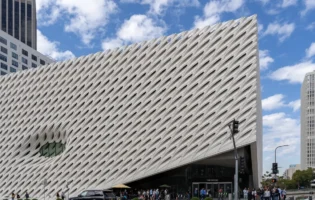
The Broad
Free contemporary art museum in downtown LA featuring postwar masterworks and Yayoi Kusama's Infinity Mirror Rooms.
Bradbury Building
A Victorian light-filled atrium hidden behind a plain brick facade, famous as the setting for Blade Runner's climactic scenes.
The Museum of Contemporary Art, Los Angeles
Los Angeles's only museum dedicated exclusively to contemporary art, showcasing 8,000+ works from 1940 to today in a striking red…
Olvera Street on Other Sites