
Old Town Music Hall
Historic 1921 theater showcasing silent and classic films with live accompaniment on a rare 2,600-pipe Mighty Wurlitzer organ.
- Do
- See
Old Town Music Hall Details
- Saturday and Sunday: 2:00 PM - 10:30 PM
- Closed Monday-Friday
Overview
Details
Experiencing Old Town Music Hall / Curious LA Field Notes
Quick Take
Movies were never truly silent. They had music. Old Town Music Hall keeps that tradition alive with one of the few remaining theater pipe organs still performing its original job. Each weekend brings multi-generational audiences who settle into rows of seats facing not just a screen but a working piece of 1920s engineering. The organ fills the small space with sounds no recording can capture. You hear pipes whooshing to life, watch the organist work four keyboards and dozens of switches, see the percussion instruments strike in time with the action. It's cinema as live performance, the way audiences experienced it before synchronized sound existed.
The Theater Experience
The building itself tells stories before the lights dim. Walking into Old Town Music Hall means entering a space that opened in 1921 to entertain Standard Oil refinery workers. The 188 seats face a stage framed by velvet curtains and lit by crystal chandeliers. The scale feels personal. You can see the organ console clearly from any seat.
Shows follow a format that builds anticipation. Box office opens 30 minutes early. Arrive then to grab seats and watch the theater fill. The lobby sells coconut macaroons baked in-house. Pre-show conversations happen easily in the small space. Strangers compare notes on which films they’ve seen before.
The Mighty Wurlitzer
The organ dominates the stage. More than 2,600 pipes rise behind the curtains. The console sits front and center with four keyboards stacked like steps. The organist controls everything from there: pipes that create melodies, percussion instruments for sound effects, even a grand piano worked into the system. A 10-horsepower turbine powers the whole contraption with compressed air.
Before the feature, you get a demonstration. The organist explains how it works while playing songs from the era. You hear drums rattle, cymbals crash, a xylophone chime. The pipes light up in rotating colors. Sound doesn’t come from speakers. It fills the room from multiple directions as different pipe sections activate.
A sing-along follows with lyrics projected on screen. The audience joins in on standards from the 1920s and 30s. People who came alone sing with groups they just met. Then a comedy short, often from the silent era with organ accompaniment. These typically run 10-20 minutes and draw genuine laughs.
The Main Feature
Silent films here work differently than watching at home. The organ responds to what happens on screen. A character runs, the tempo quickens. Someone sneaks around, the music drops to suspenseful notes. Comedy gets bouncy ragtime. Drama swells with emotion. The organist improvises within the structure, making each screening unique.
Classic sound films also screen regularly. Seeing a Marx Brothers comedy or a 1950s musical on a big screen with an engaged audience changes the experience. Jokes land harder. Musical numbers feel grander. The prints show grain and scratches that remind you these films existed as physical objects passed through projectors for decades.
Planning Your Visit
Shows run Saturday and Sunday only. Matinees start around 2:30pm, evening screenings around 8:15pm. Check the website for the current schedule. Films change weekly. Special events include the annual Laurel and Hardy Film Fest, Christmas programs, and October horror classics like Nosferatu and Frankenstein.
Tickets cost $10 general admission, $8 for seniors. Cash or check only at the box office. No advance online purchase system exists. Popular screenings can sell out, especially holiday shows.
The lot next door offers free parking on weekends. Street parking throughout El Segundo costs nothing. A bar sits directly across Richmond Street if you want drinks or food before or after. The theater sells limited snacks and beverages but nothing substantial.
Plan to spend about three hours for a full program. Bathrooms are small. The theater has no modern accessibility features but staff will assist as needed. The intimate size means late arrivals disrupt the experience for others. Get there when the box office opens.
Old Town Music Hall attracts families, film buffs, and curious first-timers. Regulars know each other by sight. The nonprofit status shows in the operation: volunteers staff many positions, the building needs ongoing care, and ticket prices barely cover costs. It survives on donations and the dedication of people who believe this type of cinema experience deserves preservation.
You leave understanding why silent films dominated entertainment for three decades. With live music, they worked. The stories translated across language barriers. The organ could shift mood instantly. Modern viewers accustomed to dialogue and sound effects discover these films told complete stories through images, music, and physical performance. Charlie Chaplin remains funny. Buster Keaton’s stunts still amaze. The technical craft of 1920s filmmaking holds up when presented properly.
What Others are Saying
Nearby Curious Los Angeles Destinations
Dockweiler Beach
Three-mile stretch of sand where bonfires, RV camping, hang gliding, and LAX jet planes create a uniquely coastal Los Angeles…
The Harbor Room
LA's tiniest bar and the 3rd smallest in the country - this spot is refreshing holdout of a classic neighborhood…
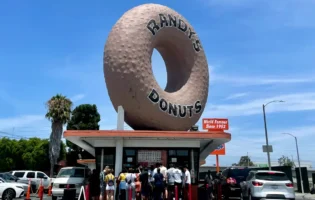
Randy’s Donuts
Historic 24-hour donut shop crowned by a 32-foot steel and concrete donut, serving fresh handmade pastries since 1953.
Marina del Rey Water Bus
Open-air summer water taxi connecting eight marina destinations for $1 rides through LA's largest small-craft harbor.
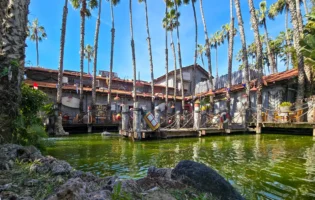
The Warehouse Restaurant
Themed, all-wood, waterfront steakhouse and seafood restaurant built from reclaimed shipyard materials, serving marina views since 1969.
Pann’s Restaurant
Family-run 1950s Googie diner serving classic breakfast and Southern comfort food in a time capsule of space-age architecture.
Old Town Music Hall on Other Sites