
Octavia Lab & DIY Memory Lab
Free public makerspace with 3D printers, laser cutters, recording studios, and tools for creating everything from music to fashion.
- Do
Octavia Lab & DIY Memory Lab Details
Overview
Details
Experiencing Octavia Lab & DIY Memory Lab / Curious LA Field Notes
Quick Take
Public libraries aren't just for books anymore. Octavia Lab is a full production facility within the Central Library where anyone with a library card can record music, 3D print replacement parts, laser-engrave gifts, or rescue deteriorating family videos. The equipment would cost thousands to own privately, but here you can learn to use professional tools through hands-on experimentation. People come in to make T-shirt lines, edit student films, digitize wedding photos from the 1960s, or simply try something new.
What You Can Make
Walk into Octavia Lab and you enter a working creative studio. Ten Apple computers line one wall, all loaded with Adobe Creative Cloud for graphic design and video editing. Two large 3D printers hum in their corner, slowly building objects layer by layer from digital files. The laser cutter sits ready to burn precise patterns into wood, leather, or acrylic. Sewing machines wait at another station for fabric projects.
The layout feels open and accessible. Equipment stations spread throughout the 3,000-square-foot space, each with instructional materials nearby. You can watch someone laser-cutting custom wine glasses at one table while another person edits a podcast recording in a soundproof booth. A father and daughter might be designing a 3D-printed train track replacement. The mix of projects makes it clear that people use this space for real work, not just casual dabbling.
The recording studio gets booked weeks in advance. Musicians come to track full albums. Students edit documentary films. Podcasters record interviews with professional microphones and mixing boards. The photography studio provides backdrops, lighting equipment, and cameras for product shots or portraits. Two smaller podcast booths handle voice recording and livestreaming.
Learning By Doing
Staff won’t hold your hand through projects. This works as a do-it-yourself space where you figure things out. Computers have access to LinkedIn Learning tutorials and other online resources. Instruction manuals sit on shelves near each equipment station. Staff members set up equipment, handle troubleshooting, and answer technical questions, but they won’t teach you step by step.
Most people adapt quickly. The laser cutter needs a vector design file, which you can create using free software like Inkscape. The 3D printers accept standard STL files. The sewing machines work like any other sewing machine. If you already know the basics of design or fabrication, you can jump right in.
Preserving Memories
The DIY Memory Lab occupies its own section in the back. This specialized station converts old media into digital files. VHS tapes, cassette recordings, printed photos, Super 8 film, 16mm reels, all can be digitized here using archival-grade equipment. People bring shoeboxes of family photos from the 1950s or home movies from childhood that exist only on degrading film stock.
Using the Memory Lab requires attending an orientation session first. The equipment handles delicate materials and the staff wants everyone to know proper procedures. Book your orientation and digitization sessions by phone. Some staff assistance is available Wednesday afternoons and Friday afternoons.
Making It Work For You
Call (213) 228-7150 to reserve specific equipment. Popular items like the recording studio need booking a week ahead. The 3D printers and laser cutter work on two-hour time blocks. Most projects fit that window.
Bring your own materials. The lab provides filament for 3D printing, but you need to supply wood for laser cutting, fabric for sewing, or vinyl for the cutter. This keeps the service free while giving you control over materials quality.
The first three hours of 3D printing cost nothing. After that, prints run 50 cents per 30 minutes, capped at $10 maximum. Everything else stays completely free. One free poster print per week comes with membership.
Save your work to a flash drive. The computers wipe their hard drives between users for privacy. Video projects might need an external hard drive given file sizes.
Other Labs
The Los Angeles Public Library also provides the Koreatown Media Lab within the Pio Pico Koreatown Library. “The Koreatown Media Lab is a makerspace and business center with high-quality, professional-grade computer hardware, software, and equipment to support library patrons with their educational, entrepreneurial, and creative endeavors.”
What Others are Saying
Nearby Curious Los Angeles Destinations
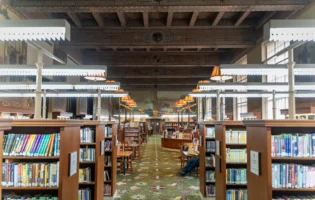
Los Angeles Central Library
Downtown's 1926 architectural landmark combining historic Art Deco design with modern library services across two connected buildings
Bonaventure Hotel & BonaVista Lounge
Downtown's only revolving cocktail lounge inside five iconic cylindrical glass towers that redefined futuristic architecture in 1976.
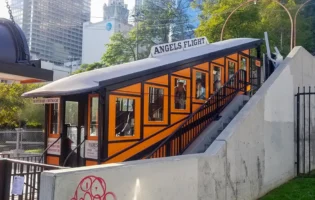
Angels Flight Railway
Historic 1901 funicular railway connecting downtown Los Angeles to Bunker Hill in a 298-foot journey up the city's steepest grade.
The Museum of Contemporary Art, Los Angeles
Los Angeles's only museum dedicated exclusively to contemporary art, showcasing 8,000+ works from 1940 to today in a striking red…
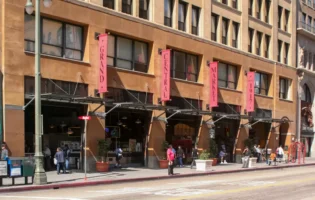
Grand Central Market
Downtown's oldest food hall serving up LA's multicultural flavors since 1917 in a historic Beaux-Arts landmark
The Last Bookstore
California's largest new and used bookstore housed in a 1914 bank building with book tunnels, literary labyrinths, and artist studios.
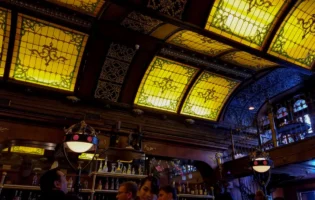
The Wolves
Belle Époque cocktail bar inside the historic Alexandria Hotel, featuring house-made ingredients and period-authentic 1900s design.
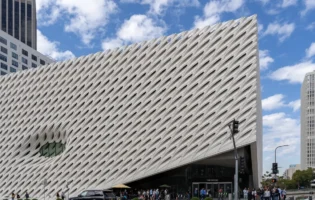
The Broad
Free contemporary art museum in downtown LA featuring postwar masterworks and Yayoi Kusama's Infinity Mirror Rooms.
Bradbury Building
A Victorian light-filled atrium hidden behind a plain brick facade, famous as the setting for Blade Runner's climactic scenes.
Cathedral of Our Lady of the Angels
Downtown's postmodern architectural statement serves five million Catholics with alabaster light, saint tapestries, and a crypt beneath.