
Marciano Art Foundation
Contemporary art museum in a 1961 Masonic temple, featuring rotating exhibitions from a 1,500-piece collection spanning 1990s to present
- See
Marciano Art Foundation Details
- Tuesday through Saturday: 11am – 6pm
- Closed Monday, Sunday, and major holidays
Overview
Details
Experiencing Marciano Art Foundation / Curious LA Field Notes
Quick Take
The Marciano Art Foundation gives Los Angeles access to a major private contemporary art collection in one of the city's most distinctive buildings. Brothers Maurice and Paul Marciano began collecting in 2006, focusing on works created from the 1990s forward, with deep holdings of individual artists that show how their practices evolved. The foundation reopened in 2024 after closing in 2019, returning with regular public hours and exhibitions that draw from their collection of over 1,500 pieces. What sets this venue apart is the building's double life: you're walking through spaces where Freemasons once performed elaborate ritual dramas, with the costumes, backdrops, and ceremonial objects they left behind now displayed in the original library. The foundation preserved these artifacts rather than clearing them out, creating an experience where contemporary art and Masonic history exist side by side.
A Temple Transformed
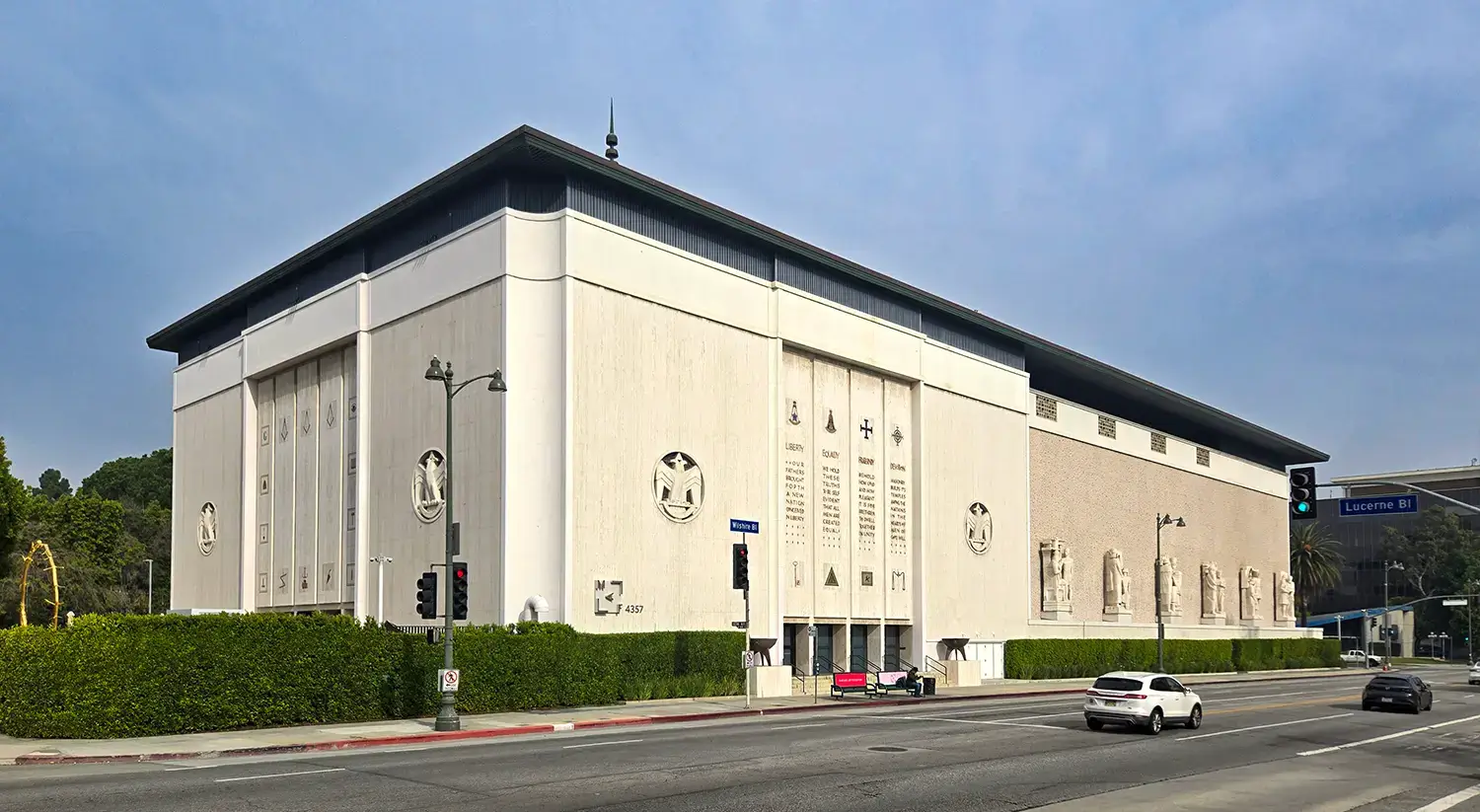
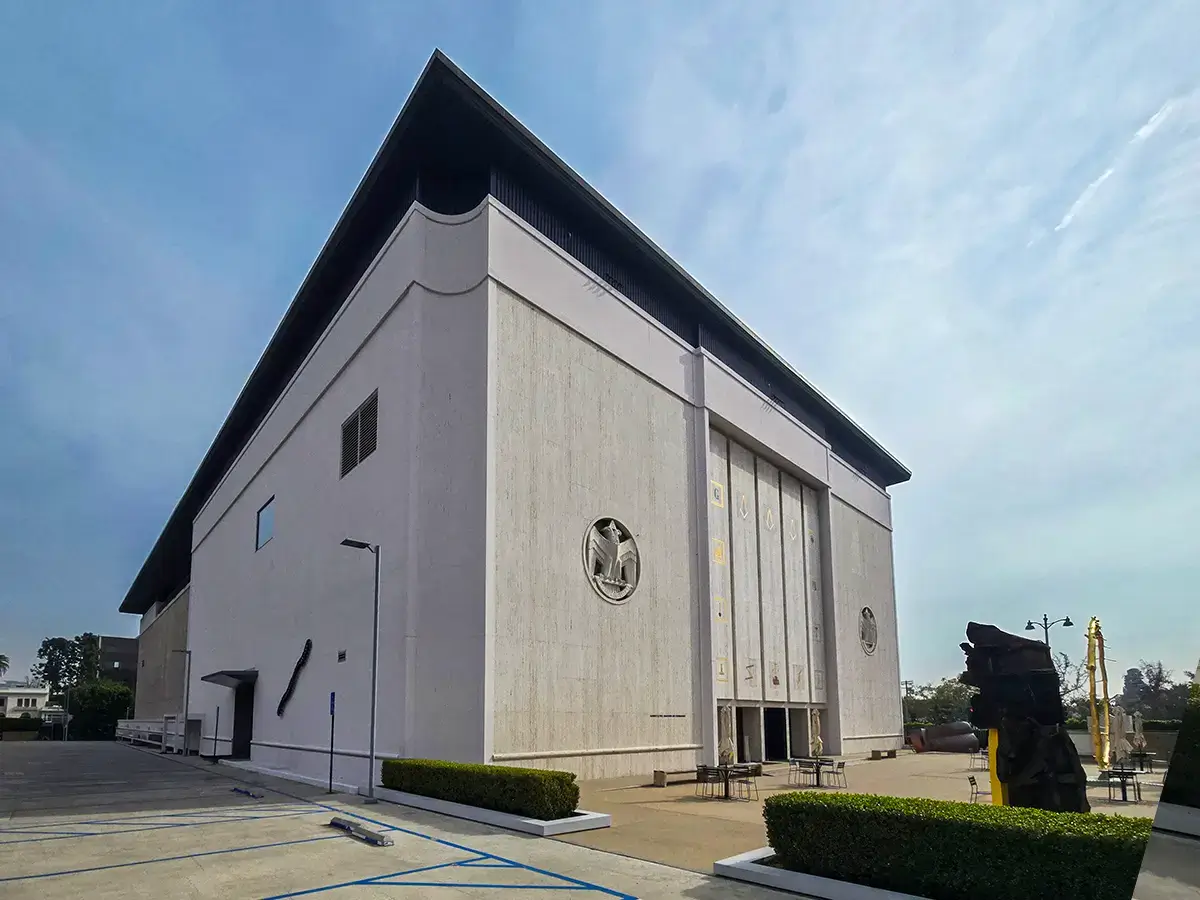
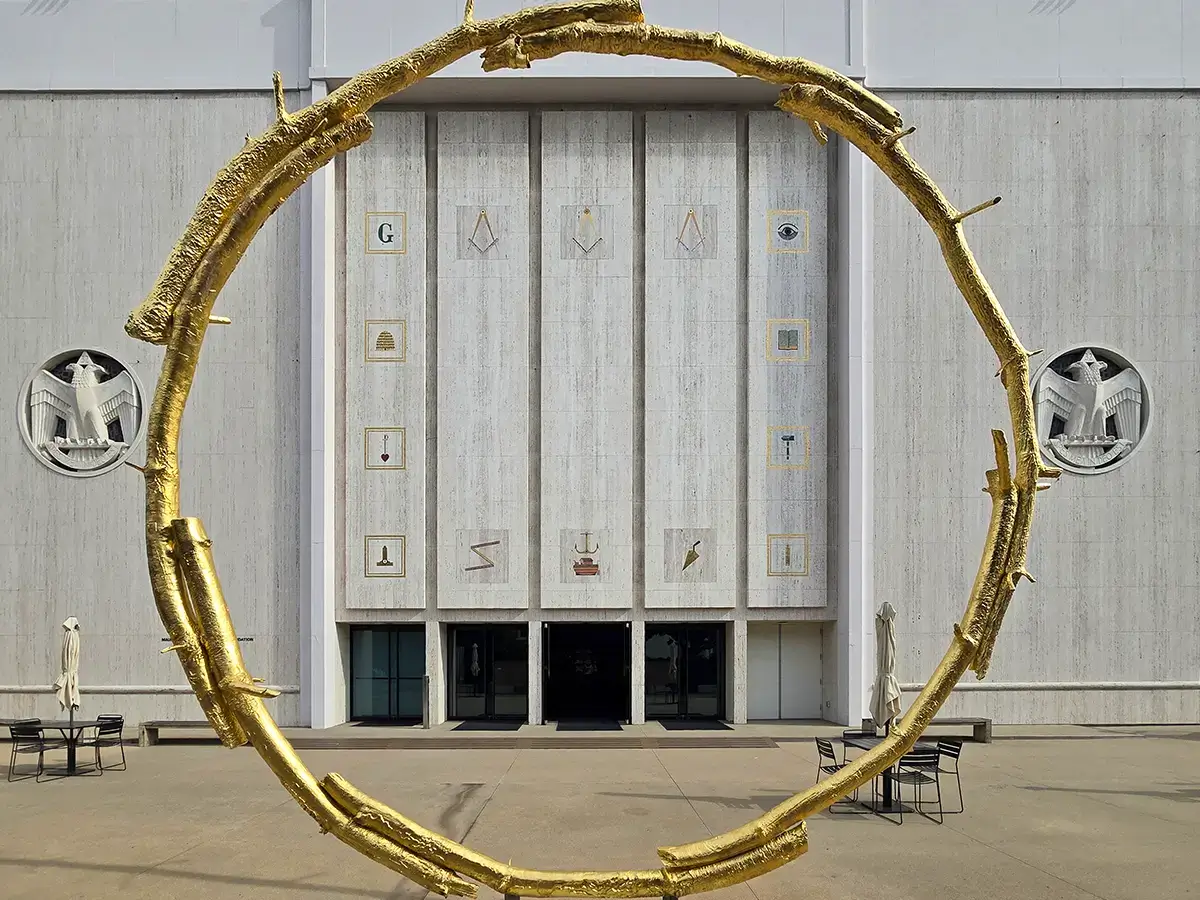
Walk up to the Marciano Art Foundation and you’ll see a building that demands attention. The 1961 Scottish Rite Masonic Temple sits like a fortress on Wilshire Boulevard, its white marble and travertine facade decorated with cryptic symbols, biblical passages, and eight towering 14-foot sculptures depicting figures from Masonic history. Artist and architect Millard Sheets designed every detail, from the exterior mosaics telling the story of temple building through history to the interior spaces where Freemasons once performed elaborate rituals.
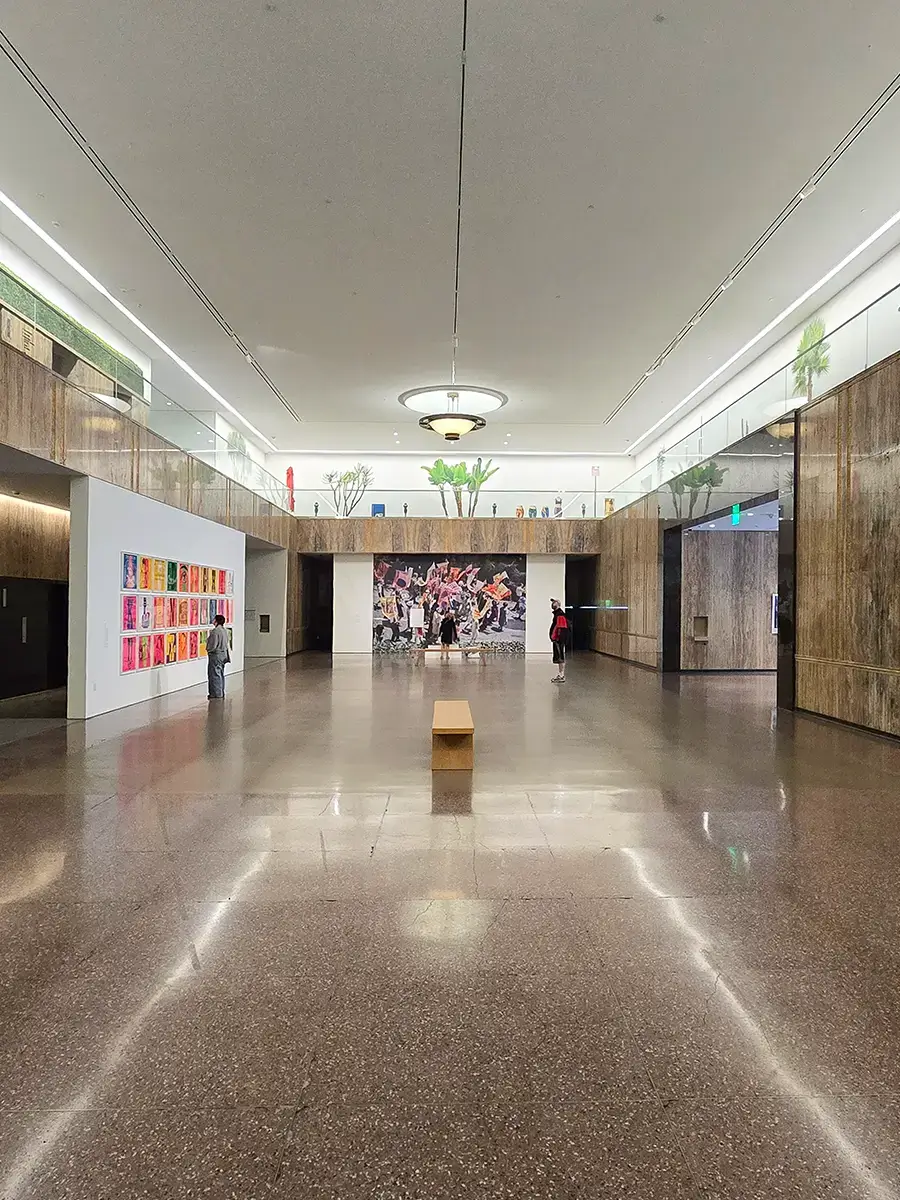
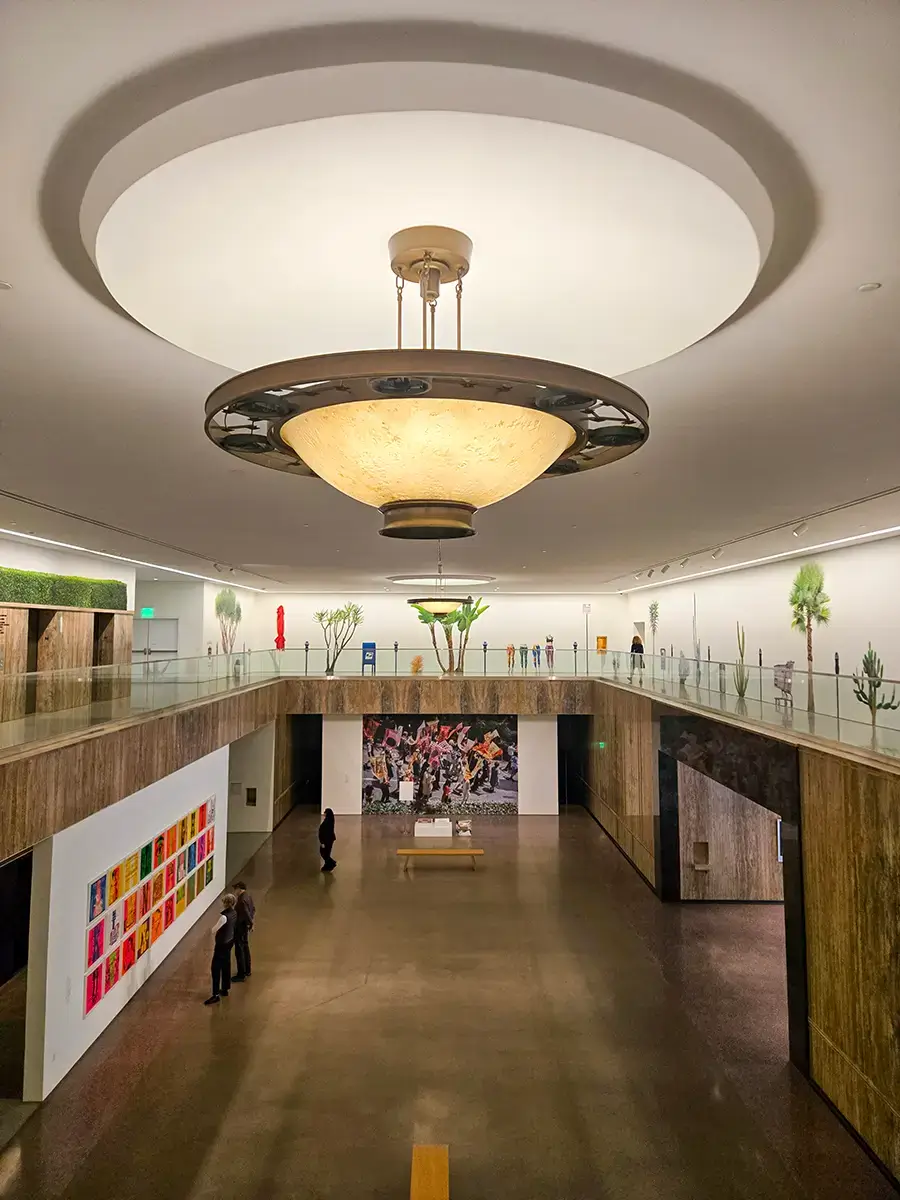
The Marciano brothers purchased this enigmatic structure in 2013 for $8 million and transformed it into a contemporary art museum. Architect Kulapat Yantrasast of wHY handled the conversion, gutting some spaces while preserving others. The result gives you access to a building few people ever saw inside. Walk through doors that once admitted only Freemasons, climb staircases adorned with Nicolas Party’s fantastical forest mural, and explore galleries carved from what was once a 2,000-seat auditorium.
The Collection and Exhibitions
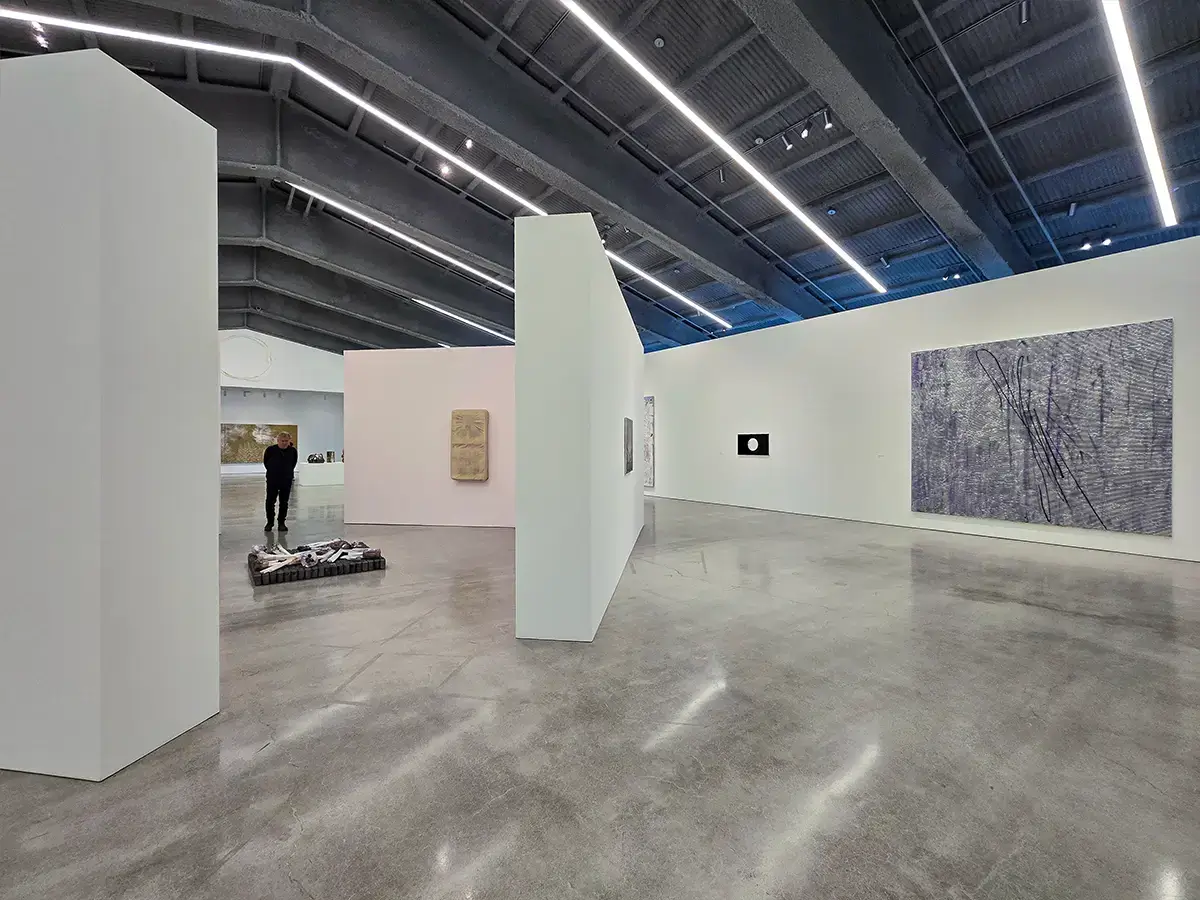
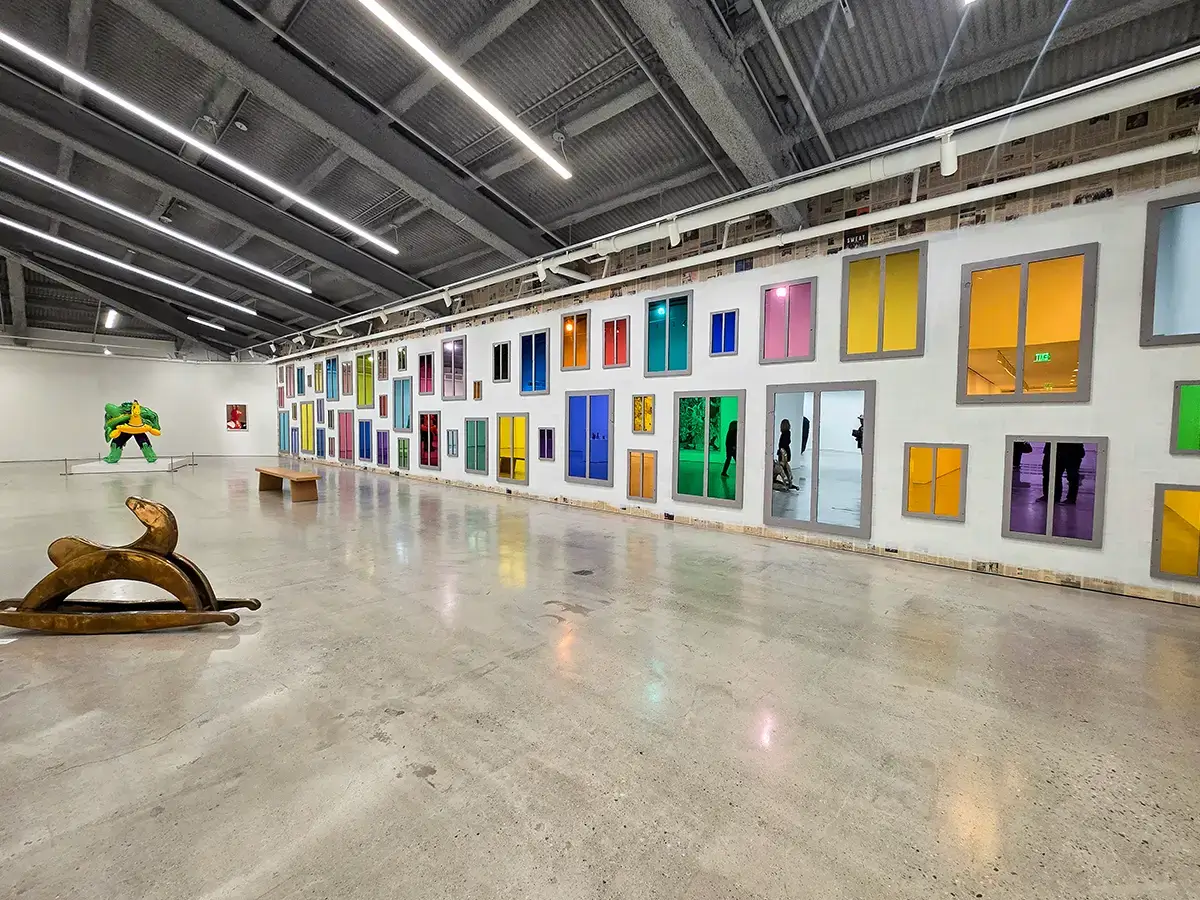
The foundation’s holdings focus on contemporary art from 1990 forward. You’ll find work by established names like Ai Weiwei, Yayoi Kusama, Christopher Wool, and Takashi Murakami alongside emerging artists. The Marcianos collect in depth, acquiring multiple works from individual artists to show how their practices develop over time. Rotating exhibitions draw from this collection, supplemented by occasional commissioned installations.
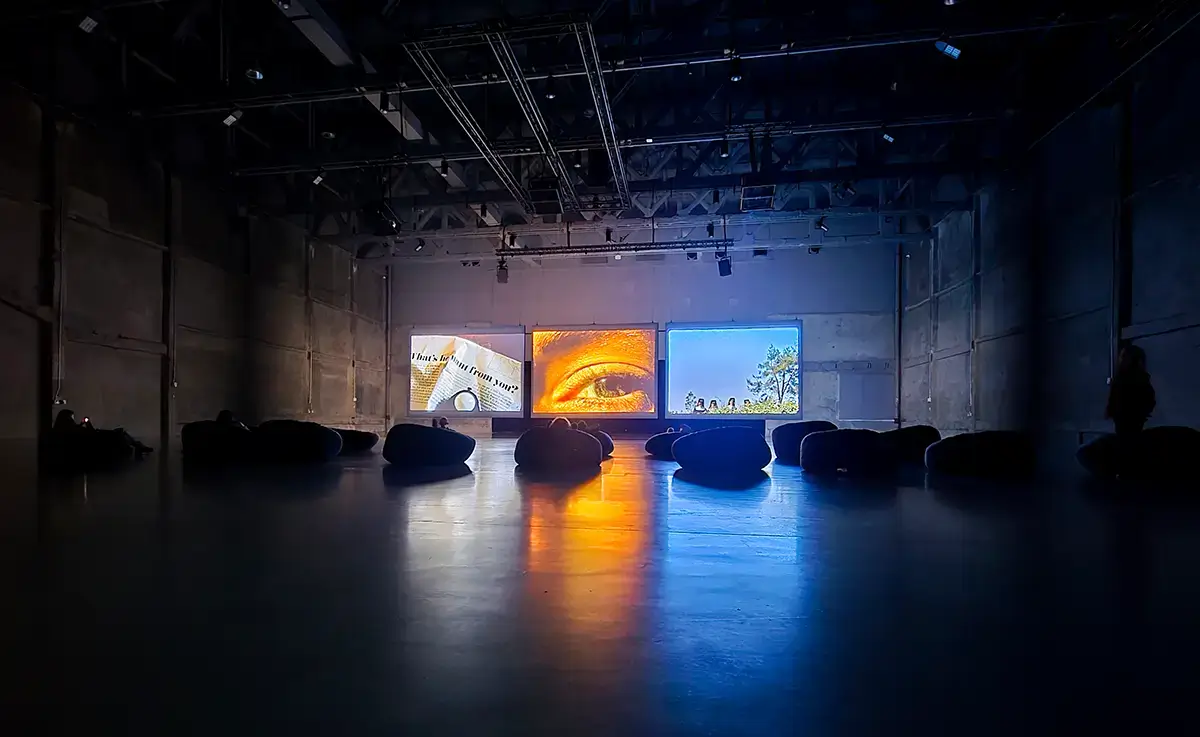
The Theater gallery presents a changing array of large-format installations and presentations.
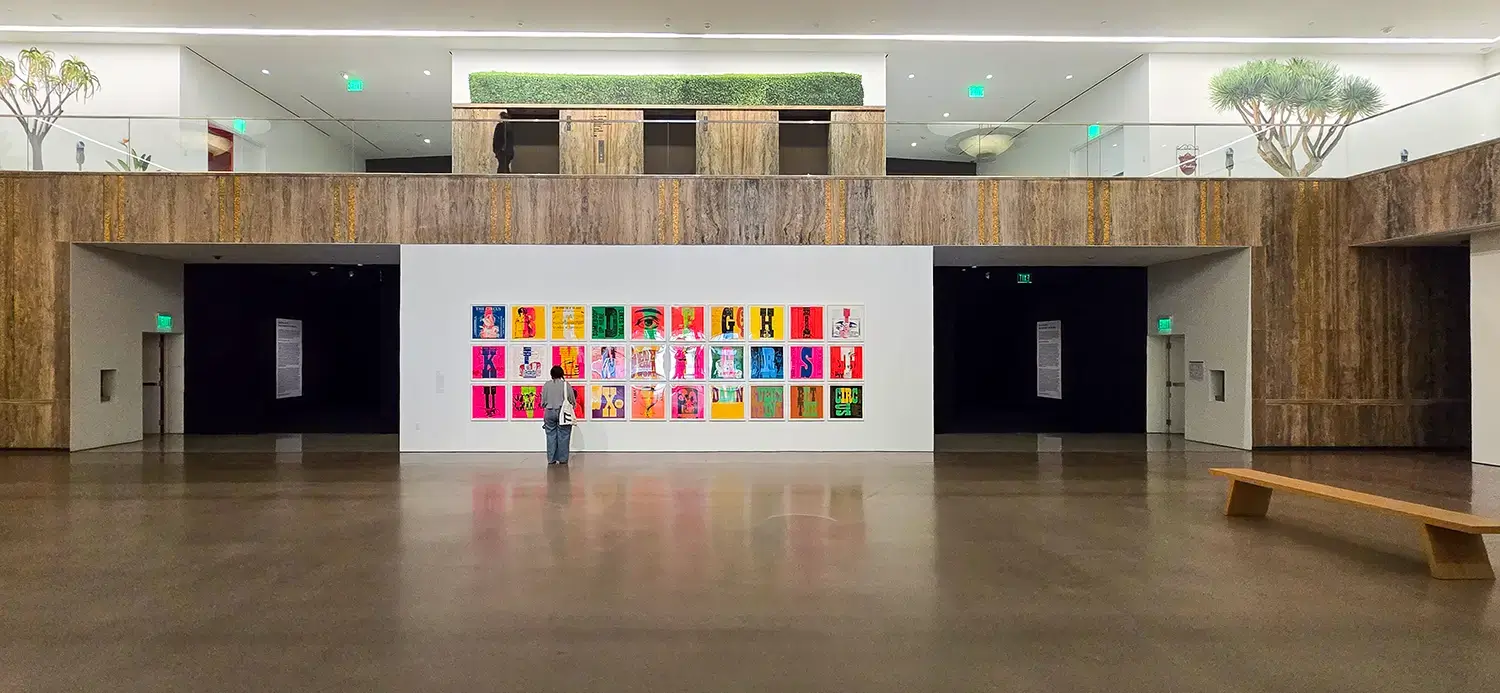
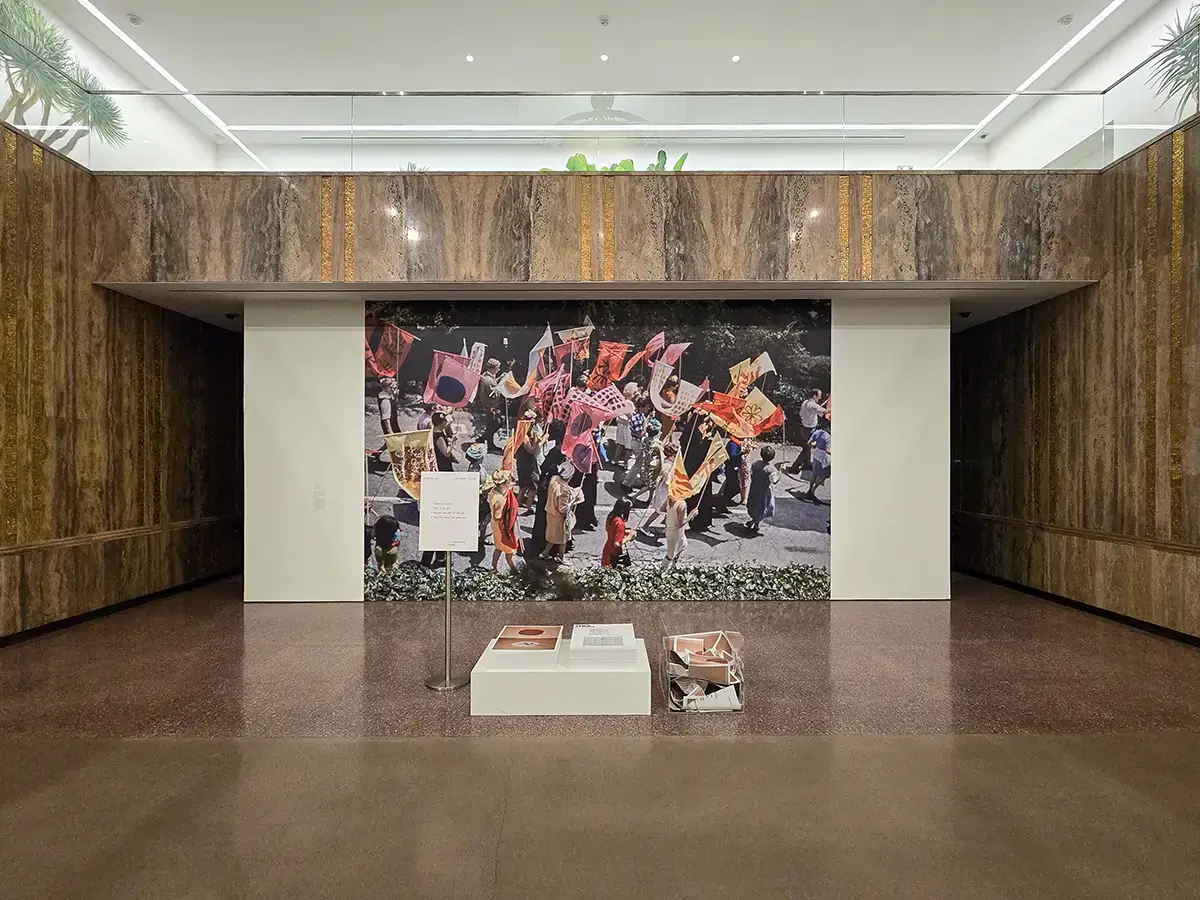
Current (as of writing) exhibitions include John Giorno’s text-based paintings and archival materials from his role in New York’s art scene since the 1960s, plus Corita Kent’s lesser-known slide archive from her teaching years at Immaculate Heart College.
The Relic Room: Masonic Secrets Revealed
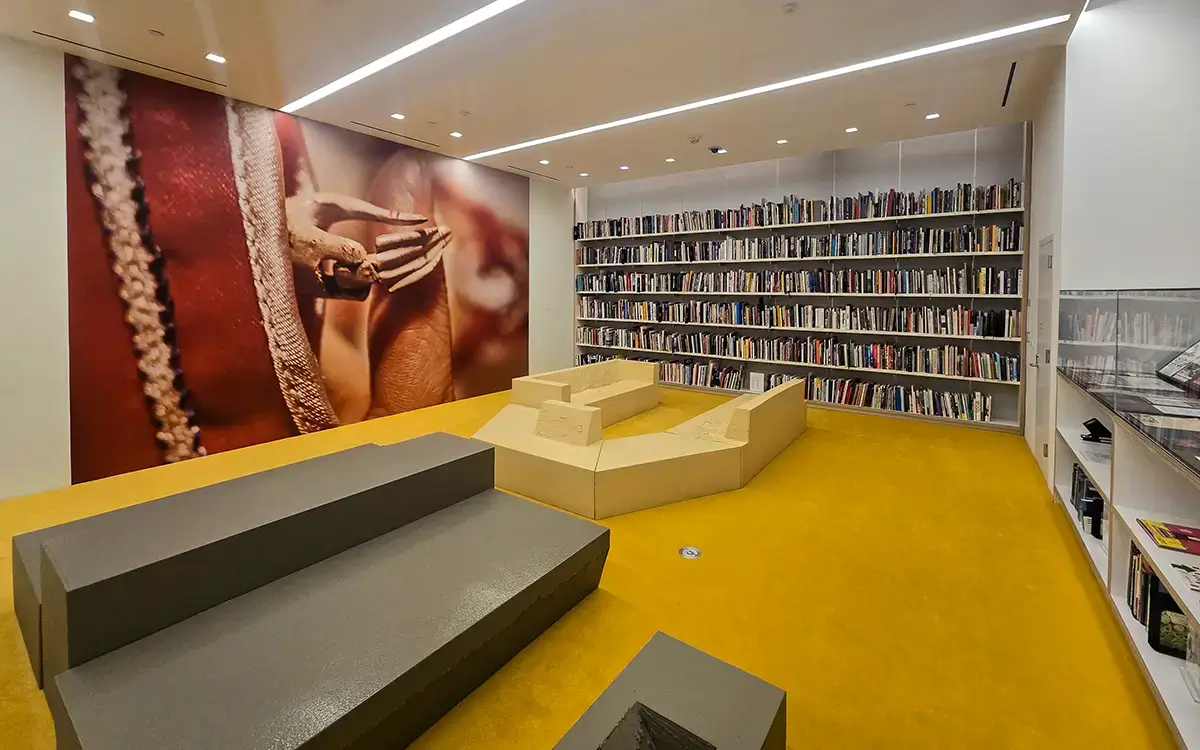
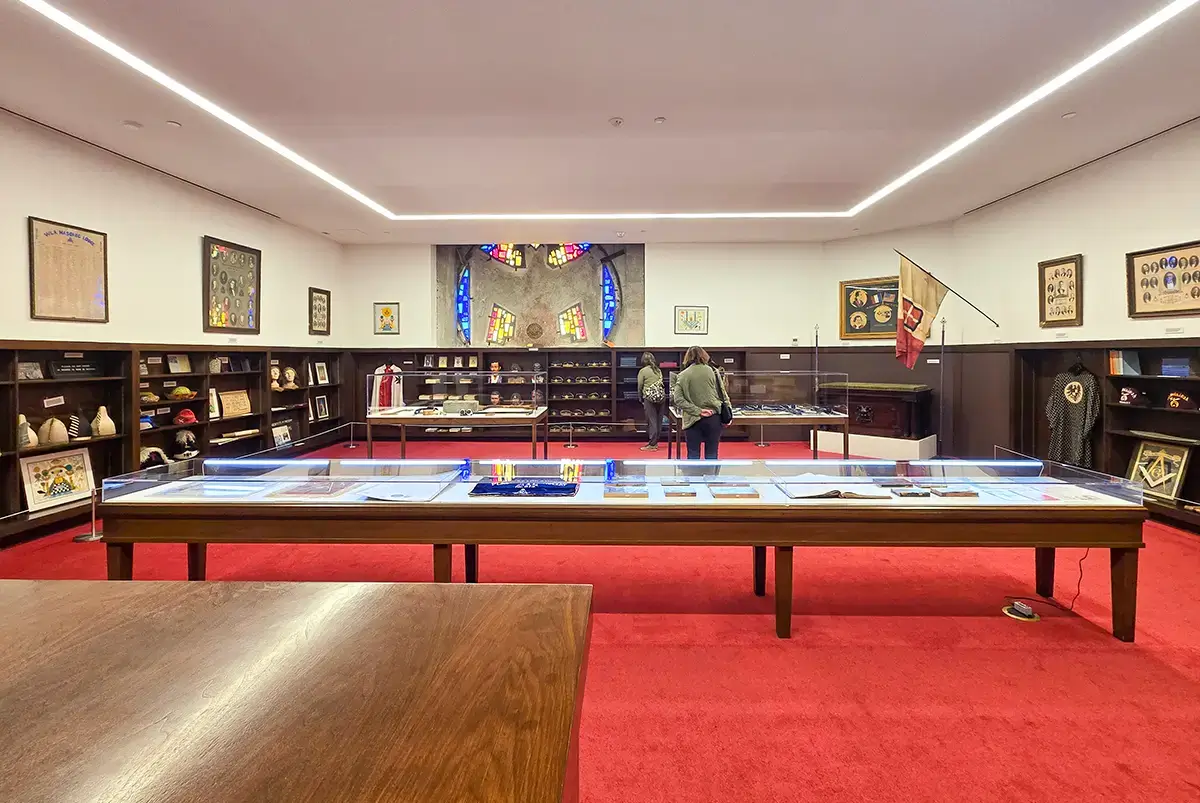
Make your way to the mezzanine level and step into the former Masonic library, now the Relic Room. This space preserves the original dark wood cabinetry and a stunning double-headed eagle stained glass window that once filtered the temple’s limited natural light. The Masons left behind more than they took when they departed in 1994, and the foundation displays this abandoned collection as a window into a secretive world.
Glass cases hold silk and satin banners embroidered with Masonic emblems in gold and silver braid. The Masons carried these ornate banners during rituals and occasional public processions, each one identifying a specific lodge. You’ll see tasseled fezzes, elaborate theatrical costumes with wigs and false eyebrows, and photographs of past lodge members lined up in their regalia. The most remarkable objects are the painted theatrical backdrops, some dating back over a century. Scottish Rite Masons staged elaborate ritual dramas as forms of ethical instruction, with members advancing through 29 additional degrees beyond basic Masonry. These performances required intricate costumes and multiple scene changes, turning spiritual lessons into theatrical spectacle.
The Relic Room curator, Susan L. Aberth, notes that these theatrical productions functioned as methods for spiritual and moral self-improvement. Standing before a massive backdrop depicting an infernal scene of writhing souls, you get a sense of how these rituals combined drama, symbolism, and moral education. The Masons loved their ceremonies and pageantry, and the objects they left behind tell that story without romanticizing or dismissing it.
Architecture and History
The building’s Masonic past keeps revealing itself as you explore. Beyond the Relic Room, you’ll notice original gold-tiled water fountains (no longer functioning), elevator doors emblazoned with bronze compasses, and cryptic symbols woven into the architectural details. Sheets’ original mosaics appear throughout, and the Quaternion installation by Kristen Wentrcek and Andrew Zebulon responds directly to the building’s Masonic symbolism with furniture carved from foam and coated to look like stone.
The foundation preserved architectural elements other renovations might have destroyed. High ceilings and long windowless walls that once created dramatic settings for Masonic ceremonies now provide ideal spaces for large-scale contemporary art. The former 2,000-seat theater became a massive gallery with exposed structural traces across the concrete walls, ghosts of the raked seating visible as architectural scars. You can feel the building’s original purpose even as it serves its new function.
Planning Your Visit
The museum spans multiple floors with varied gallery sizes. Most visitors spend 1.5 to 2 hours exploring the current exhibitions and permanent installations. Start on the ground floor and work your way up, saving the Kusama room and stairwell murals for the upper levels.
Photography is allowed throughout the galleries without flash or tripods. The polka-dot room attracts crowds, so visit midweek if you want less competition for photos. Staff members know the building’s history and can point out preserved Masonic details you might otherwise miss.
The foundation takes a different approach than LA’s other contemporary art venues. LACMA, MOCA, and The Broad each have distinct identities and collections. The Marciano offers something different through its focus on a single private collection shown in rotating themes, plus the added dimension of the building’s extraordinary history and architecture.
What Others are Saying
Nearby Curious Los Angeles Destinations
HMS Bounty
Time capsule dive bar serving steaks and strong drinks in nautical surroundings since 1962.
Tom’s One Hour Photo Studio & Lab
Koreatown photo studio preserving 1990s glamour shot traditions with hand-painted backdrops since 1991
St. Elmo Village
Historic artist commune offering free art workshops, colorful murals, and community creativity in 1920s Craftsman bungalows
Cinespia
Classic and cult films screened outdoors under the stars on the historic lawn of Hollywood Forever Cemetery
Museum Row
Five world-class museums along one walkable half-mile of Wilshire Blvd — art, fossils, film, cars, and craft all within a…
Marciano Art Foundation on Other Sites