
Lummis Home-El Alisal
Stone house hand-built over 13 years by pioneering journalist and Native American rights activist Charles Fletcher Lummis
- See
Lummis Home-El Alisal Details
- Saturday & Sunday 10am-3pm
Overview
Details
Experiencing Lummis Home-El Alisal / Curious LA Field Notes
Quick Take
Charles Lummis built this house stone by stone to last a thousand years, and 127 years later it still stands as a monument to his outsized personality and passion for Southwest culture. The man who walked 3,500 miles from Ohio to Los Angeles in 1884, founded the city's first museum, and fought alongside Theodore Roosevelt for Native American rights deserves a home that tells his story. El Alisal captures Lummis's whole philosophy: that a house should be an extension of its owner, built from the land it sits on, and serve as a gathering place for ideas and culture. Visiting lets you walk through the actual space where early Los Angeles took shape.
A Stone House Built by Hand
The moment you step through the gates off Avenue 43, the roar of the nearby 110 Freeway fades behind walls of vegetation. Sycamore trees arch overhead, native plants line winding paths, and there in the center sits a medieval-looking fortress made entirely of river rock. This is El Alisal, named for the grove of sycamores that originally covered the three-acre property.
Charles Lummis started building in 1897 and spent the next 13 years hauling boulders from the Arroyo Seco streambed below, mixing concrete, and fitting salvaged railroad telegraph poles as ceiling beams. Every stone was placed by his hands. The concrete floors could be washed with a hose after the frequent parties he threw for artists, writers, and intellectuals. The rounded corner turret looks lifted from a French castle. Arched windows recall the Spanish missions he worked to preserve. The entire structure wraps around a central patio so every room opens to outdoors on two sides.
Inside the Castle
Tour guides (available whenever the house is open) walk you through rooms that remain largely unchanged since Lummis lived here. Smooth stucco walls, exposed wooden beams, and Arts and Crafts details show the care he put into every element. Painted windows incorporate photographic negatives. Built-in benches and alcoves create intimate spaces for reading and conversation. The rooms hold artifacts from his travels throughout the Southwest and Latin America, copies of his many books, and photographs documenting his extraordinary life.
The house tells multiple stories at once. You see the journalist who walked across America and sent weekly dispatches that captivated the nation. The founder of the Southwest Museum who filled it with Native American baskets, pottery, and recordings of indigenous songs. The editor who published Jack London and John Muir in his magazine. The activist who created the Sequoya League to fight government policies that separated Native American children from their families. The librarian who transformed the LA Public Library’s collection. Famous guests who stayed here included John Muir, Will Rogers, and Clarence Darrow.
The Gardens and Grounds
After touring the house, wander the gardens at your own pace. California native plants and drought-tolerant species cover the property. The original giant sycamore that gave El Alisal its name died and was replaced by four saplings. Benches tucked under trees invite you to sit and imagine the literary salons and cultural gatherings that happened here in the early 1900s. On the back porch, a small marker shows where Lummis placed the ashes of his son Amado, who died of pneumonia at age seven on Christmas Day 1900.
The gardens create a surprising oasis considering the urban surroundings. The freeway might be close, but once you’re inside these grounds the city disappears. Artists often set up easels to paint. Visitors stroll slowly, reading interpretive signs about Lummis and his era. The peaceful atmosphere matches what Lummis envisioned: a place apart from the growing city where ideas and culture could flourish.
Why This Place Matters
El Alisal represents a turning point in how Los Angeles thought about its identity. When Lummis arrived in 1885, the city had just 12,000 residents. He saw potential for something different from the eastern cities he knew: a place where Spanish, Mexican, and Native American cultures shaped the character of a modern American city. He promoted this vision through his writing, his museum work, and his activism.
The house itself launched the Arts and Crafts movement in Southern California. Its rustic materials, handcrafted details, and integration with the landscape influenced architects for decades. As one of the most landmarked historic sites in Los Angeles (designated as LA Historic-Cultural Monument #68, California Historical Landmark #531, and listed on the National Register of Historic Places), it remains largely intact with minimal alterations over the past century.
What Others are Saying
Nearby Curious Los Angeles Destinations
Heritage Square Museum
Eight rescued Victorian buildings from 1876-1900 offer docent-led tours through Los Angeles' first century of statehood.
The Steepest Road in California (Eldred Street & Stairs)
California's steepest drivable street with a 33% grade and historic wooden stairs leading to sweeping city views.

Chicken Boy
The Statue of Liberty of Los Angeles: a 22-foot rooftop guardian (half man and half chicken) who stands over the…

The Lucky Tiki (Highland Park)
Hidden speakeasy tiki bar tucked behind Highland Park Bowl serving theatrical rum cocktails in a vintage Polynesian hideaway.
Highland Park Bowl
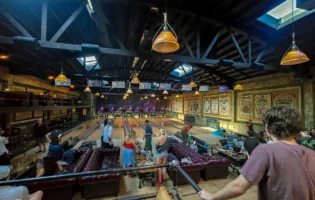
Los Angeles's oldest operating bowling alley, restored to its 1927 Prohibition-era glory with vintage lanes and exposed pin-setting machinery.
Galco’s Old World Grocery (Soda Pop Stop)
Family-owned Highland Park soda shop stocking 700+ independent sodas alongside vintage candy, craft beer, and deli sandwiches.
MorYork
Clare Graham's 7,000-square-foot Highland Park studio filled with sculptural works made from millions of buttons, pop tops, and found objects.

Bob Baker Marionette Theater
America's longest-running puppet theater, where hand-crafted marionettes have performed for families since 1963.
Pasadena Model Railroad Museum
One of the world's largest HO scale model railroads, built by a volunteer club that has been running trains in…
Chinatown
Historic neighborhood where Chinese American culture lives through food markets, temples, red-lantern plazas, and generations of family-run businesses
Randyland
24-foot glass bottle sculpture in Echo Park where over 1,000 water-filled vessels refract sunlight into an ever-changing kaleidoscope.
Lummis Home-El Alisal on Other Sites