
Los Angeles Breakfast Club
Century-old civic breakfast club where members gather at dawn for silly songs, club traditions, and guest speakers.
- Do
Los Angeles Breakfast Club Details
- Wednesday meetings: 7:00 AM - 9:00 AM
- Doors open: 6:45 AM - 7:15 AM (doors close promptly at 7:15 AM)
Overview
Details
Experiencing Los Angeles Breakfast Club / Curious LA Field Notes
Quick Take
The Los Angeles Breakfast Club preserves a slice of early 20th-century civic life that somehow survived a century of change. What began as post-ride breakfasts for Griffith Park horsemen became a weekly gathering place for business leaders, entertainers, and everyday Angelenos who wanted to start Wednesday mornings with community and conversation. The club nearly folded in the 2000s when membership dwindled, but a revival brought younger members who appreciated the retro charm of singing about ham and eggs at 7 AM. Today's meetings blend genuine camaraderie with intentionally silly traditions that poke fun at secret societies while creating real connections across generations.
A 7 AM Time Capsule
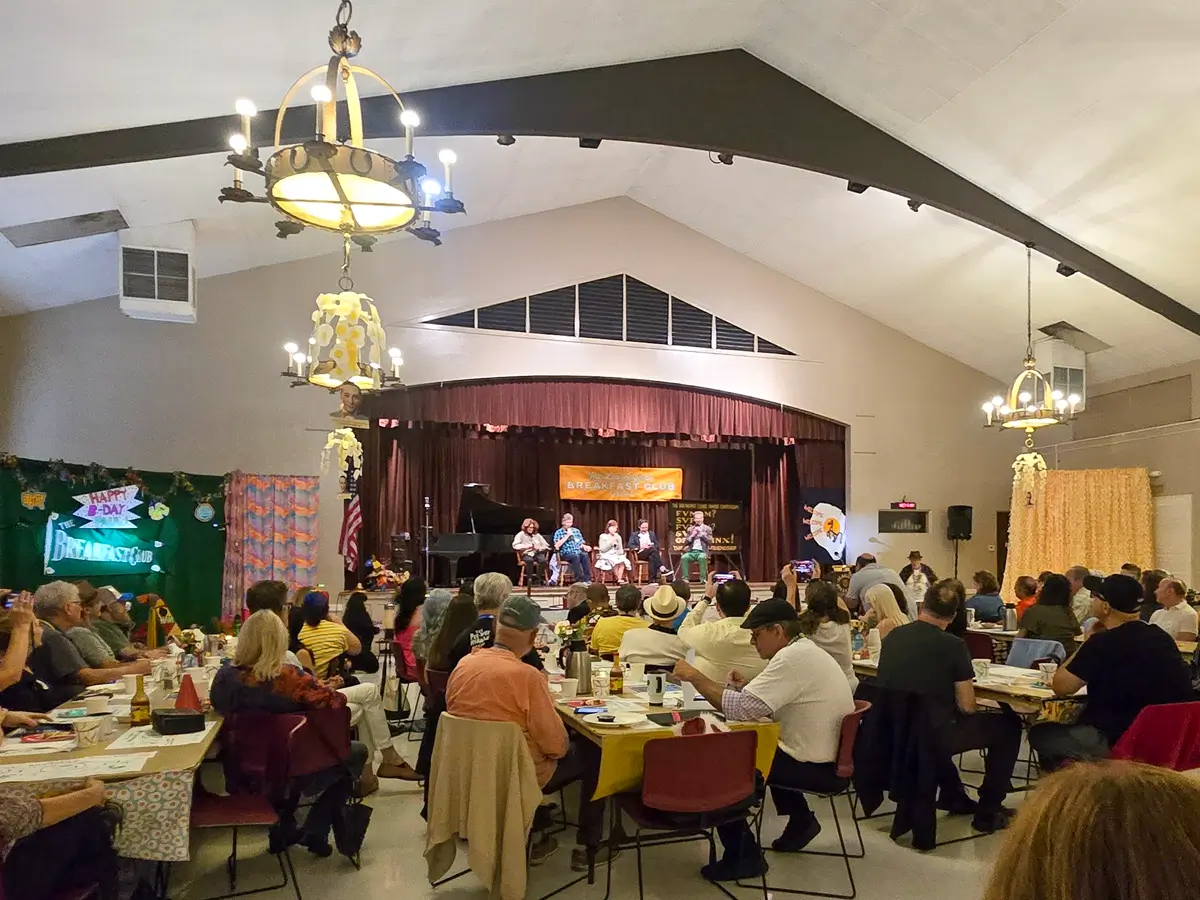
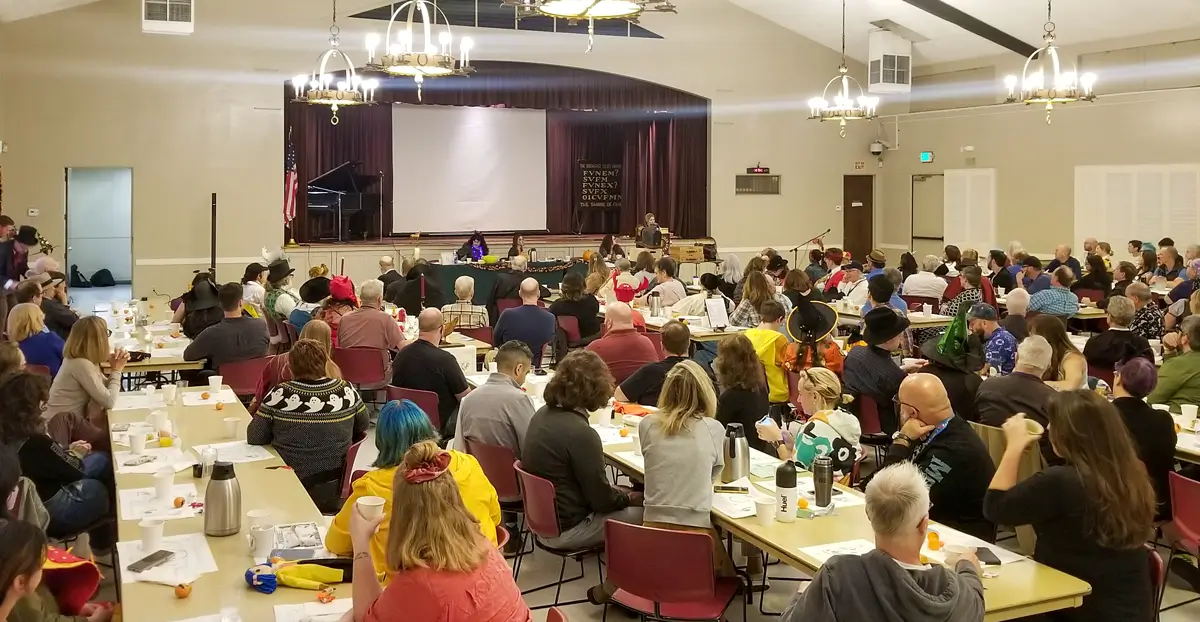
Walking into Friendship Auditorium at dawn feels like stepping through a portal. The 1965 building sits quietly on Riverside Drive near Griffith Park, and at 6:45 AM on Wednesday mornings, cars start pulling into the free parking lot. People emerge carrying coffee cups, greeting each other with “Hello Ham!” and getting “Hello Egg!” in return. This greeting ritual is one of dozens that make the Los Angeles Breakfast Club feel like a living museum of mid-century American civic life.
The club started in 1924 when businessmen who rode horses through Griffith Park wanted a proper breakfast spot after their morning rides. Banker Marco Hellman set up a chuck wagon, someone gave an impromptu talk, and merchant Maurice DeMond suggested they make it official. By March 1925, they had formed a club with $100 membership fees and soon counted studio moguls like Louis B. Mayer and Cecil B. DeMille among their ranks.
Songs, Symbols, and Sawhorse Initiations
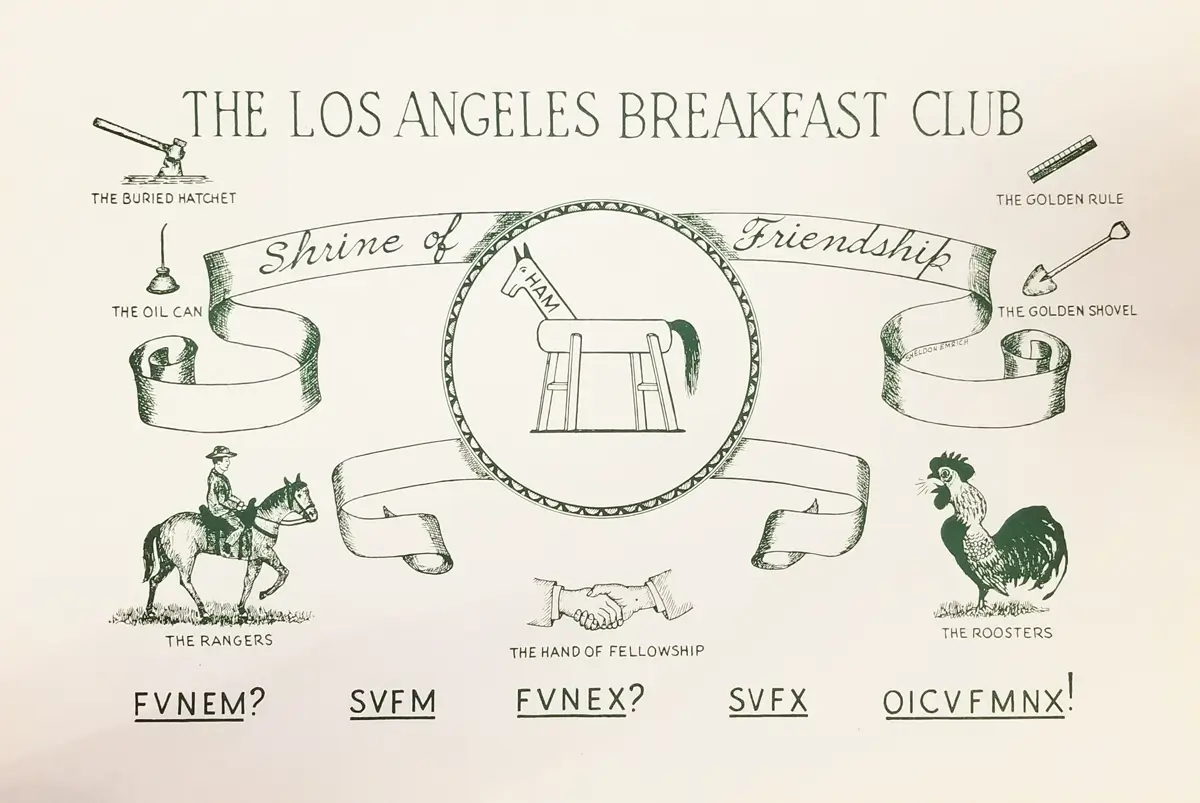
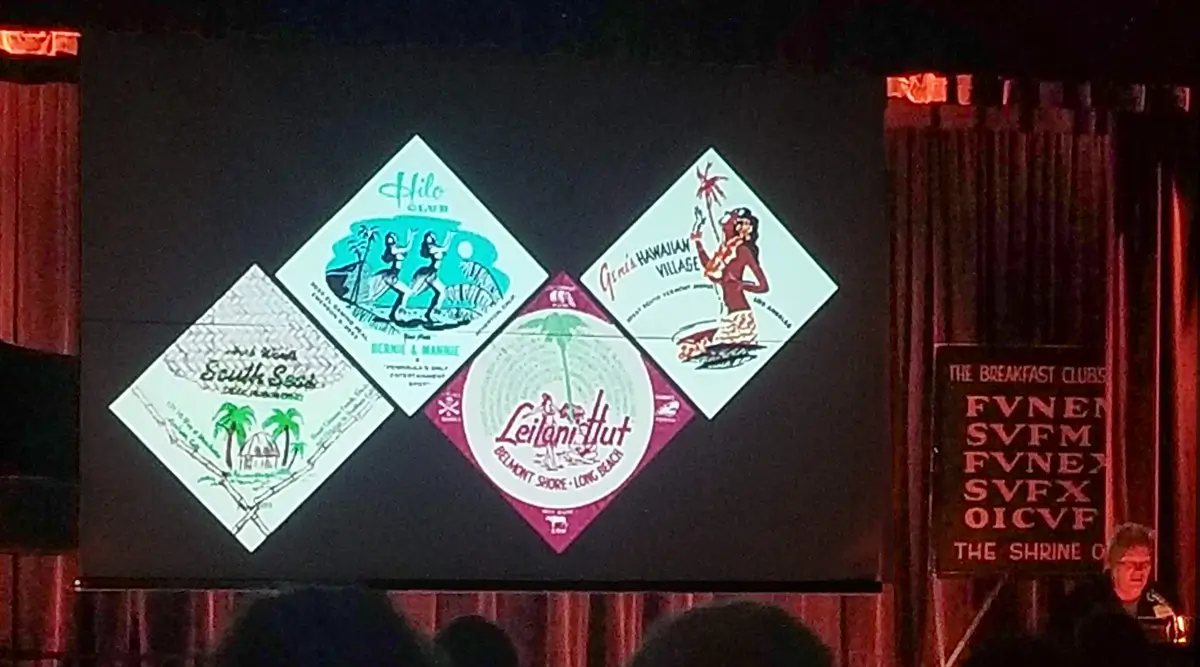
The morning program follows a format established nearly 100 years ago. After settling in with breakfast from the buffet (eggs, bacon, sausage, oatmeal, fruit, and rotating specials), members recite the Pledge of Allegiance and launch into group singing. The repertoire includes patriotic tunes and vintage pop songs, all accompanied by vaudeville-style piano. Then comes the famous cryptogram: “FVNEM? SVFM FVNEX? SVFX OICVFMNX!” which translates to “Have we any ham? Yes we have ham. Have we any eggs? Yes we have eggs. Oh I see we have ham and eggs!”
The club symbols displayed throughout the room tell you everything about the organization’s philosophy. The Golden Ruler represents fairness, the Buried Hatchet symbolizes friendship, and the Oil Can reminds members to smooth over conflicts. These weren’t serious Masonic-style symbols but playful parodies created by people who wanted community without pretension.
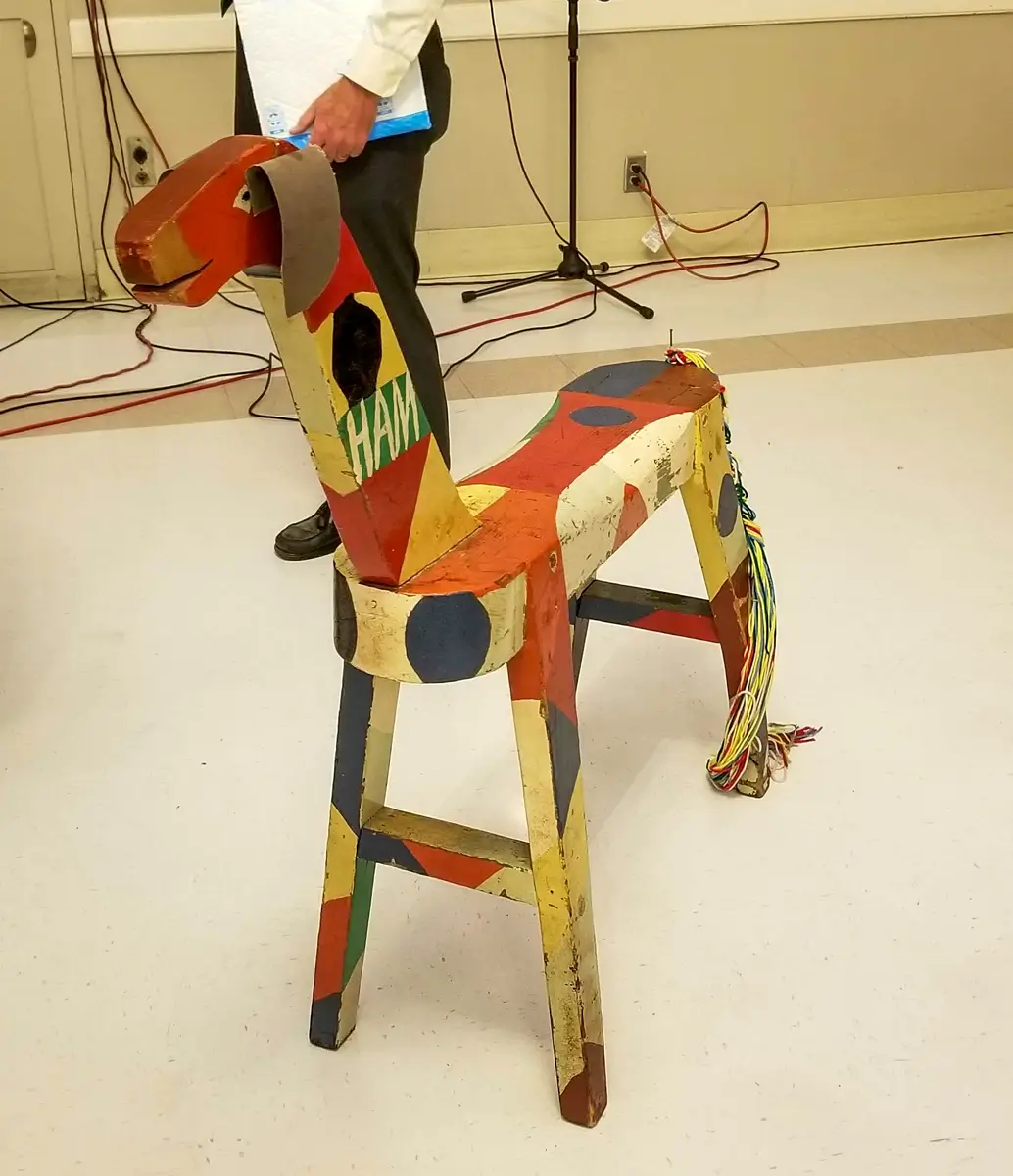
New member initiations follow a tradition that has baffled visitors for decades. Inductees sit blindfolded on a rickety wooden sawhorse named Ham while placing one hand on a plate holding a sunny-side-up egg. Ronald Reagan did this in 1967. Walt Disney climbed aboard too. The ceremony is absurd by design, a way of ensuring no one takes themselves too seriously.
Talks, Traditions, and a Near-Death Experience
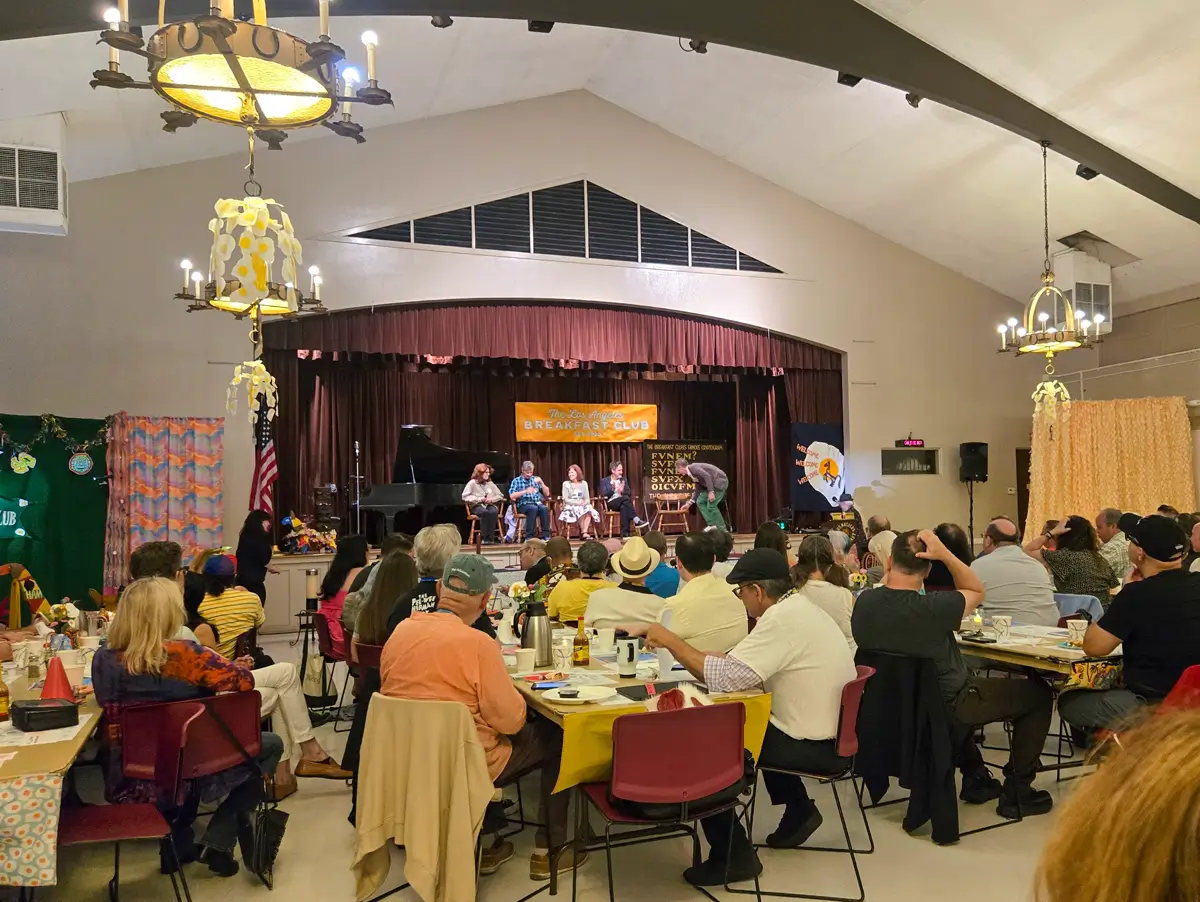
Between the songs and rituals, guest speakers give 30-45 minute presentations. Topics range widely: authors discussing new books, politicians explaining policy initiatives, filmmakers sharing behind-the-scenes stories, historians exploring LA’s past. Speakers often sell books afterward and chat with attendees. Recent guests have included actors, urban planners, puppeteers, and film preservationists.
The club’s history mirrors Los Angeles itself. During the golden age of Hollywood, membership swelled into the hundreds. Warner Brothers gave them free radio time on KFWB starting in 1927, broadcasting the weekly programs across the city. The Depression forced a move to the Ambassador Hotel in 1933, where they met in the Fiesta Room until raising funds for their own California ranch-style clubhouse in 1937. That building gave way to the current Friendship Auditorium in 1965, secured through a deal with the city’s Department of Recreation and Parks for $1 annual rent.
By the 2000s, membership had shrunk to a couple dozen people. The club seemed headed for extinction until actress Lily Holleman convinced the remaining board members to embrace social media around 2010. Word spread through Instagram and local media coverage, bringing in younger members who appreciated the time-capsule quality. Today, attendance regularly reaches 100-200 people per week.
What to Expect
Meetings run 7:00-9:00 AM, with doors opening at 6:45 AM and closing promptly at 7:15 AM. Arriving early lets you grab breakfast and chat with members before the program starts. The buffet accommodates vegetarians and vegans alongside traditional options. Dress code is business casual.
After morning exercises (gentle arm stretches led by a longtime member), the program moves through announcements, more songs, and the week’s speaker presentation. The atmosphere stays relaxed and welcoming, with newcomers enthusiastically greeted. First-time visitors used to get free breakfast, though current pricing has guests paying $25-28 per event. Members who join ($285 annually or $28.50 monthly) receive 25% discounts.
The club is fully wheelchair accessible, with dedicated parking spaces, wide doorways, and accessible bathrooms in the front lobby. Metro bus lines 96 and 180 serve the area, with stops directly in front of or near the auditorium.
Why It Persists
The Los Angeles Breakfast Club survives because it offers something increasingly rare: structured social time with people outside your usual circles. Members include professionals, retirees, entertainment industry workers, and curious newcomers who heard about the club through social media. The format forces conversation, the traditions create shared experience, and the early morning timing means people show up intentional and alert.
The ham-and-eggs theme has become a running joke about the club’s commitment to simple pleasures. When you shake hands using the secret egg-flipping gesture or shout the cryptogram in unison, you’re participating in rituals that have remained unchanged since the 1920s. That continuity matters to people who appreciate LA’s history and want to experience it firsthand rather than just read about it.
Visiting feels like discovering a parallel Los Angeles where civic clubs still thrive and people gather without screens or cynicism. The club celebrates its centennial throughout 2025, hosting special events and speakers while maintaining the same Wednesday morning schedule that has run uninterrupted for 100 years. Whether you attend once out of curiosity or become a regular member, the experience offers a genuine connection to the city’s past and a reminder that community can be built around the simplest things: breakfast, friendship, and wonderfully terrible puns about eggs.
What Others are Saying
Nearby Curious Los Angeles Destinations
Philosophical Research Society
Nonprofit library and cultural center housing 30,000 rare books on philosophy, mysticism, and world religions in a 1930s Mayan Revival…
Los Feliz 3-Par Golf Course
Compact 9-hole par 3 course where the 1996 film "Swingers" was shot, offering quick rounds through tree-lined holes.
Ennis House
Frank Lloyd Wright's monumental Mayan Revival residence constructed from 27,000 hand-cast granite blocks rising above Los Feliz
Tiki-Ti
Family-owned tiki institution since 1961 serving 94+ exotic cocktails in LA's tiniest, most authentic tropical hideaway.
Vista Theatre
Century-old single-screen palace with Egyptian Revival interiors showing films exclusively on 35mm and 70mm under Quentin Tarantino's ownership
Soap Plant / Wacko
Pop culture emporium and lowbrow art gallery packed with 50+ years of curated oddities, handmade soaps, and underground treasures
Griffith Park Merry-Go-Round
Historic 1926 carousel where Walt Disney conceived Disneyland, featuring hand-carved horses and one of the West Coast's largest band organs.
Forest Lawn Museum (Hall of Crucifixion & Resurrection)
Theatrical presentation of the largest religious painting in the Western United States inside a purpose-built Gothic hall
Hollyhock House
Frank Lloyd Wright's first Los Angeles commission blends Mayan temple forms with California modernism atop a hilltop art park.
Old Los Angeles Zoo
Explore the abandoned 1930s-era zoo ruins and grottos turned picnic area in the heart of Griffith Park for a unique…
Griffith Observatory
Iconic Art Deco observatory offering free astronomy exhibits, planetarium shows, public telescopes, and sweeping views of LA and the Hollywood…
Los Angeles Breakfast Club on Other Sites