
Little Tokyo
Historic five-block cultural district celebrating Japanese American heritage through authentic dining, shopping, and annual festivals since 1885
- Do
- Eat & Drink
- See
- Shop
Little Tokyo Details
Overview
Details
Experiencing Little Tokyo / Curious LA Field Notes
Quick Take
Little Tokyo gives you direct access to Japanese American history and culture without requiring a museum visit or cultural lecture. You can eat authentic ramen for lunch, browse manga at Kinokuniya, grab mochi from a century-old confectionery, and understand why this five-block district mattered enough to earn National Historic Landmark status. The district succeeds because it serves both as living community and cultural destination, where third-generation Japanese American families shop alongside tourists hunting for anime merchandise. You get food, history, and shopping in walkable blocks, all centered on a heritage that survived internment camps and urban renewal.
A Living Historic District
Walk down First Street and you see two timelines running parallel. Sidewalk plaques mark where Japanese-owned businesses stood before World War II internment camps emptied the neighborhood. Above those plaques, current restaurants and shops continue serving customers today. This layering of past and present defines Little Tokyo.
The district occupies five blocks bounded by Los Angeles Street, Alameda Street, Third Street, and just north of First Street. Former sailor Hamanosuke Shigeta opened the first Japanese business here in 1885, a restaurant on East First Street. Other immigrants followed, building what became the largest Japanese community in the United States by 1942. Forced relocation during World War II devastated the area, but many families returned after 1945 to rebuild.
You see the results of that rebuilding at Japanese Village Plaza, the central shopping complex at 335 E 2nd Street. This outdoor plaza opened in the 1970s during the Little Tokyo Project redevelopment. Today it houses dozens of shops and restaurants around a courtyard. A red yagura tower marks the entrance, and traditional architectural details create a Japanese streetscape feel.
Food and Shopping Options
Little Tokyo earns its reputation through food. Ramen shops like Daikokuya draw long lines for rich tonkotsu broth. Marugame Monzo serves fresh udon made daily. Sushi Gen provides omakase for serious sushi eaters. The variety runs deep, from $5 onigiri at Rice & Nori to kaiseki dinners requiring reservations.
Kinokuniya operates its main Los Angeles location at Weller Court shopping center. The bookstore stocks Japanese and English books, extensive manga sections, Japanese magazines, stationery, art supplies, and cultural items. Marukai Market at Weller Court supplies Japanese groceries. Other shops sell anime figures, vintage clothing, traditional crafts, and Hello Kitty merchandise.
Cultural Institutions
The Japanese American National Museum anchors the district at 100 N Central Avenue. Currently closed for renovation until late 2026, the museum normally presents exhibits on Japanese American history, with particular focus on World War II internment experiences. The building itself combines historic architecture with modern additions designed by architect Gyo Obata.
Historic temples remain active. Koyasan Buddhist Temple has served the community since 1912. Hompa Hongwanji Buddhist Temple dates to 1925. These institutions provided community centers during Little Tokyo’s early decades and continue religious and cultural programming today.
Annual Festivals
Nisei Week runs each August for nine days, typically the second and third weekends. The festival started in 1934 during the Great Depression to attract younger Japanese Americans back to Little Tokyo. Events include a Grand Parade down 2nd Street, Queen Coronation at Aratani Theatre, car show, cultural demonstrations, and closing street dancing called ondo. Admission is free. Crowds get heavy during parade hours on Sunday afternoon.
The Oshogatsu Family Festival celebrates Japanese New Year each January 1st with traditional performances, crafts, and cultural activities. Smaller events happen monthly through organizations like the Little Tokyo Community Council.
Practical Experience
The district works well for half-day visits. Japanese Village Plaza and the surrounding blocks contain most destinations within a few minutes’ walk. The Metro A and E lines stop at Little Tokyo/Arts District station right across from the Japanese American National Museum. Multiple parking garages serve the area, with rates typically $10-20 for several hours. Some restaurants validate parking.
Plan to eat. The food draws many visitors, and trying multiple spots makes sense given the density of quality restaurants. Weekday lunches see less crowding than weekend dinners. Budget ranges from under $10 for quick meals to $50+ per person for sit-down dining.
Shopping centers stay open daily, though individual business hours vary. Most restaurants open for lunch and dinner. Check specific locations for current hours since some close between lunch and dinner service.
What Others are Saying
Nearby Curious Los Angeles Destinations
The Geffen Contemporary at MOCA
Frank Gehry-designed warehouse gallery showcasing large-scale contemporary art installations in Little Tokyo's industrial-chic space.
Triforium
Towering 1970s sculpture adorned with 1,494 multicolored glass prisms intended to sync light and music but plagued by technical failures.
Hauser & Wirth
International contemporary art gallery in a restored 1896 flour mill complex with free admission, restaurant, bookstore, and award-winning garden.
Corita Art Center
Downtown gallery preserving the colorful pop art serigraphs and social justice legacy of artist Corita Kent (1918-1986).
Bradbury Building
A Victorian light-filled atrium hidden behind a plain brick facade, famous as the setting for Blade Runner's climactic scenes.
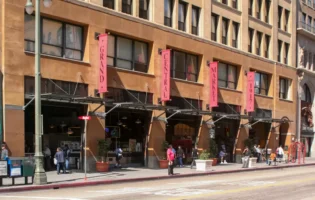
Grand Central Market
Downtown's oldest food hall serving up LA's multicultural flavors since 1917 in a historic Beaux-Arts landmark
The Last Bookstore
California's largest new and used bookstore housed in a 1914 bank building with book tunnels, literary labyrinths, and artist studios.
Our Lady Queen of Angels Catholic Church
Los Angeles' oldest church, founded in 1814, featuring Spanish Colonial architecture, gilded altar, and continuous Catholic worship.
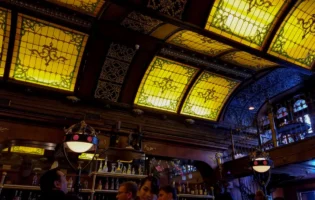
The Wolves
Belle Époque cocktail bar inside the historic Alexandria Hotel, featuring house-made ingredients and period-authentic 1900s design.
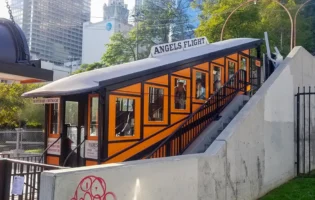
Angels Flight Railway
Historic 1901 funicular railway connecting downtown Los Angeles to Bunker Hill in a 298-foot journey up the city's steepest grade.
Little Tokyo on Other Sites