
Levitated Mass
340-ton granite boulder suspended above a 456-foot concrete walkway at LACMA, free to visit sunrise to sunset.
- See
Included in:
Levitated Mass Details
- Sunrise to sunset daily • Closed when raining
Overview
Details
Experiencing Levitated Mass / Curious LA Field Notes
Quick Take
Levitated Mass gives you a rare physical encounter with geological time and human engineering ambition. Stand beneath a 340-ton boulder that took 3,500 years to form and watch how Michael Heizer turned negative space into sculpture by carving a 456-foot slot beneath it. The work delivers an experience you can't get from photos: the boulder's mass becomes more apparent as the walkway descends 15 feet, creating a moment where you're actually underneath something that weighs as much as a blue whale. Free, always accessible, and takes about 10 minutes to walk through.
A 340-ton boulder floats above your head. You know it doesn’t actually float, but standing 15 feet below this granite megalith creates a strange optical effect where the laws of physics seem momentarily suspended. This is Levitated Mass, and walking beneath it ranks among Los Angeles’s most unusual free experiences.
The Walk Beneath
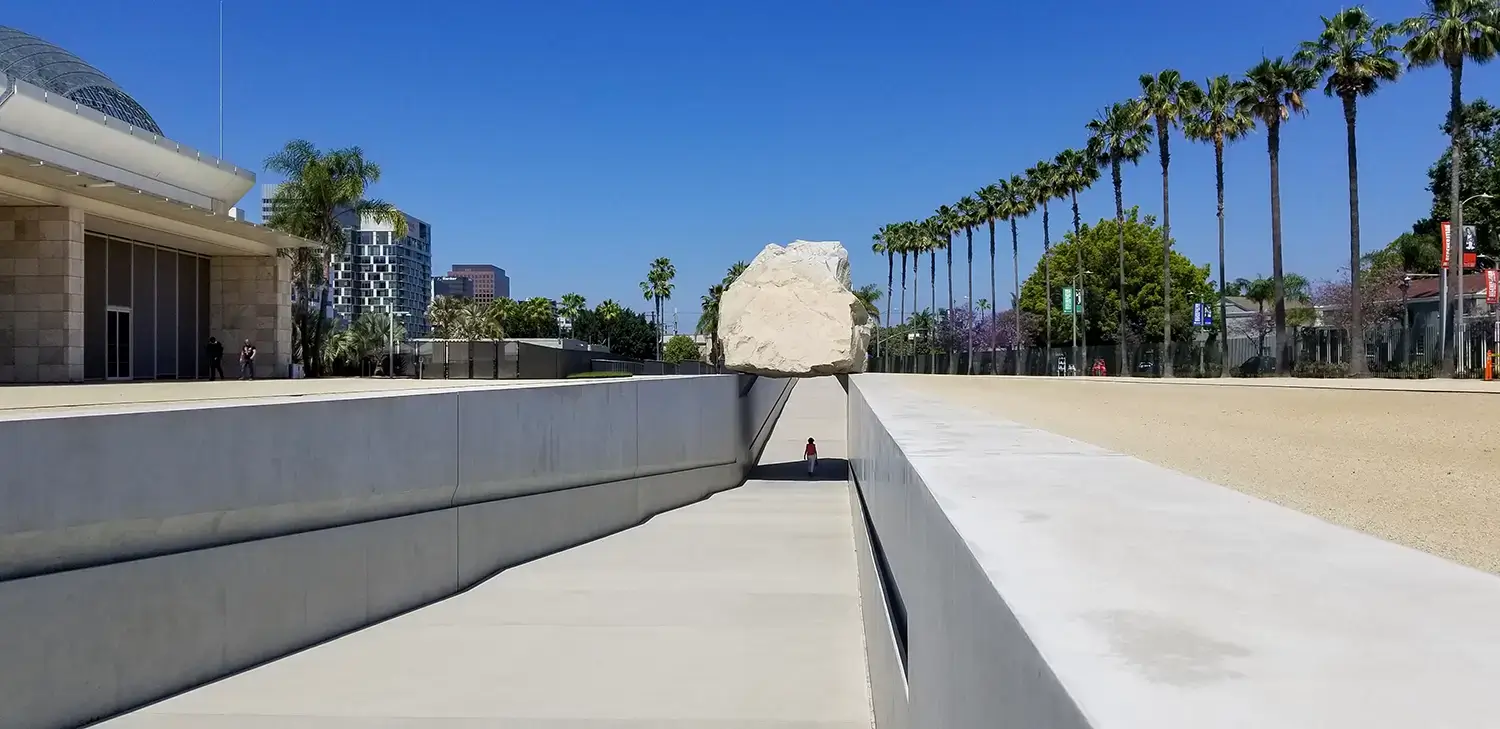
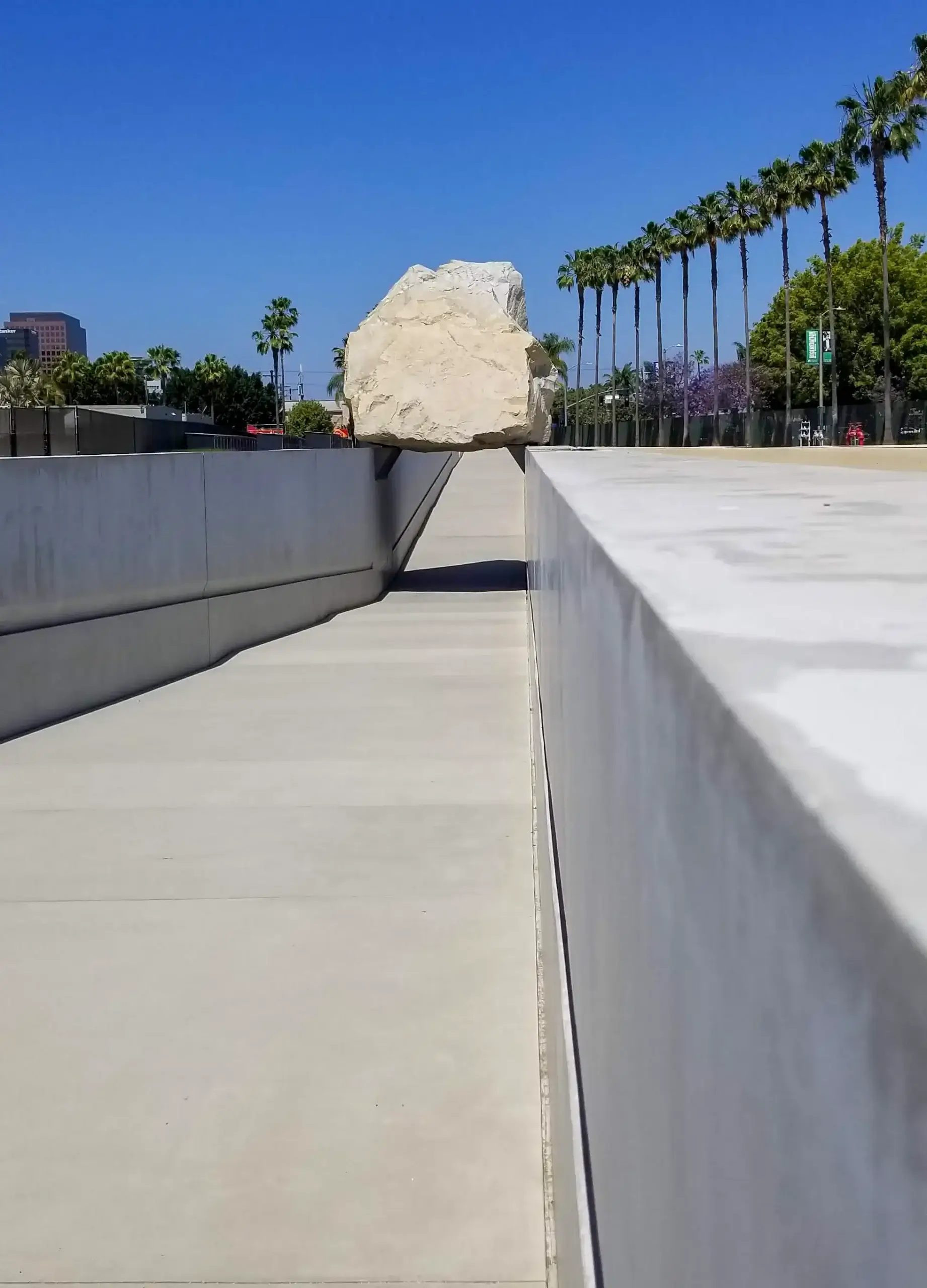
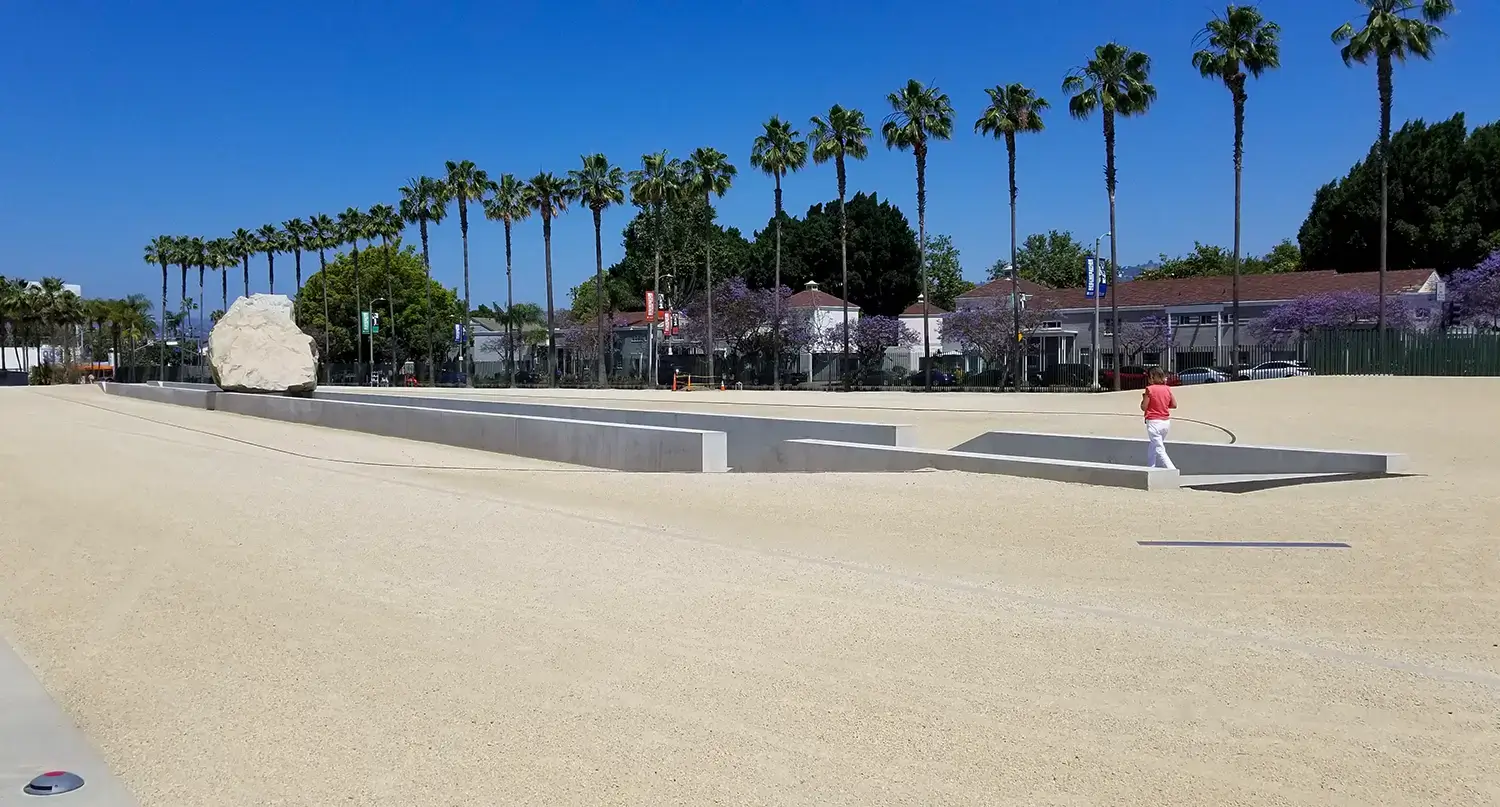
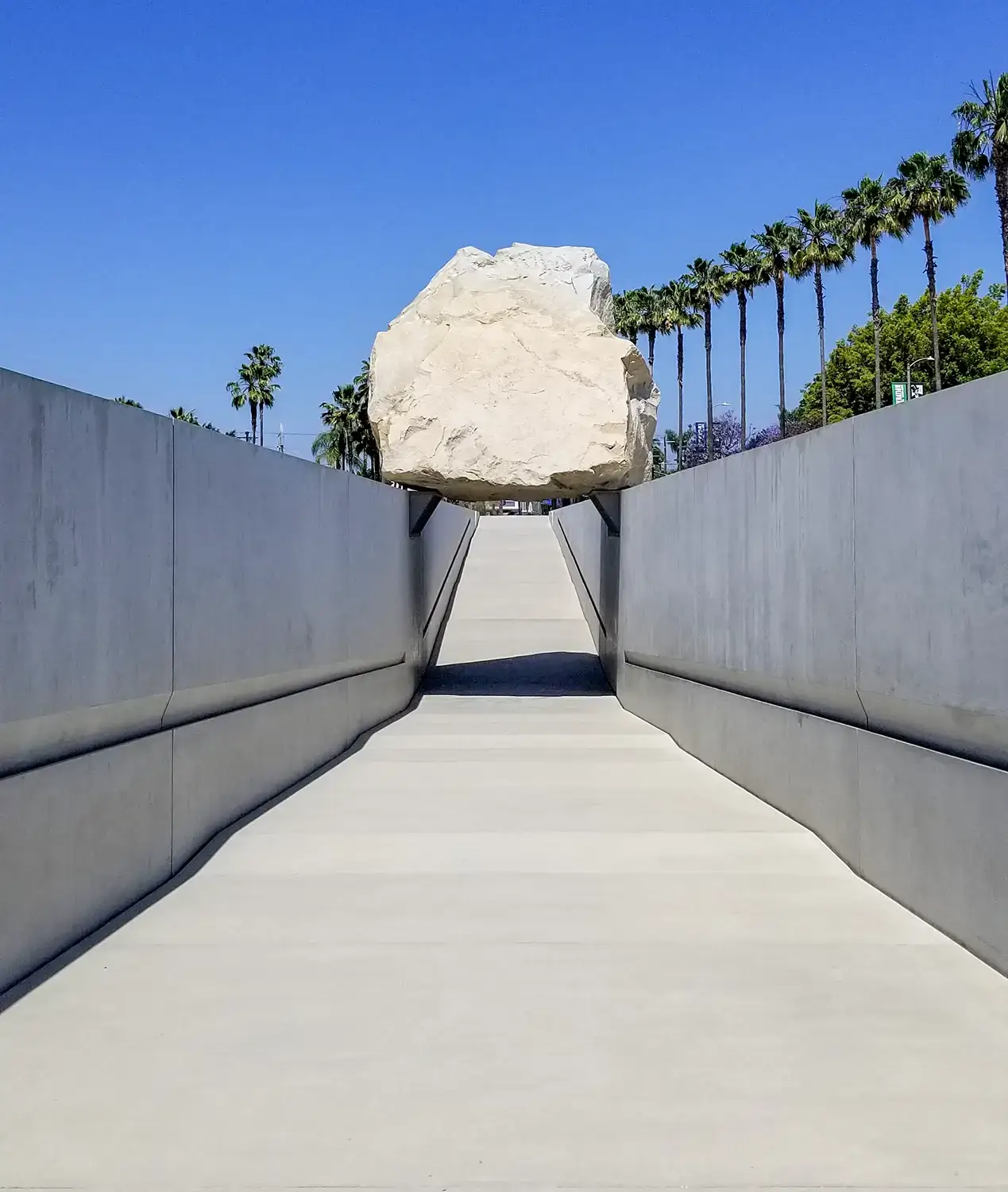
The sculpture’s genius lies in its simplicity. Michael Heizer placed a massive diorite granite boulder over a 456-foot concrete slot that gradually descends into the earth. You enter at ground level where the boulder sits just overhead. The path slopes downward as you walk, and the rock looms larger with each step. At the deepest point, 15 feet of open air separates you from 340 tons of stone.
The descent changes your perspective. What looked manageable from the entrance becomes imposing at the center. Some people pause to photograph the boulder from below. Others rush through, slightly unnerved by the weight overhead. Both reactions make sense. The work plays with your sense of security and scale.
Engineering Meets Art
Heizer first conceived this piece in 1969. His initial attempt used a 120-ton boulder, but the crane broke during installation. The project sat dormant until 2006 when this 340-ton specimen came off a quarry wall during routine blasting at Stone Valley Quarry in Jurupa Valley. The size and quality convinced Heizer and LACMA director Michael Govan to try again.
Moving the boulder became a public spectacle. The rock traveled 106 miles over 11 days in March 2012, creeping through Southern California at 5 miles per hour. Crowds gathered along the route. The transporter arrived at LACMA at 4:30 AM on March 10 to an estimated 1,000 people. Installation took three more months. The piece opened to the public on June 24, 2012.
What You’ll See
The boulder itself is diorite granite, a hard volcanic rock that formed deep underground. Its surface shows the scars of extraction and transport. Two concrete shelves anchored to the slot’s inner walls hold the stone in place, designed to support the weight for millennia. Heizer says the work should last 3,500 years.
The outdoor setting matters to the piece. LACMA sits on 2.5 acres of compressed decomposed granite that frames the slot. The museum’s buildings provide urban context. Wilshire Boulevard’s traffic hums in the background. This juxtaposition of ancient geology and modern city life sits at the heart of Heizer’s concept.
Visitor Experience
The walk takes about 5 to 10 minutes. Early morning and late afternoon offer the best light, when the sun hits the metal supports at certain angles and the boulder appears to genuinely levitate. Late afternoon also brings softer light for photography.
Rainy days close the installation for safety. The concrete can get slippery, and water damage could compromise the structure over time. Check conditions before visiting in uncertain weather.
Most visitors complete one pass and move on. Some return for a second walk, paying attention to details they missed the first time. The experience works best when you slow down and let the scale sink in. Stand at the center point and look up. The boulder blocks out a surprising amount of sky.
Why It Matters
Levitated Mass belongs to a movement called Land Art, where artists work with natural materials at monumental scales. Heizer is one of the form’s pioneers. His Double Negative (1969) in Nevada carved two massive trenches into the desert. City (1972-ongoing) in the Nevada desert spans 1.25 miles. Levitated Mass brings his approach to an urban museum setting.
The work challenges how we think about sculpture. Instead of looking at an object on a pedestal, you move through negative space. The empty slot beneath the boulder becomes as important as the stone itself. Heizer calls these “negative forms,” and they shift the focus from what’s there to what’s been removed.
Critics remain divided. Some see it as a brilliant meditation on geological time and human ambition. Others call it an expensive rock. The debate continues, but few deny the physical impact of standing beneath it. The experience stays with you whether you love the work or not.
Planning Your Visit
Arrive via LACMA’s 6th Street entrance where the sculpture sits on the north lawn. You can visit without paying museum admission. The artwork is always visible from outside, and the walkway through the slot stays open from sunrise to sunset.
Parking can be challenging during peak museum hours. LACMA’s Pritzker Parking Garage charges $23 ($15 after 8 PM). Street parking on 6th Street and Wilshire Boulevard offers metered alternatives. Read signs carefully for restrictions. Arriving early or late in the day improves your chances of finding street parking.
Combine your visit with LACMA’s other outdoor installations. Chris Burden’s Urban Light, featuring 202 restored street lamps, sits a few hundred yards away. Both works light up at night, and Urban Light looks best after sunset. The museum’s campus also includes other outdoor sculptures worth exploring.
Levitated Mass works as a quick stop or part of a longer LACMA visit. The piece demands physical presence. Photos capture the boulder’s size but miss the sensation of walking beneath it. You need to be there, in the slot, with 340 tons overhead, to understand what Heizer created. The work turns looking at art into a bodily experience, and that makes it worth the trip.
What Others are Saying
Nearby Curious Los Angeles Destinations
Museum Row
Five world-class museums along one walkable half-mile of Wilshire Blvd — art, fossils, film, cars, and craft all within a…
Largo at the Coronet
Historic theater turned legendary music and comedy club where A-list performers test new material in an intimate, phone-free setting.
Pizzeria Sei
Tokyo-style Neapolitan pizza considered some of the best in the world, served at intimate counter seating around a wood-fired oven.
St. Elmo Village
Historic artist commune offering free art workshops, colorful murals, and community creativity in 1920s Craftsman bungalows
Levitated Mass on Other Sites