
La Brea Tar Pits and Museum
The world's only active urban Ice Age excavation site with over 3.5 million fossils from saber-toothed cats to mammoths.
- See
Included in:
La Brea Tar Pits and Museum Details
- Daily 9:30am-5pm
- Closed first Tuesday of each month
Overview
Details
Experiencing La Brea Tar Pits and Museum / Curious LA Field Notes
Quick Take
La Brea Tar Pits holds the largest collection of Ice Age fossils in the world, all excavated from a single location in the middle of Los Angeles. What makes this site remarkable is that you can watch the entire scientific process unfold. Paleontologists dig fossils from outdoor pits, clean them in the visible Fossil Lab, study them in research areas, and display the best specimens in the museum galleries. The asphalt still bubbles to the surface today just as it did 60,000 years ago, making this a living laboratory where Ice Age discoveries happen every day.
An Urban Portal to the Ice Age
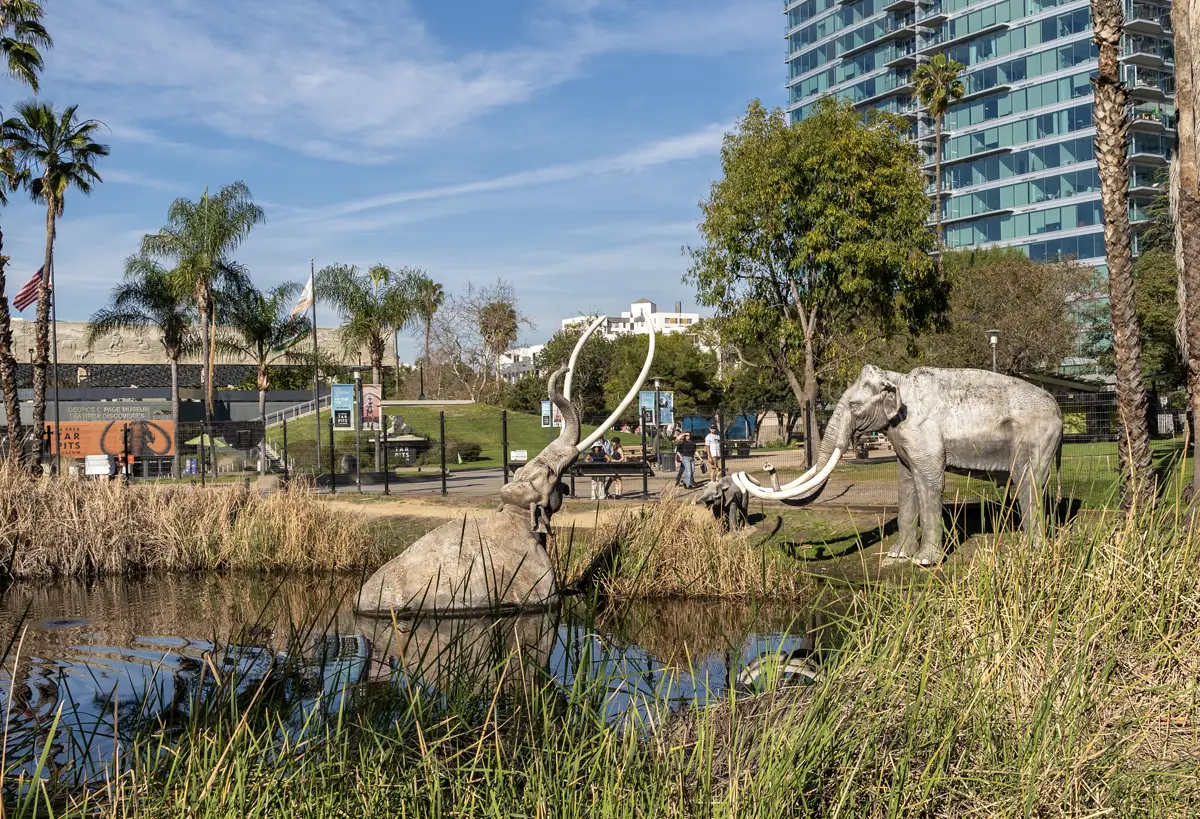
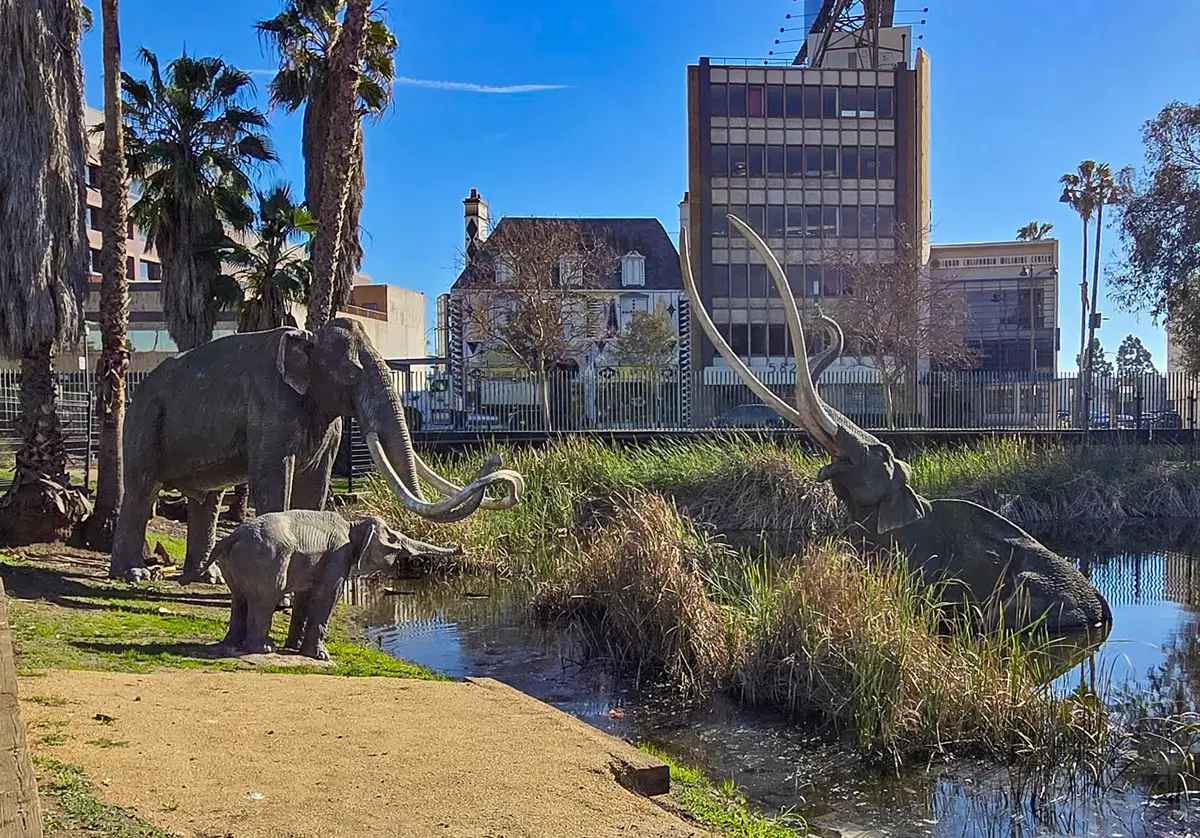
Walking along Wilshire Boulevard past high-rises and museums, you encounter something extraordinary: bubbling pools of black asphalt surrounded by park grass. The Lake Pit stops people in their tracks. Life-sized sculptures of a mammoth family appear trapped in the tar, one reaching desperately toward solid ground. This dramatic scene actually happened here thousands of times during the Pleistocene era when Los Angeles looked nothing like it does today.
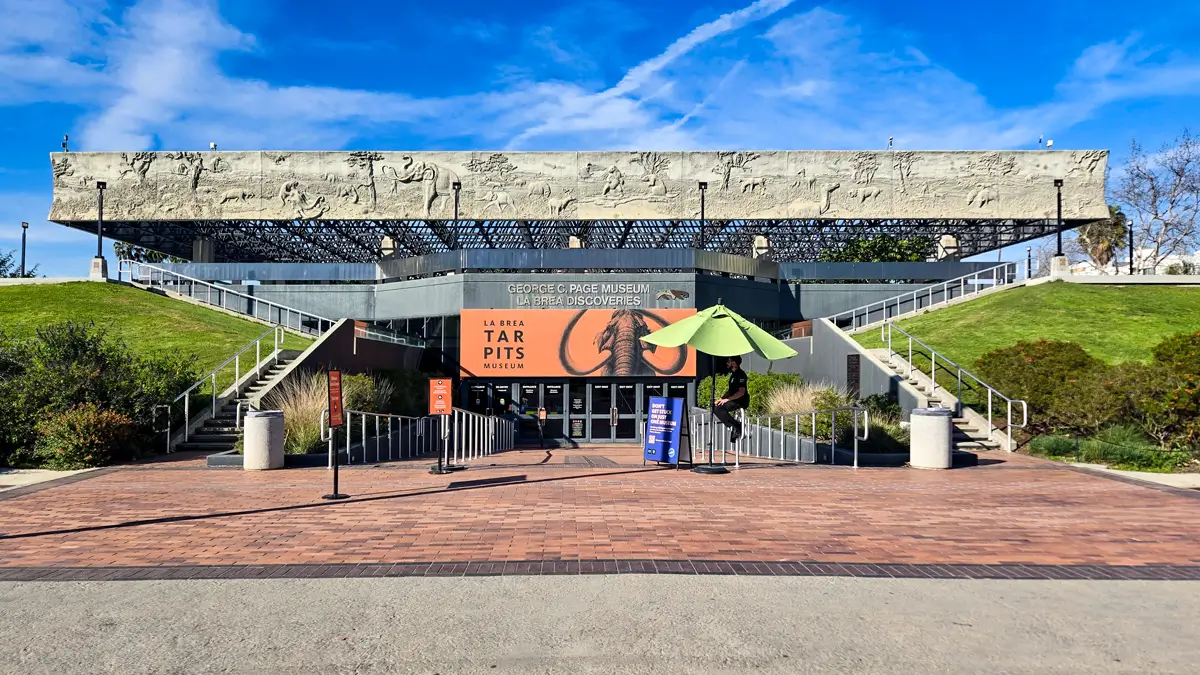
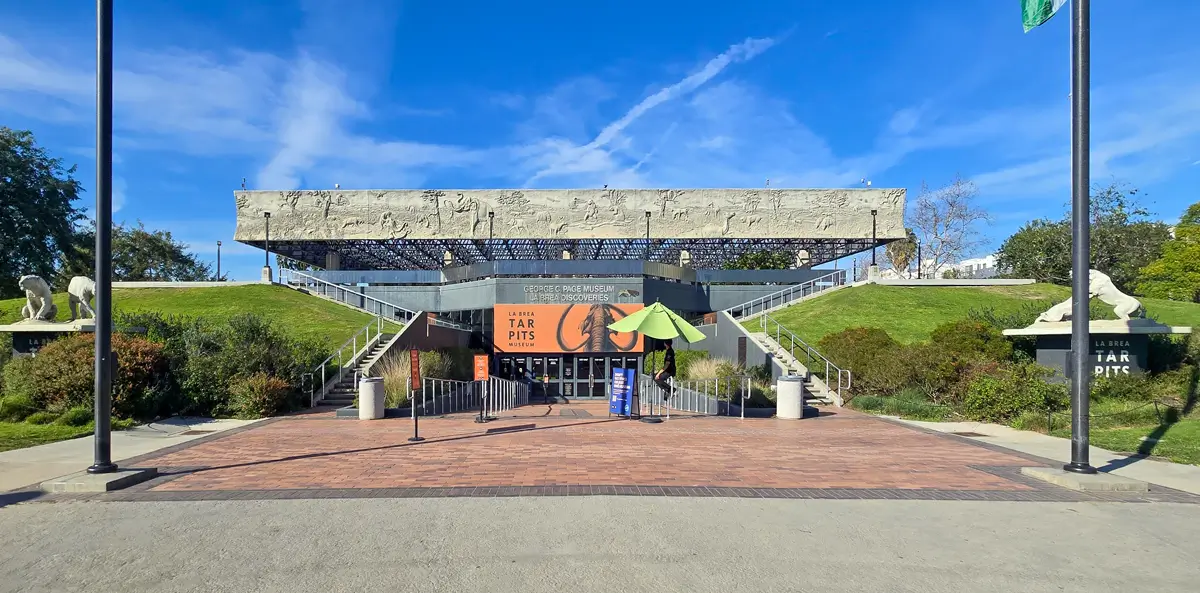
The George C. Page Museum sits at the center of this 23-acre site, built directly over the fossil deposits in 1977. The connection between museum and dig site creates a complete scientific story that most natural history museums can’t tell. Walk outside and watch excavators carefully uncovering bones from pits. Step inside and see those same fossils being cleaned behind glass walls in the Fossil Lab. Move through the galleries and encounter the finished product: perfectly preserved skeletons assembled from bones found right beneath your feet.
Watching Science Happen
The Fossil Lab draws crowds to its curved glass wall, nicknamed the Fishbowl. Scientists and volunteers sit at workstations, using tools and brushes to clean asphalt-coated bones. They answer questions while they work. You might see someone carefully separating a dire wolf tooth from the surrounding tar or piecing together fragments of a giant ground sloth’s skeleton. The work moves slowly because each fossil requires meticulous care.
Outside at Pit 91, excavators have been digging continuously since 1969. This single pit has yielded over a million bones. Project 23, discovered in 2006 when workers broke ground for a parking garage next door, contains 16 fossil deposits including the nearly complete skeleton of a Columbian mammoth named Zed. Both sites remain active. On any given day, you can lean over the railings and watch researchers carefully gridding off sections, photographing every bone’s position before removal.
The Fossil Collection
The museum displays hundreds of complete skeletons pulled from the tar over 100 years of excavation. The saber-toothed cat wall shows over 400 skulls mounted together, representing just a fraction of the thousands found here. These cats were ambush predators who likely got trapped while hunting animals already stuck in the tar. Dire wolves appear even more frequently in the fossil record. Over 4,000 individual dire wolves have been identified from the pits.
The collection extends beyond impressive predators. Mammoths, mastodons, giant ground sloths, ancient bison, camels, and horses all became trapped in the sticky asphalt. The displays also showcase microfossils: tiny bones, insect parts, seeds, and pollen grains that reveal what plants grew here and what the climate was like during different time periods. These small fossils provide scientists with data about ecosystem changes spanning 50,000 years.
The Excavator Tour
Included with admission, this 35-minute guided tour takes you behind the scenes to areas most visitors don’t see. The tour starts in the Fossil Lab workrooms, then moves outside to the Lake Pit where guides explain how animals became trapped. You visit the Observation Pit to see what a tar deposit looks like in cross-section, then walk to Project 23 for a close look at active excavation. Guides share stories about specific discoveries and explain current research projects. Space is limited, so reserve your spot when you arrive.
Ice Age Encounters
On Thursday through Sunday, the museum offers a 15-minute live show featuring a life-sized saber-toothed cat puppet created by Jim Henson’s Creature Shop. The performance happens in a darkened theater where the puppet stalks and pounces while a docent shares information about how these predators hunted. The show also clarifies that these aren’t actually tar pits but asphalt seeps (tar is man-made while asphalt occurs naturally). Kids find the puppet thrilling, though the darkness and realistic movement might startle younger children. This experience requires a separate ticket.
The Grounds
Hancock Park surrounds the museum with walking paths, bubbling tar pits, and the Pleistocene Garden. The garden recreates the native vegetation that grew here between 10,000 and 40,000 years ago based on fossil evidence from Pit 91. You’ll see coastal sage, juniper, oak, and other plants that provided food for the giant herbivores whose bones fill the museum. The park includes picnic areas, a playground, and spots to sit and watch tar bubble to the surface from active seeps. The outdoor areas are free to explore even without museum admission.
Why This Site Matters
La Brea Tar Pits was designated one of the first 100 International Union of Geological Sciences Geological Heritage Sites in 2022, recognizing it as the richest Ice Age fossil site on Earth. Research here has shaped scientific understanding of climate change, extinction events, and ecosystem dynamics. A 2023 study published in Science used precisely dated fossils from the tar pits to determine that large-scale wildfires, possibly started by humans in an ecosystem made fire-prone by climate change, caused the disappearance of saber-toothed cats, dire wolves, and other large mammals nearly 13,000 years ago. The data collected here informs current conservation decisions.
The museum continues excavating, cleaning, and studying fossils every day. Visitors leave understanding that science moves forward through careful, methodical work. You see the whole process: the asphalt still seeping, the excavators still digging, the scientists still making discoveries. The Ice Age doesn’t feel distant here. It feels immediate and real.
What Others are Saying
Nearby Curious Los Angeles Destinations
Museum Row
Five world-class museums along one walkable half-mile of Wilshire Blvd — art, fossils, film, cars, and craft all within a…
St. Elmo Village
Historic artist commune offering free art workshops, colorful murals, and community creativity in 1920s Craftsman bungalows
Largo at the Coronet
Historic theater turned legendary music and comedy club where A-list performers test new material in an intimate, phone-free setting.
Pizzeria Sei
Tokyo-style Neapolitan pizza considered some of the best in the world, served at intimate counter seating around a wood-fired oven.
La Brea Tar Pits and Museum on Other Sites