
Korean Friendship Bell
17-ton bronze bell and traditional Korean pavilion overlooking the Pacific, honoring U.S.-Korea friendship and Korean War veterans.
- See
Korean Friendship Bell Details
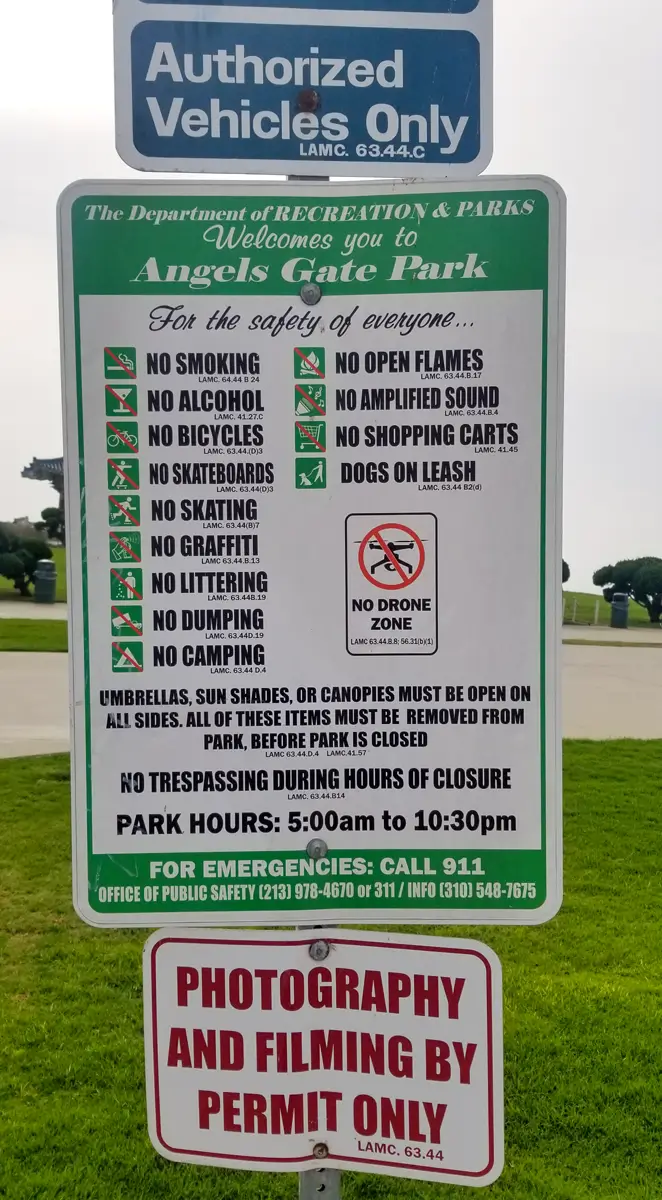
- Park open sunrise to sunset (gates typically close around 5pm)
Overview
Details
Experiencing Korean Friendship Bell / Curious LA Field Notes
Quick Take
The Korean Friendship Bell represents one of the most significant diplomatic gifts between nations, crafted by master bell makers using techniques dating to 771 AD. The bell sits on the former Fort MacArthur grounds where American troops sailed to fight in the Korean War, making this location deeply meaningful to both countries. Visitors experience both artistic mastery and historical weight in a single coastal setting. The monthly bell-ringing ceremonies let you hear the resonant tone that took nine bell masters and nearly 20,000 workers almost a year to perfect.
The Bell and Pavilion
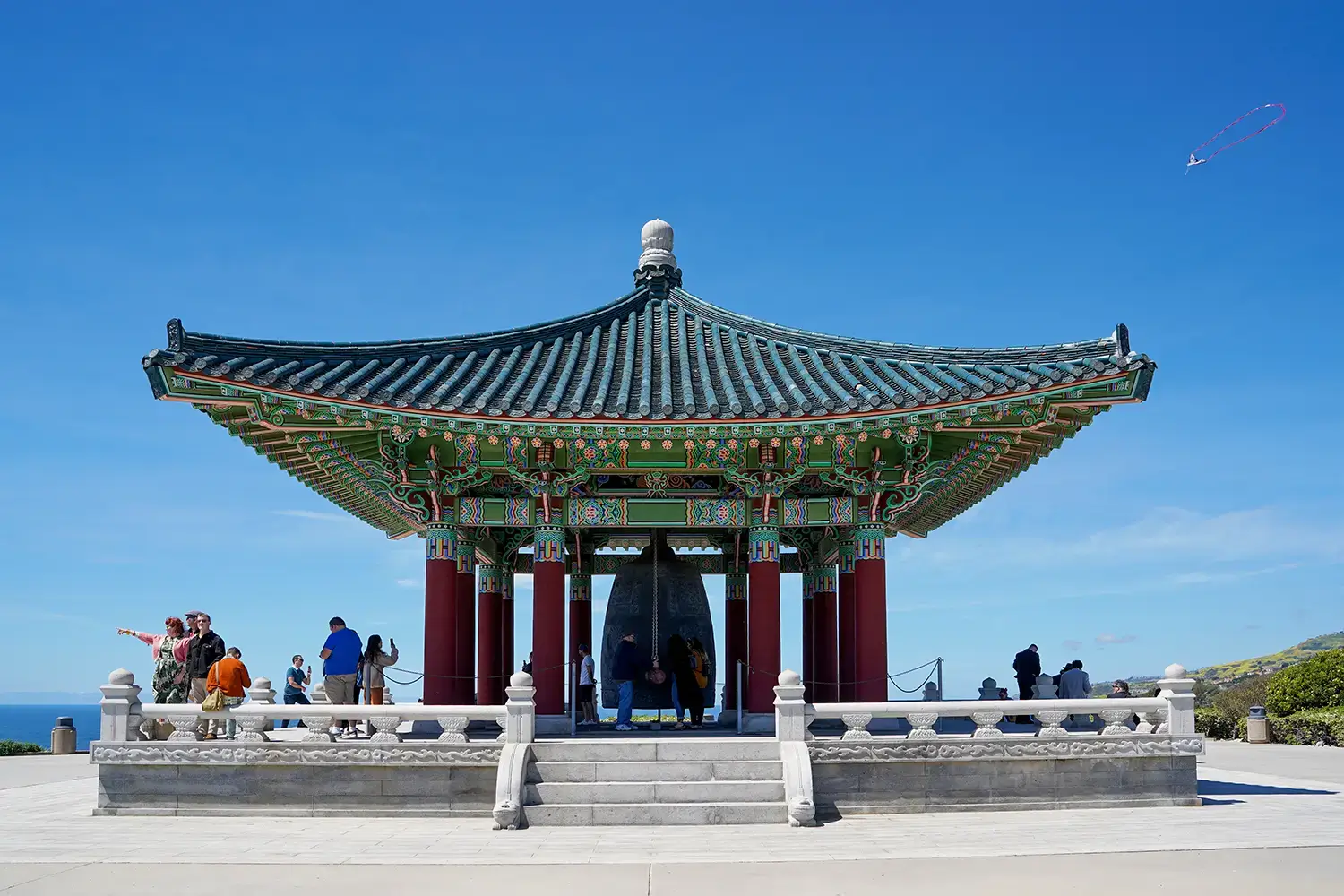
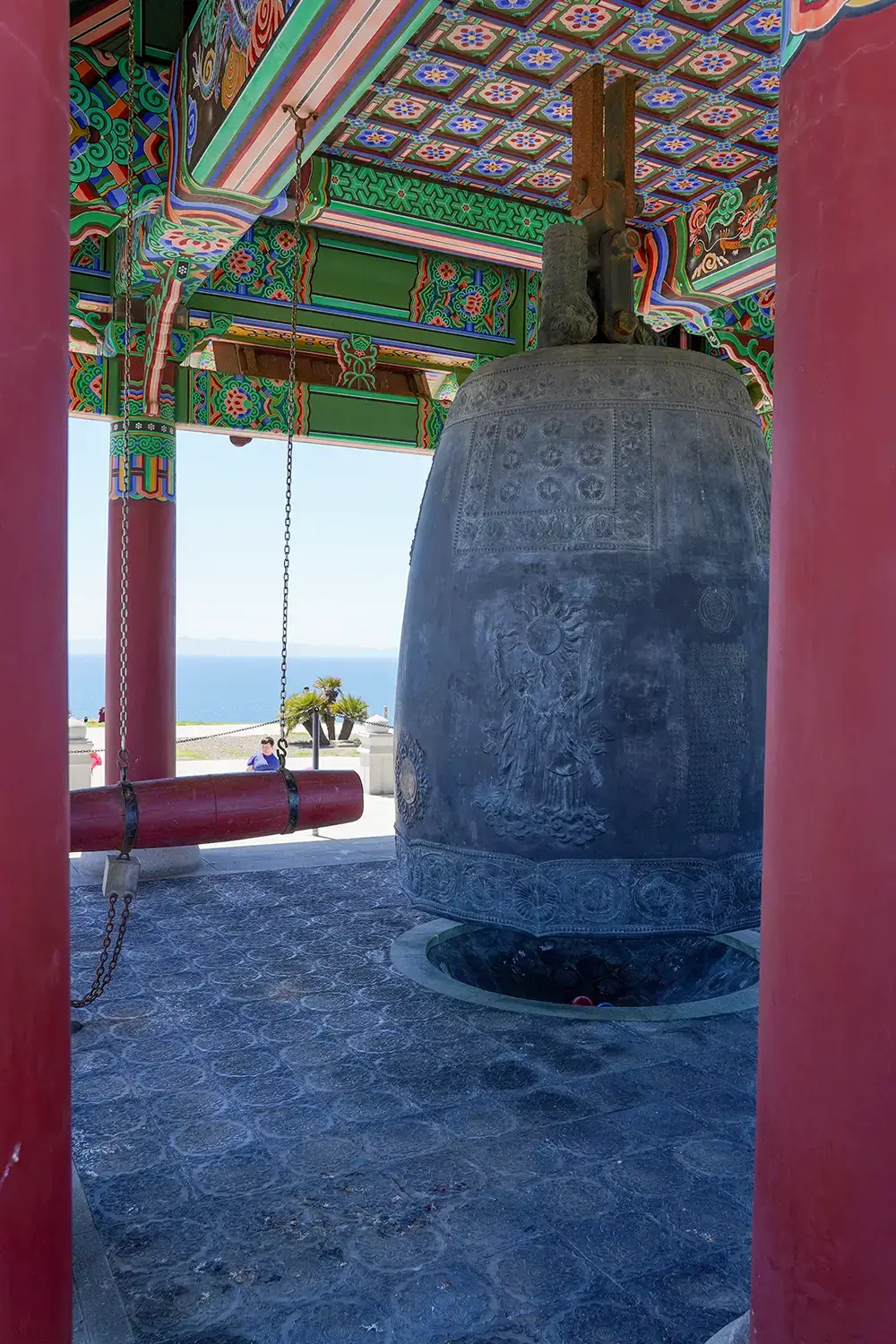
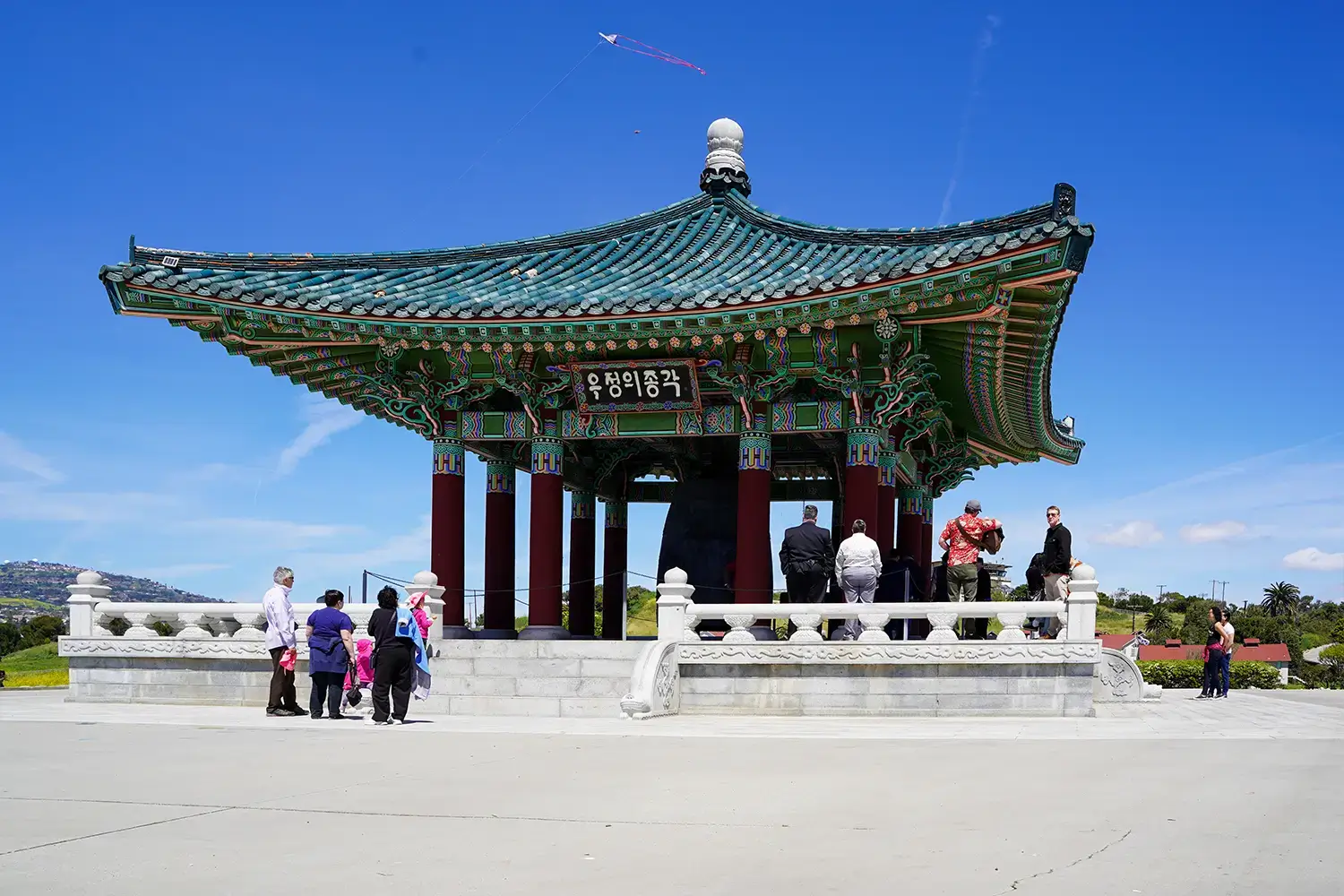
The Korean Friendship Bell rises 12 feet from its stone platform, cast from 17 tons of bronze alloyed with copper, tin, gold, silver, and phosphorus. Four pairs of figures circle the bell’s exterior: the Goddess of Liberty holding her torch alongside Korean spirits, each pair symbolizing freedom, independence, peace, and prosperity. Bands of mugunghwa (the rose of Sharon, Korea’s national flower) decorate the bell’s shoulder and rim in raised relief.
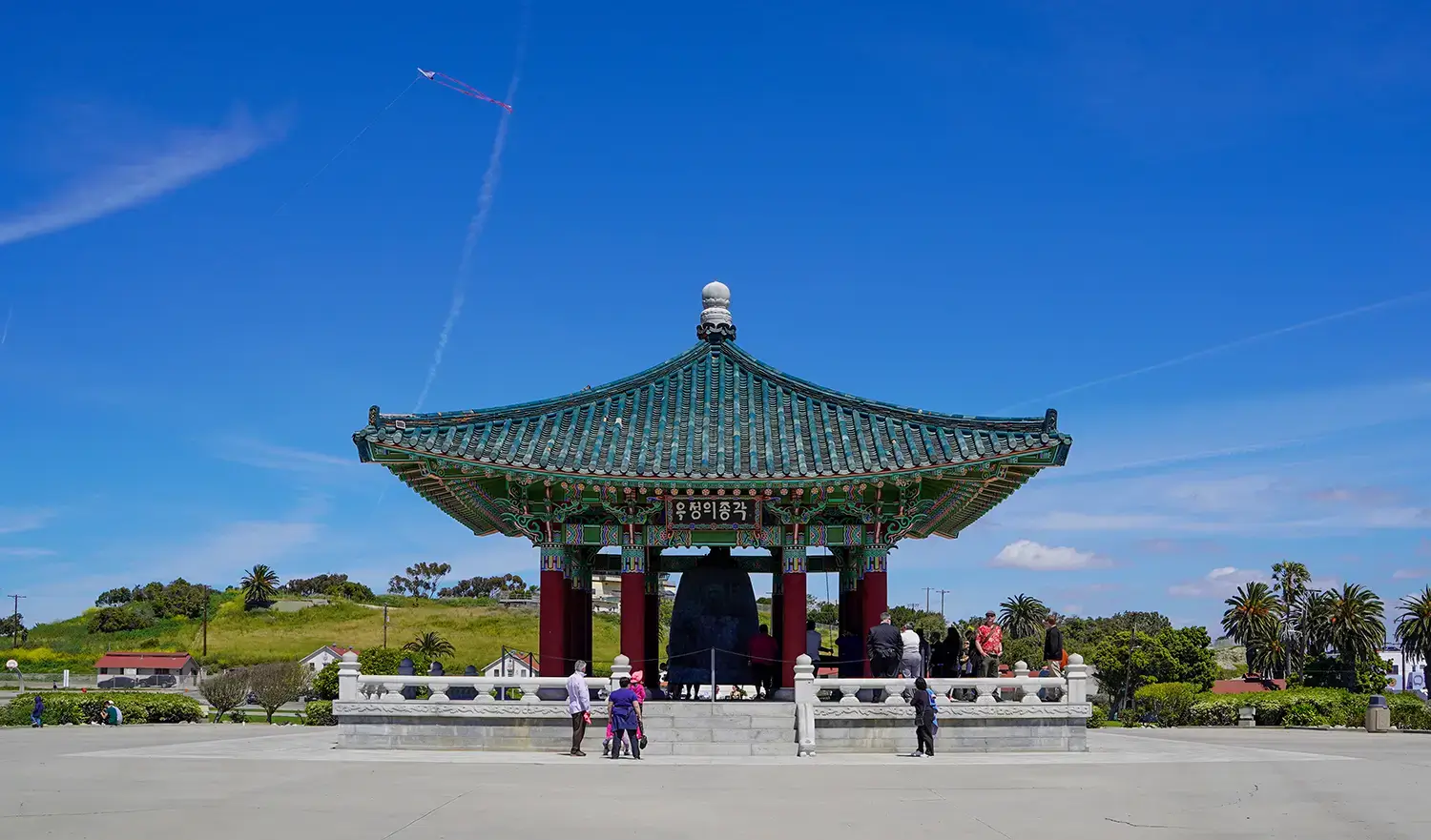
The pavilion sheltering the bell matches the grandeur of its centerpiece. Twelve reinforced concrete columns support a blue-tiled, hipped roof, each column representing an animal from the Korean zodiac. Carved stone animals guard each column’s base. The roof and columns display traditional dancheong painting in jewel tones of red, blue, green, and gold. Korean craftsmen spent ten months constructing the pavilion on-site in 1976, importing materials and traditional building techniques directly from Korea.
The bell lacks an internal clapper. Instead, a large wooden log suspended from the pavilion strikes the bell’s exterior, the traditional Korean method for ringing large bells. This produces the distinctive, resonant tone that carries across the park and out toward the ocean.
The View and Setting
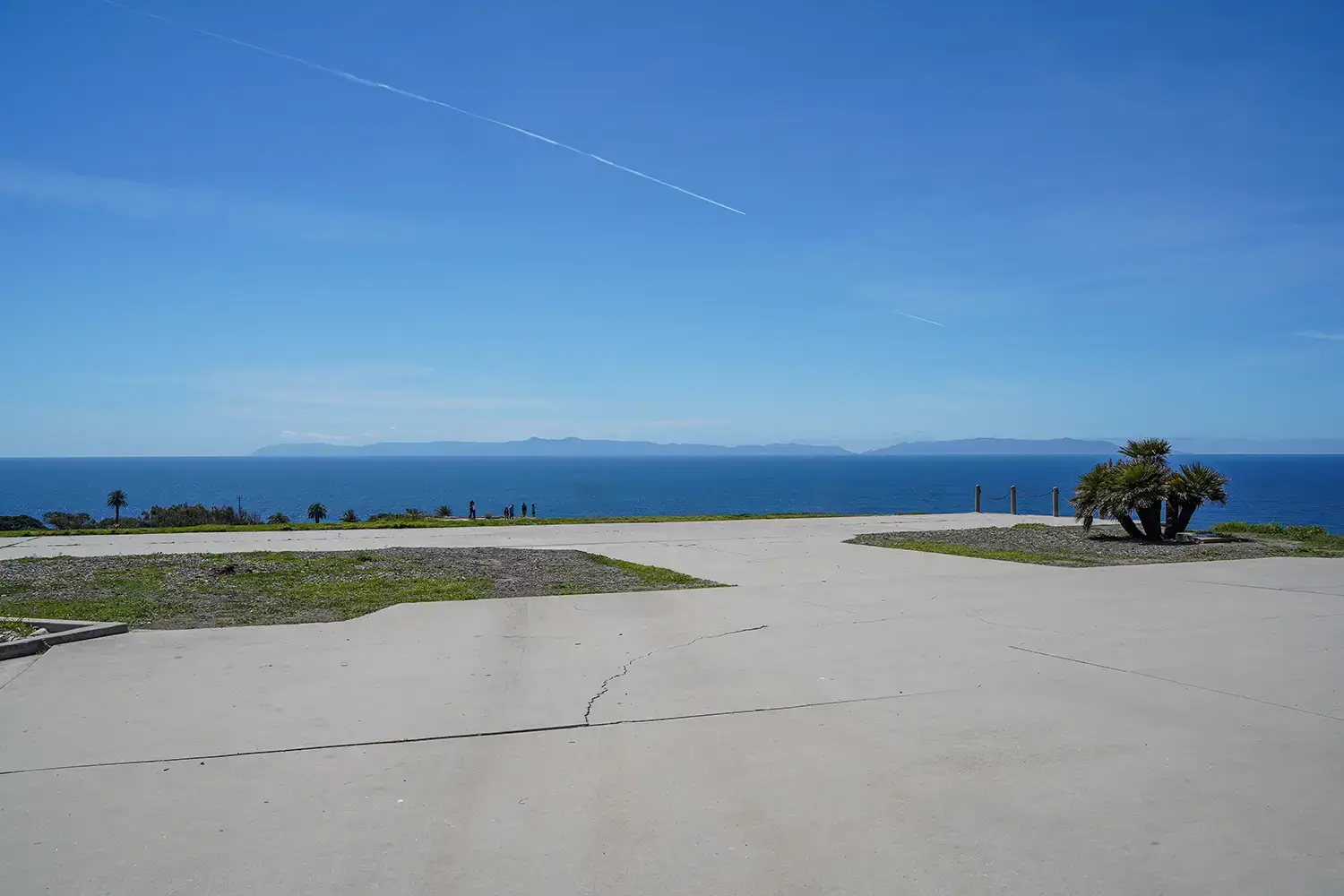
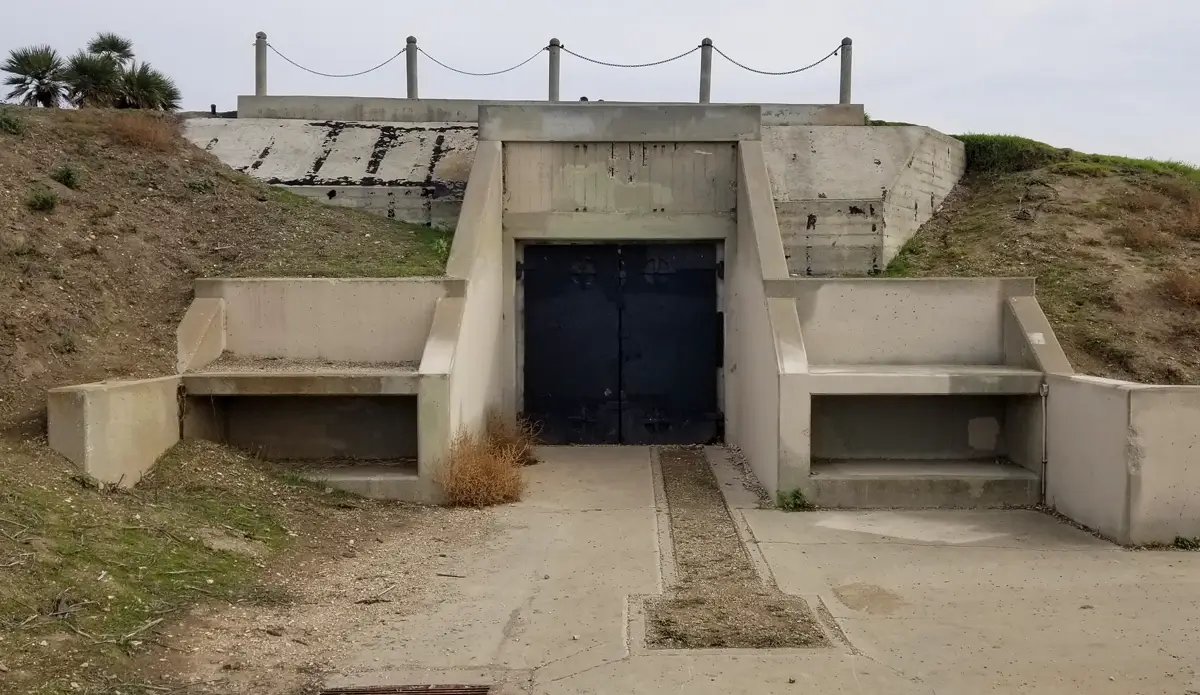
Angels Gate Park occupies the former Upper Reservation of Fort MacArthur, a World War II-era coastal defense installation. The bell sits on a knoll at the intersection of Gaffey and 37th Streets, positioned where American troops once embarked for the Pacific theater. On clear days, you can see across the Los Angeles Harbor to Catalina Island, watch container ships navigate the channel, and trace the coastline south toward Palos Verdes.
The grassy bluff surrounding the pavilion serves multiple purposes. Families spread picnic blankets on the lawn. Kids fly kites in the ocean breeze. Photographers time their visits for golden hour when the setting sun illuminates the pavilion’s painted details. The exposed location gets windy, but the temperature stays moderate year-round thanks to the ocean influence.
Two traditional Korean guardian posts (jangseung) stand near the path approaching the bell. These wooden totems, carved with stern faces, traditionally protected Korean villages from evil spirits. The posts add cultural context to your approach, marking the transition from American parkland to this Korean cultural space.
Historical Significance
The Republic of Korea gifted the bell to the United States on October 3, 1976, commemorating America’s bicentennial and honoring veterans of the Korean War. The bell’s design replicates the Divine Bell of King Seongdeok the Great, cast in 771 AD for Bongdeok Temple and now displayed at the National Museum of Gyeongju. That original bell, designated National Treasure No. 29 in Korea, remains the largest bell ever cast in Korean history.
Creating the Korean Friendship Bell required nine master bell makers and nearly 20,000 workers laboring for almost a year. The first casting attempt in Korea failed, cracking the bell. The second attempt succeeded in June 1976, allowing the bell to ship to Los Angeles in time for the October dedication. The Korean Ministry of Culture, Sports and Tourism funded a major restoration in 2013-2014, contributing over $300,000 to remove rust and graffiti. The City of Los Angeles designated the bell as Historic-Cultural Monument No. 187 in 1978.
Visiting Experience
The bell rings five times annually: Independence Day (July 4), Korean Liberation Day (August 15), New Year’s Eve (December 31), Korean-American Day (January 13), and Constitution Week (September 17). The bell also rings 13 times on the first Saturday of each month at either 11:30am or 12:15pm, depending on the season. These ceremonies often include cultural performances, martial arts demonstrations, and Korean food.
Plan to spend 30 minutes to an hour at the site. Walk around the pavilion to examine the carved details and painted designs from different angles. The path encircling the bell lets you appreciate both the architectural elements and the changing ocean views. Information plaques near the pavilion explain the bell’s history and symbolism in English and Korean.
The park includes a playground, basketball court, and restrooms near the parking area. Walking trails connect to other sections of Angels Gate Park, including the Fort MacArthur Military Museum and Point Fermin Lighthouse. The marine layer typically burns off by late morning, so visiting between 11am and 4pm usually provides the clearest views.
What Others are Saying
Nearby Curious Los Angeles Destinations
Point Fermin Lighthouse
Historic 1874 Victorian lighthouse with California redwood construction, original Fresnel lens, and guided tours up the tower
Sunken City
Crumbling 1929 landslide ruins perched on San Pedro cliffs, covered in graffiti and offering dramatic Pacific views.
Korean Friendship Bell on Other Sites