
Heritage Square Museum
Eight rescued Victorian buildings from 1876-1900 offer docent-led tours through Los Angeles' first century of statehood.
- Do
- See
Heritage Square Museum Details
- Saturday-Sunday: 11am-5pm
- Guided interior tours at noon, 1pm, 2pm
Overview
Details
Experiencing Heritage Square Museum / Curious LA Field Notes
Quick Take
These buildings tell the story of how Los Angeles grew from a small pueblo into a major city during its first hundred years as a U.S. territory. Each structure represents a different social class and architectural style from the Victorian period. You can step inside homes where lumber barons, real estate developers, and working families lived. The docent tours explain both the craftsmanship and the daily lives of early Angelenos, from funeral customs to the evolution of the corner drugstore. The museum exists because a group of citizens in 1969 refused to let LA's remaining Victorian architecture disappear.
A Living Archive of Victorian Los Angeles
Heritage Square Museum sits on four acres next to the Arroyo Seco Parkway in Montecito Heights. You enter through the Palms Depot, an 1875 train station where passengers once waited for the Red Car line between Los Angeles and Santa Monica. The depot now houses the gift shop and ticket counter.
From here, gravel paths wind through landscaped grounds past eight buildings constructed between 1876 and 1900. Each was lifted from its original location around Los Angeles and moved to this site to escape demolition. The museum opened in 1969 when concerned citizens formed the Cultural Heritage Foundation after watching Victorian homes on Bunker Hill face the wrecking ball.
Inside the Houses
Weekend tours take you into three fully restored residences. The Perry Mansion dates to 1876 and belonged to lumber magnate William Hayes Perry. Architect Ezra F. Kysor designed the Victorian Italianate home with Corinthian columns, carved brackets, and marble fireplaces. The Colonial Dames Society restored it after moving the house from Boyle Heights in 1975.
The Hale House draws the most attention with its multi-colored paint scheme. Built in 1887, the Queen Anne structure originally stood in Highland Park before James and Bessie Hale bought it in 1906. Bessie ran it as a boarding house after her husband died, living there until 1966. When the house faced demolition, citizens raised funds to move it. The restoration team found paint chips that revealed the original pink, teal, green, red, and yellow colors. They matched those hues exactly.
The Octagon House reflects an architectural theory promoted by Orson Squire Fowler in the 1850s. Fowler argued eight-sided homes provided better light, air circulation, and construction efficiency than standard four-sided houses. Gilbert Longfellow built this rare California example in 1893, long after the octagon trend had faded in the eastern U.S.
The Drug Store Time Capsule
The Colonial Drug Store stands at the end of the tour route. This recreation of a Highland Park pharmacy contains an authentic collection from George Simmons, who operated a drugstore at Figueroa Street and Avenue 57 from 1918 into the 1970s. His family donated between 85,000 and 95,000 items, most still in original packaging. Bottles and boxes line the walls floor to ceiling. A vintage soda fountain sits near the front. The back room shows the prescription department with its own pharmaceutical collection. The building even smells like old medicine.
What to Expect on Tour Day
Tours run Saturdays and Sundays at noon, 1pm, and 2pm. Tickets cost $16 and must be booked through Eventbrite in advance. Each tour lasts about 75 minutes. Docents wear period clothing and share stories about the families who lived in these homes and how Los Angeles changed during the Victorian era.
General admission lets you walk the grounds without entering the buildings. You can bring a picnic, walk your leashed dog, browse the gift shop, and photograph the exteriors. The gardens include heirloom vegetables and roses. Tables sit on the lawn. No time limit applies to general admission.
The museum hosts special events year-round. The October Halloween series includes Victorian mourning tours explaining 19th-century death customs. An outdoor movie series runs during holidays. Check the event calendar before visiting.
Parking and Access
Free parking sits at the end of Homer Street. The lot is gravel and fairly small. Arrive early on weekends. Some visitors note the street access can feel narrow for large vehicles.
Three buildings have wheelchair ramps: Perry House, Palms Depot, and Colonial Drug Store. Other structures require stairs. Upper floors in most houses remain accessible only by staircase. Docents can show photos of rooms you cannot reach. The modern restrooms and gift shop meet full accessibility standards.
Only service dogs can join interior tours. On general admission days, leashed dogs are welcome on the grounds.
Planning Your Visit
The museum closes on major holidays including Fourth of July, Thanksgiving, Christmas, and New Year’s Day. Heavy rain may cause closures. Call ahead at (323) 222-3319 if weather looks questionable.
Photography is not permitted inside the buildings during tours. This protects the collection and maintains security. You can photograph exteriors freely.
Heritage Square takes about two hours to explore if you include a docent tour and time on the grounds. The experience works well for architecture enthusiasts, history buffs, families with older children, and anyone curious about how Southern California looked before freeways and sprawl.
What Others are Saying
Nearby Curious Los Angeles Destinations
Lummis Home-El Alisal
Stone house hand-built over 13 years by pioneering journalist and Native American rights activist Charles Fletcher Lummis
The Steepest Road in California (Eldred Street & Stairs)
California's steepest drivable street with a 33% grade and historic wooden stairs leading to sweeping city views.
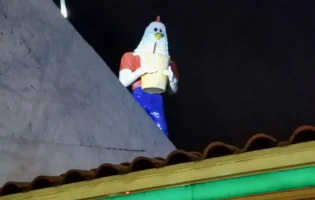
Chicken Boy
The Statue of Liberty of Los Angeles: a 22-foot rooftop guardian (half man and half chicken) who stands over the…
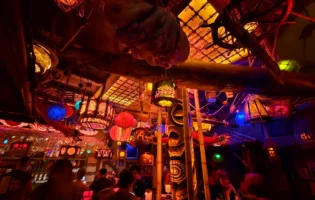
The Lucky Tiki (Highland Park)
Hidden speakeasy tiki bar tucked behind Highland Park Bowl serving theatrical rum cocktails in a vintage Polynesian hideaway.
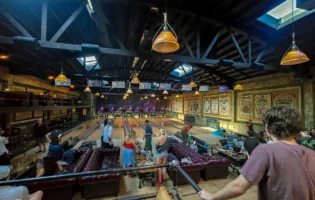
Highland Park Bowl
Los Angeles's oldest operating bowling alley, restored to its 1927 Prohibition-era glory with vintage lanes and exposed pin-setting machinery.
Galco’s Old World Grocery (Soda Pop Stop)
Family-owned Highland Park soda shop stocking 700+ independent sodas alongside vintage candy, craft beer, and deli sandwiches.
MorYork
Clare Graham's 7,000-square-foot Highland Park studio filled with sculptural works made from millions of buttons, pop tops, and found objects.
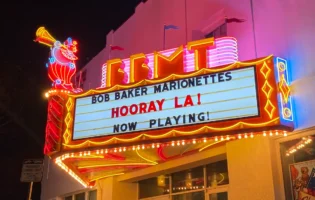
Bob Baker Marionette Theater
America's longest-running puppet theater, where hand-crafted marionettes have performed for families since 1963.
Chinatown
Historic neighborhood where Chinese American culture lives through food markets, temples, red-lantern plazas, and generations of family-run businesses
Pasadena Model Railroad Museum
One of the world's largest HO scale model railroads, built by a volunteer club that has been running trains in…
Philippe The Original
Historic downtown spot serving the original French dip sandwich since 1918 in a no-frills cafeteria with sawdust floors.
Heritage Square Museum on Other Sites