
Franklin Canyon Park
Six hundred acres of trails, wildlife, and Hollywood history between Beverly Hills and the Valley—where Andy Griffith skipped rocks.
- Do
Franklin Canyon Park Details
- Daily 7:00 AM - 6:00 PM
Overview
Details
Experiencing Franklin Canyon Park / Curious LA Field Notes
Quick Take
Franklin Canyon Park sits in the geographic center of Los Angeles, a 605-acre canyon where you can watch Mandarin ducks paddle across the same lake that appeared in The Andy Griffith Show's opening credits. The park has two distinct personalities: the upper Franklin Canyon offers an easy one-mile loop around the reservoir perfect for families and birdwatchers, while the lower canyon's Hastain Trail climbs 550 feet to views of Beverly Hills and the Pacific. Since 1914, when William Mulholland built the reservoir here, the canyon has moved from water storage to oil baron summer retreat to Hollywood backlot—and film crews still show up regularly to shoot among the sycamores and chaparral.
Two Canyons in One
Franklin Canyon divides itself into upper and lower sections, each with a different feel. The upper canyon, accessed from Mulholland Drive, centers on the three-acre reservoir ringed by a gentle walking path. Oak trees shade picnic tables near the water, and the Sooky Goldman Nature Center sits just uphill from the lake, offering hands-on exhibits about local ecology. Heavenly Pond, a smaller ADA-accessible body of water, attracts turtles and waterfowl year-round.
The lower canyon, reached from Beverly Drive, feels more remote. Here you’ll find the trailhead for Hastain Trail, which climbs through chaparral to an overlook at 1,000 feet elevation. On clear days, you can see across west Los Angeles to the ocean. The Spanish-style Doheny Ranch house from 1935 still stands at the base of the trail, a reminder of when oil baron Edward Doheny used this canyon as his family’s summer retreat.
Walking the Reservoir Loop
The most popular activity is the one-mile loop around Franklin Canyon Reservoir. The path is paved in sections and dirt in others, wide enough for strollers and wheelchairs at the duck pond. Bring bread crumbs—Mandarin ducks, wood ducks, and Canada geese gather near the shore, along with the occasional great blue heron. The lake sits in a natural bowl, so you’re walking in dappled shade for much of the circuit.
Benches line the water at intervals. Early morning brings joggers and dog walkers. Afternoons see families with young children feeding ducks. The pace is slow and the crowds are light, even on weekends. If you’re visiting with kids, stop at the nature center first—they can identify the birds they see on the trail using what they learned inside.
Hastain Trail and the Film History
If you want elevation gain, head to Hastain Trail in the lower canyon. The route climbs steadily up a fire road, gaining 550 feet over 1.1 miles to reach a rocky outcrop with panoramic views. From there, you can loop back down through chaparral on a narrower single-track trail. The full circuit is 2.3 miles.
This is the same terrain where WWII series Combat filmed nearly every episode of its fifth season. The Andy Griffith Show shot its opening sequence at the lake in 1960. Claudette Colbert’s hitchhiking scene in It Happened One Night (1934) was filmed on the access road near Heavenly Pond. Twin Peaks used a ring of sycamores here as Glastonbury Grove, the entrance to the Black Lodge. About 25 productions still film here annually, drawn by the lack of palm trees and the park’s proximity to studios.
You might spot film crews during your visit—they’re required to stay out of hikers’ way, but you’ll occasionally need to walk around equipment trucks parked along Franklin Canyon Drive. The park’s film permit fees help fund the nature center and outdoor classroom programs.
Wildlife and Birdwatching
Franklin Canyon sits on the Pacific Flyway, making it a stopover point for migratory birds. Spring and fall bring warblers, flycatchers, and neo-tropical migrants passing through on their way north or south. Year-round residents include seven species of hawks, great horned owls, and the bright-plumaged Mandarin ducks (originally from Asia, now breeding wild in California).
Early morning is best for birdwatching. The canyon wakes up with birdsong before 7 a.m., and the light is soft on the water. Bring binoculars. The nature center keeps a checklist of birds spotted in the park—over 100 species have been documented here.
Mammals are harder to spot but present: coyotes, bobcats, gray foxes, and the occasional mountain lion pass through. Frogs call from the pond edges at dusk. Garter snakes sun themselves on the trail in warm weather.
Planning Your Visit
The park opens at 7 a.m. and closes at 6 p.m. daily. There are two entry points: from Mulholland Drive for the upper canyon and nature center, or from Beverly Drive for the lower canyon and Hastain Trail. Both routes follow Franklin Canyon Drive, a winding two-lane road with several stop signs monitored by automated cameras. Stop completely—the tickets are real and cost $175.
Parking is free at both ends. The main lot near the reservoir holds about 30 cars and rarely fills. Restrooms are available near the nature center and at the lower ranch area. Cell service is spotty in the canyon.
Pack water for the Hastain Trail—there’s little shade once you climb above the oak woodland. The reservoir loop stays cooler. Dogs are allowed on all trails but must be leashed. Swimming and fishing are not permitted in the lake or pond.
The Sooky Goldman Nature Center keeps limited hours (Wednesday through Saturday, typically 10 a.m. to 4 p.m., but call ahead to confirm). Inside, you’ll find taxidermy displays, a small gift shop, and interactive exhibits about water conservation and native plants. The William O. Douglas Outdoor Classroom hosts school groups during the week—mornings can be busy with children on field trips.
Franklin Canyon gives you forest and water in the middle of Los Angeles, a place where Hollywood history and natural history share the same trails. The crowds stay manageable, the admission stays free, and the ducks keep paddling through scenes that have appeared in films for nearly a century.
What Others are Saying
Nearby Curious Los Angeles Destinations
Edwards’ Point (The Center of Los Angeles)
Hand-stamped plaque marking the calculated geographic center of Los Angeles, hidden along a trail in Franklin Canyon Park.
TreePeople
Environmental nonprofit that has planted millions of trees across LA; hike, learn, or volunteer at these headquarters
Mulholland Scenic Overlook
Winding mountain roadside pullout offering sweeping views of the San Fernando Valley and sparkling Los Angeles cityscape below.
Greystone Mansion & Gardens: The Doheny Estate
55-room Tudor Revival mansion and 18-acre estate built by an oil tycoon in 1928, now a public park and one…
Chemosphere by John Lautner
Stunning octagonal house perched atop a single 30-foot concrete column, designed by legendary architect John Lautner in 1960.
The Brady Bunch House
The most photographed TV home in America recreates The Brady Bunch sets inside a 1959 mid-century house
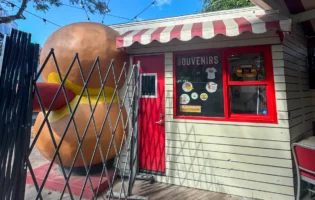
Tail O’ the Pup
LA's iconic 18-foot hot dog-shaped stand serving classic franks since 1946, lovingly restored and reopened in 2022.
The Lucky Tiki (West Hollywood)
Speakeasy-style tiki bar hidden above Tail o' the Pup where The Doors recorded L.A. Woman—theatrical cocktails in rock history.
Franklin Canyon Park on Other Sites