
Forest Lawn Museum (Hall of Crucifixion & Resurrection)
Theatrical presentation of the largest religious painting in the Western United States inside a purpose-built Gothic hall
- See
Forest Lawn Museum (Hall of Crucifixion & Resurrection) Details
- Tuesday-Sunday: 10 AM-4:30 PM
- Presentations at 10 AM, 12 PM, 2 PM, 4 PM
- Closed Mondays
Overview
Details
Experiencing Forest Lawn Museum (Hall of Crucifixion & Resurrection) / Curious LA Field Notes
Quick Take
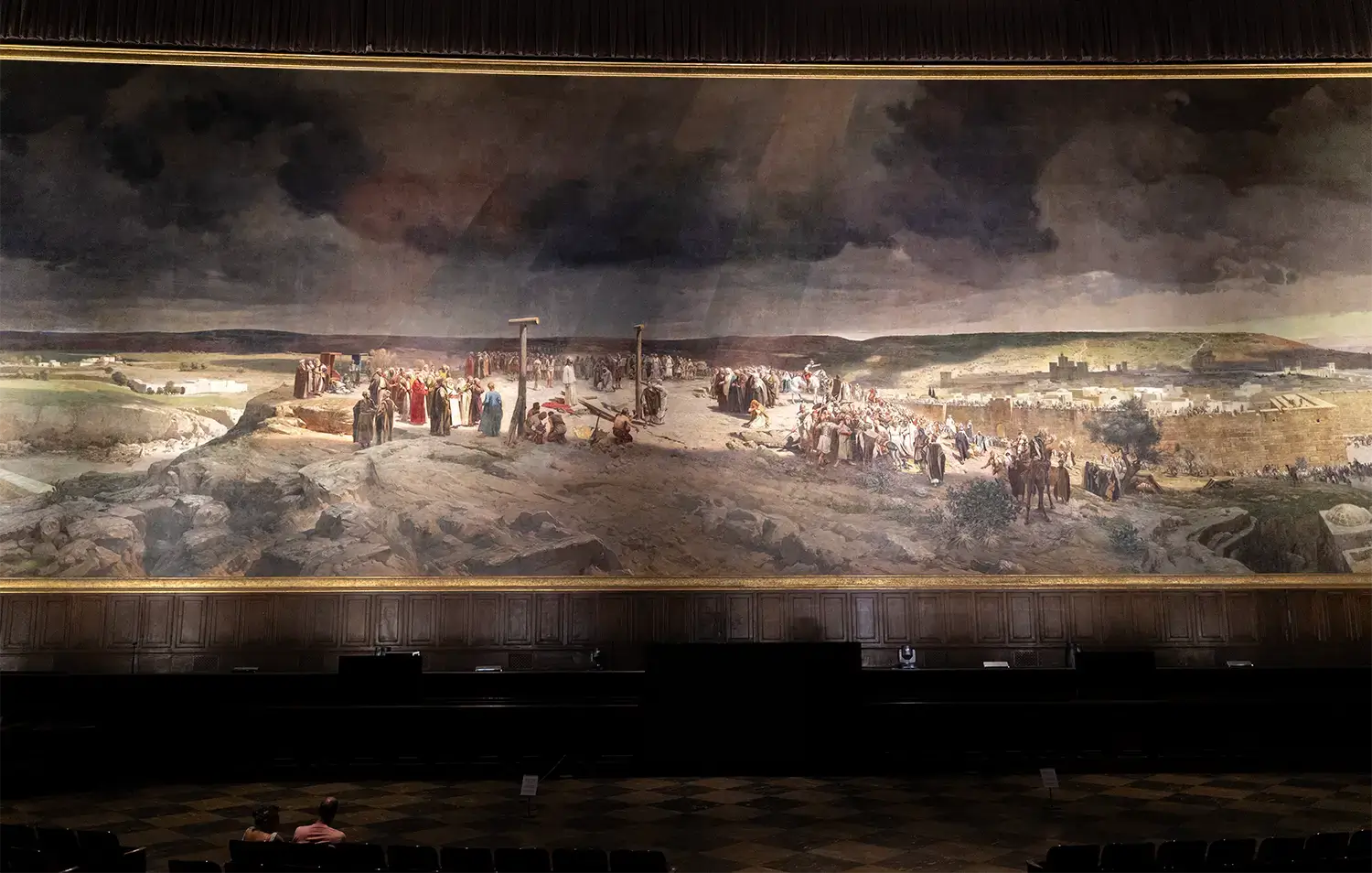
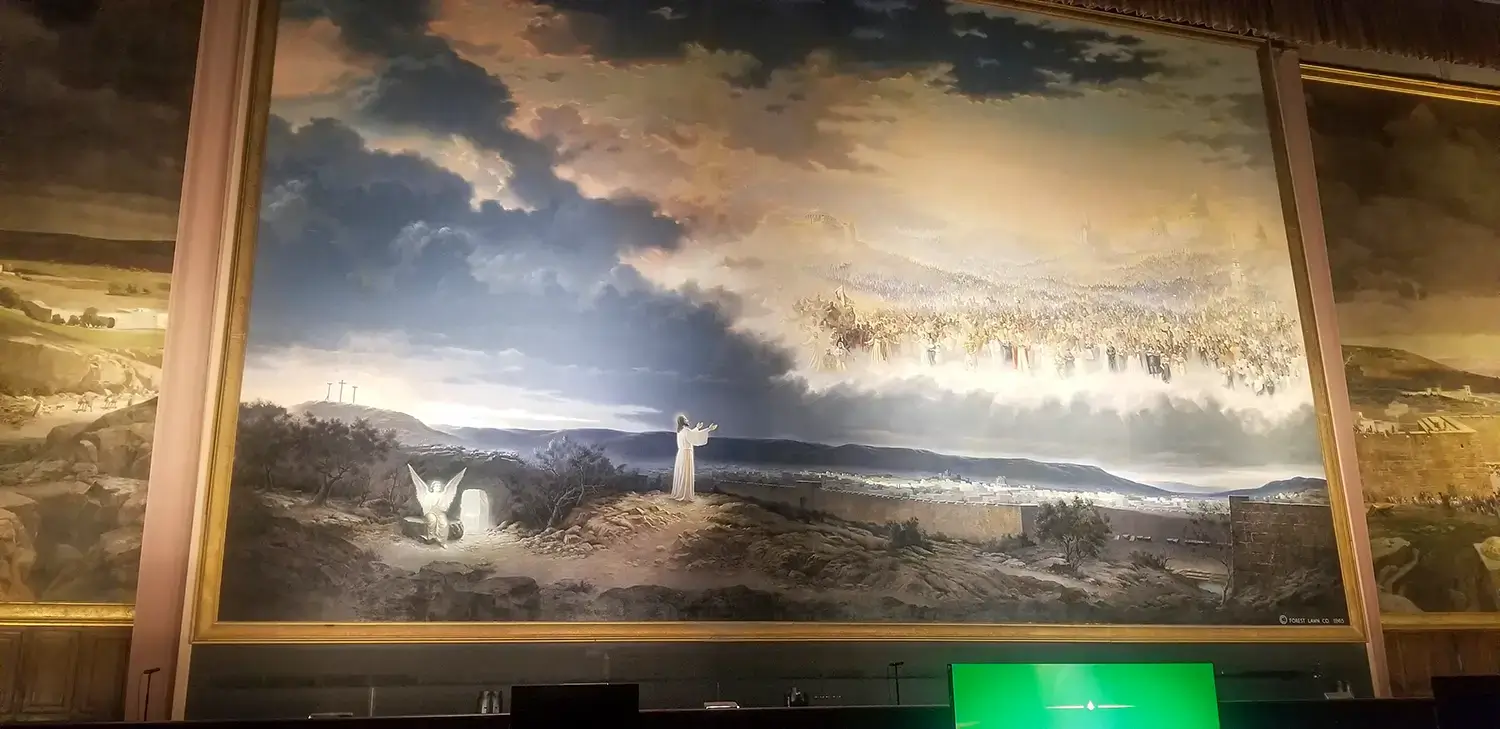
This is one of LA's stranger cultural attractions: a cemetery-owned auditorium staging hourly performances around a painting so large it spent decades rolled up in warehouses because nobody could display it. Polish artist Jan Styka created The Crucifixion in the 1890s, brought it to the 1904 World's Fair, then abandoned it when he couldn't pay customs fees. Forest Lawn founder Hubert Eaton found the canvas in 1943 and built this entire hall just to show it. The presentation feels part museum lecture, part cinema experience, with the painting emerging from darkness as narration guides your eye across its thousand figures.
A Painting Lost and Found
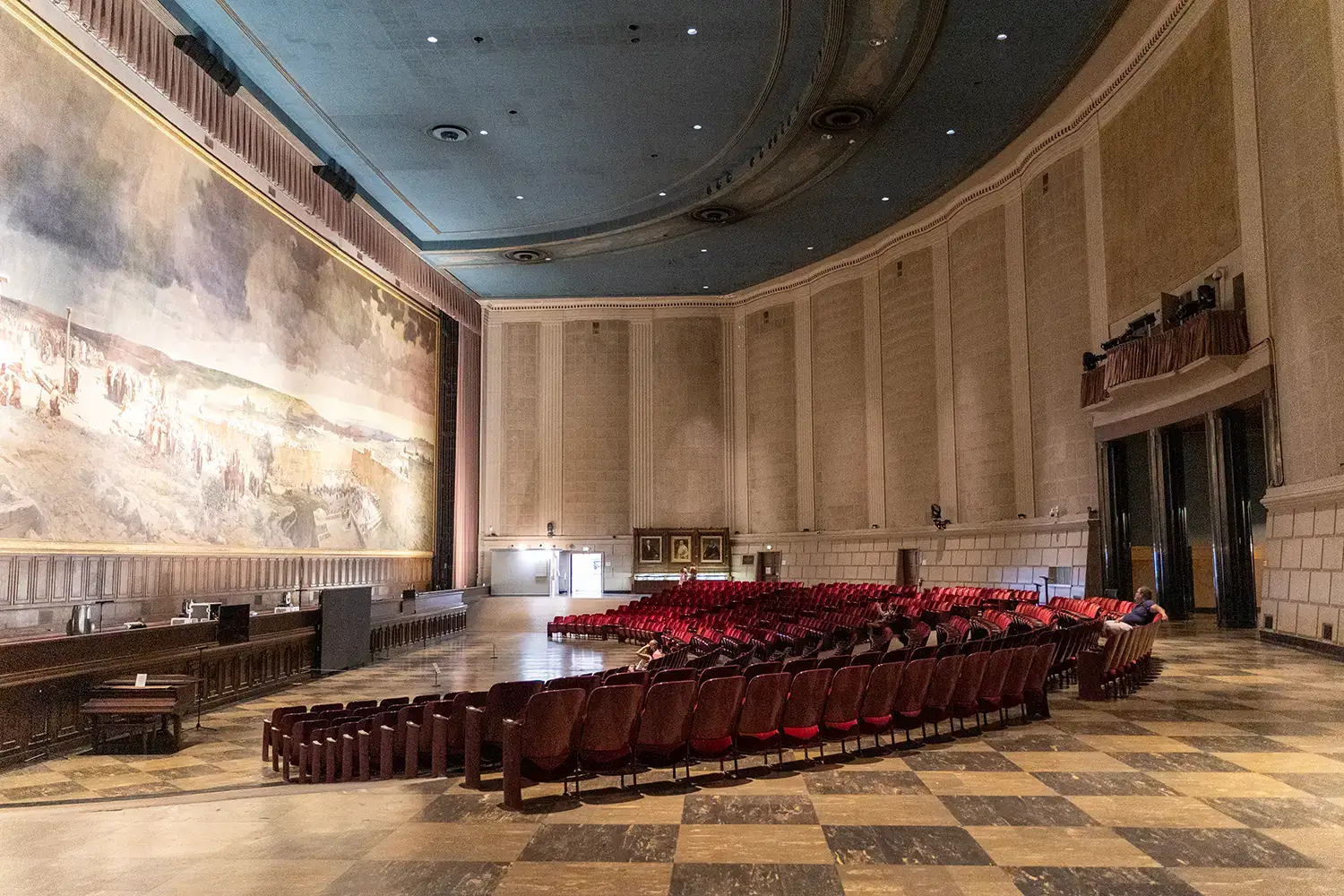
Walk into the Hall of Crucifixion-Resurrection and you enter a darkened auditorium. Rows of seats face forward. Heavy curtains conceal the far wall. The room could pass for a small theater, which makes sense given what happens next.
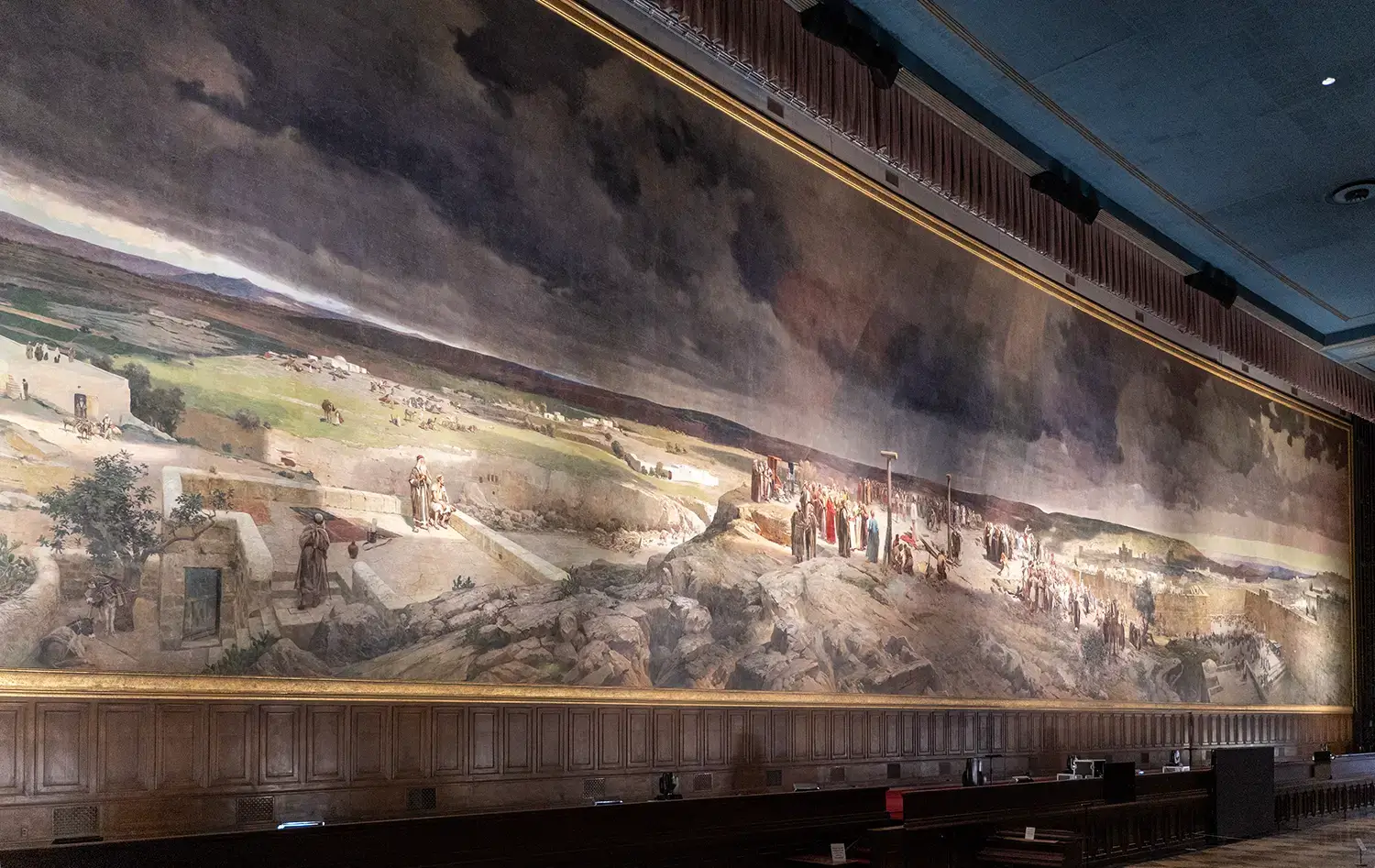
Every hour, a new presentation begins. The lights go down. A narrator’s voice fills the space, telling you about Jan Styka, a Polish painter who created something so ambitious it became his burden. In the 1890s, he painted The Crucifixion on commission, traveling to Jerusalem for research and having his palette blessed by Pope Leo XIII in Rome. He spent years rendering every detail across a canvas 195 feet wide and 45 feet tall.
Styka brought his finished work to the 1904 World’s Fair in St. Louis. The painting was too large to install. When the fair ended, he couldn’t afford the export duties. He returned to Poland empty-handed and died in 1925 without seeing his masterwork again. The painting was wrapped around a telephone pole and moved from warehouse to warehouse for four decades.
The Curtains Open
The narration continues as you sit in darkness. Then the presentation shifts. Sections of the painting light up behind the curtains, guiding your attention from right to left across the composition. You hear about the road to Calvary, the crowd, the Roman soldiers. The lighting moves with the story.
When the full curtains finally part (all 3,500 pounds of them, sliding on custom tracks), the scale hits you. The painting stretches across your entire field of vision. Christ stands at the center, bathed in painted light, with more than a thousand figures surrounding him. Faces in the crowd show grief, anger, curiosity. Styka included his own self-portrait as the apostle Paul.
The presentation doesn’t stop there. After showing The Crucifixion, the lights go dark again. You hear sound effects: hammers, thunder, a heartbeat that slows and stops. When light returns, the curtains have shifted to reveal Robert Clark’s The Resurrection, painted in 1965 after a 25-year search for a companion piece. Christ stands outside his tomb, arms raised toward heaven.
What Makes It Work
This isn’t a typical museum visit where you walk up to paintings on a wall. You stay seated. The presentation controls what you see and when you see it. Some visitors find the theatrical approach moving. Others prefer to study art at their own pace. Either way, the experience is deliberate: Forest Lawn founder Hubert Eaton designed it this way when he built the hall in 1951.
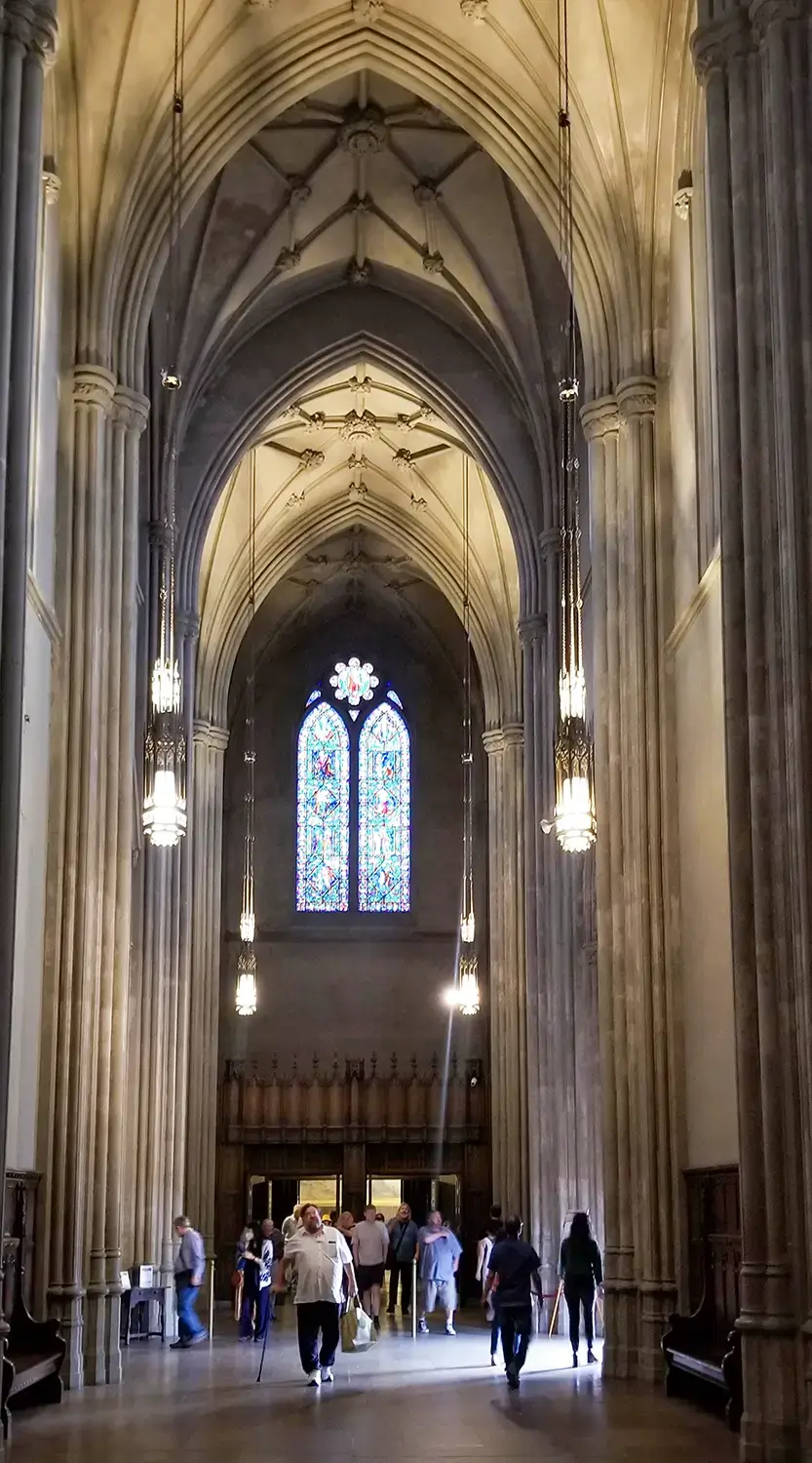
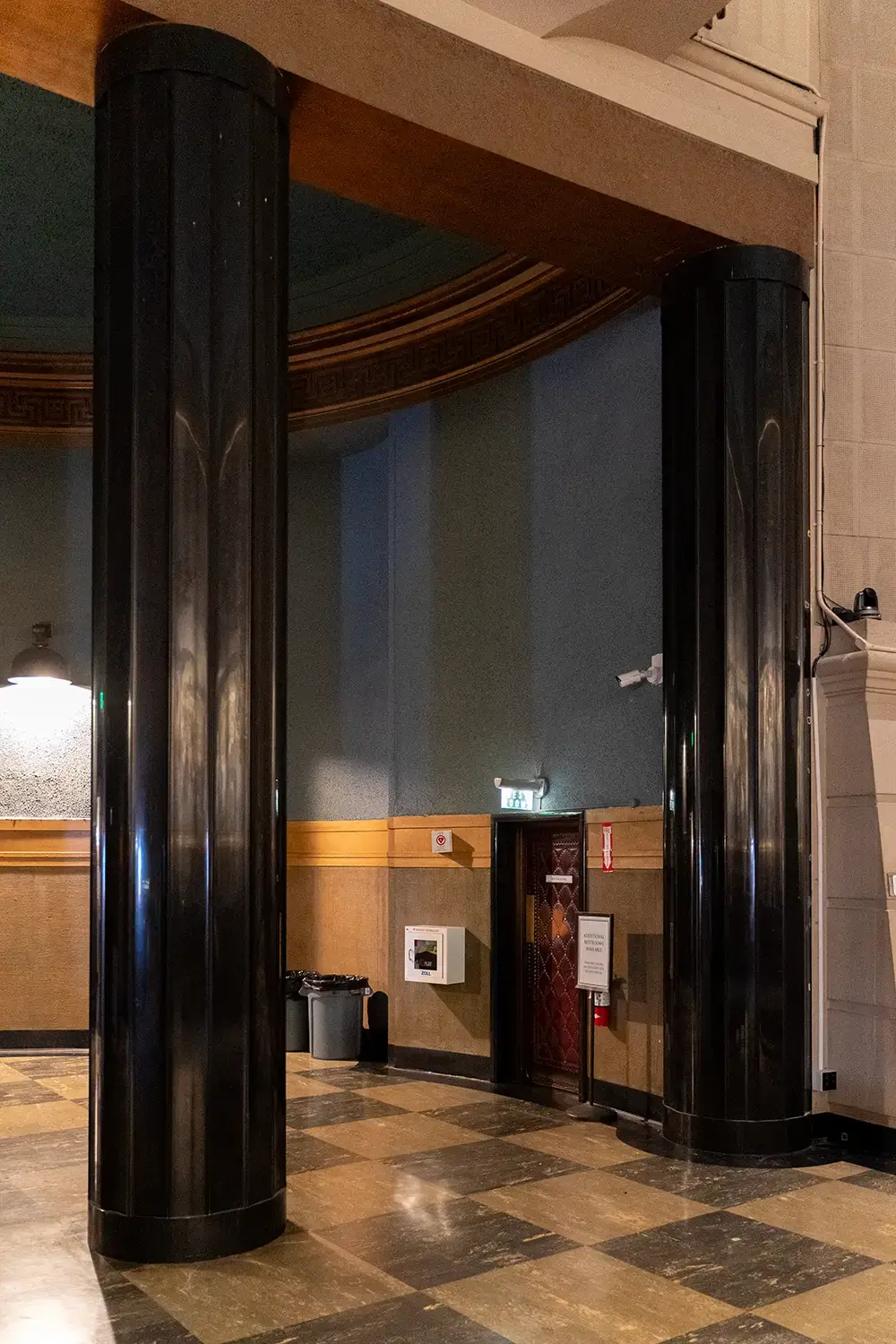
The building itself deserves attention. Gothic arches frame the entrance. The architecture references Orvieto Cathedral in Italy. Inside, the engineering had to support not just the painting’s massive size but also the curtain system and lighting rigs.
Presentations run exactly on the hour from 10 AM to 4 PM (closed at 1 PM), Tuesday through Sunday. Late entry isn’t allowed once the show starts, so arrive a few minutes early. The whole experience takes about 20 minutes. After it ends, you exit through side doors and can visit the adjacent Forest Lawn Museum, which rotates art exhibitions throughout the year.
Worth Knowing
The hall sits at the top of Forest Lawn Memorial Park, a cemetery with 300 acres of grounds. You’ll drive through the main gates and follow signs uphill. Free parking is plentiful. The site is wheelchair accessible.
Some people come for the art history. Others appreciate the rescue story. Dr. Eaton heard about the abandoned painting, tracked it down at the Chicago Civic Opera, and purchased it after World War II. He built this hall specifically to house it, believing great art should be free and accessible to everyone.
The presentation has been updated over the years. The current version premiered in 2023, with new narration by biblical scholar Timothy Kirk and modern lighting technology. The core experience remains what Eaton intended: sitting in darkness, listening to a story, and watching light reveal a painting that refused to disappear.
What Others are Saying
Nearby Curious Los Angeles Destinations
Museum of Neon Art
The only museum in the world dedicated to electric and neon art, showcasing rescued historic LA signs and contemporary light-based…
Los Feliz 3-Par Golf Course
Compact 9-hole par 3 course where the 1996 film "Swingers" was shot, offering quick rounds through tree-lined holes.
Los Angeles Breakfast Club
Century-old civic breakfast club where members gather at dawn for silly songs, club traditions, and guest speakers.
Vidiots
Legendary video rental store reborn at a restored 1929 theater, combining 60,000+ titles with daily repertory screenings.
Philosophical Research Society
Nonprofit library and cultural center housing 30,000 rare books on philosophy, mysticism, and world religions in a 1930s Mayan Revival…
Griffith Park Merry-Go-Round
Historic 1926 carousel where Walt Disney conceived Disneyland, featuring hand-carved horses and one of the West Coast's largest band organs.
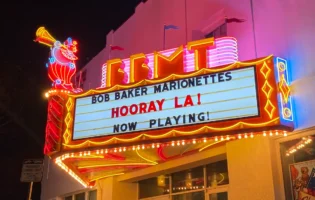
Bob Baker Marionette Theater
America's longest-running puppet theater, where hand-crafted marionettes have performed for families since 1963.
MorYork
Clare Graham's 7,000-square-foot Highland Park studio filled with sculptural works made from millions of buttons, pop tops, and found objects.
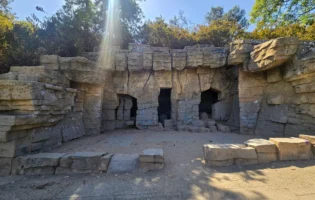
Old Los Angeles Zoo
Explore the abandoned 1930s-era zoo ruins and grottos turned picnic area in the heart of Griffith Park for a unique…
The Steepest Road in California (Eldred Street & Stairs)
California's steepest drivable street with a 33% grade and historic wooden stairs leading to sweeping city views.
Forest Lawn Museum (Hall of Crucifixion & Resurrection) on Other Sites