
Cave of Munits
Vertical sandstone chimney cave with hand-assisted climb leading to sweeping valley views from Castle Peak's rocky summit.
- Do
Cave of Munits Details
Overview
Details
Experiencing Cave of Munits / Curious LA Field Notes
Quick Take
Although the cave itself is not extensive, this location achieves a remoteness that belies its proximity to suburban streets. The cave's vertical sandstone chimney requires hands-on scrambling with cable assists, transforming a simple hike into a physical challenge that engages your whole body. The Chumash considered this landscape sacred for ceremonies, and standing inside the cave's tall chambers or atop Castle Peak's boulder-strewn summit, you understand why. It's a compact adventure that packs exploration, physical challenge, and cultural history into less than three miles.
Getting There
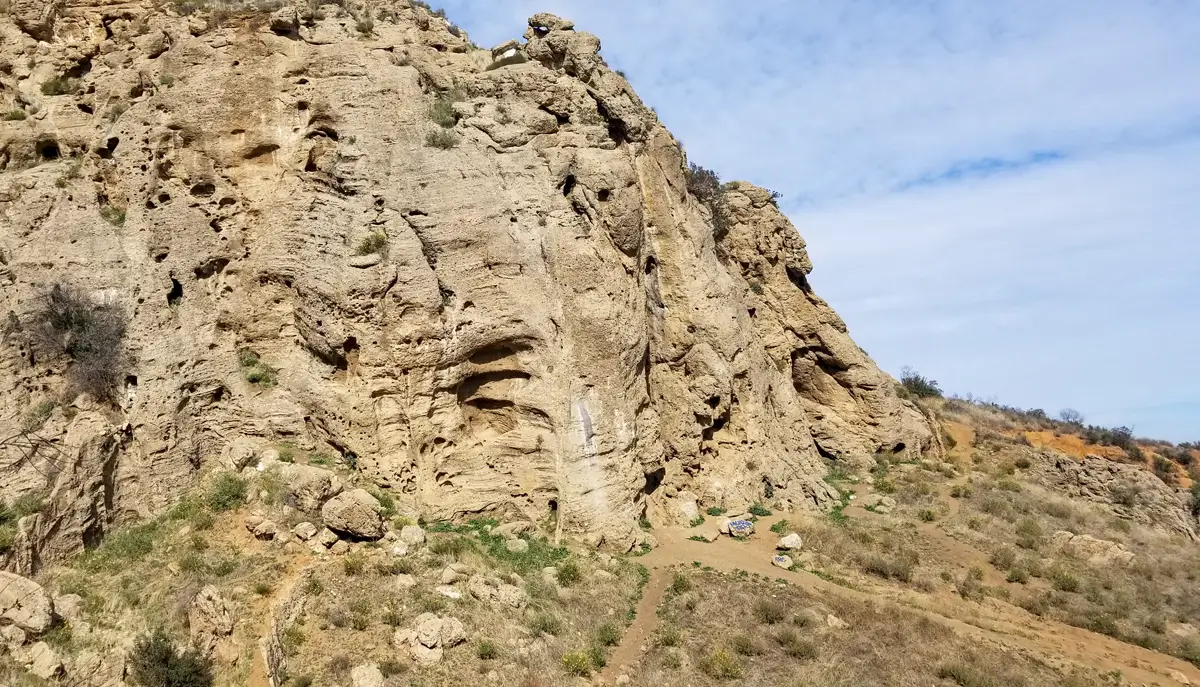
The trailhead sits at the end of Vanowen Street in West Hills, marked by a simple Los Angeles City Parks sign for El Escorpion Park. Street parking lines the residential area where the pavement ends and the Simi Hills begin. Castle Peak’s rocky crown looms directly ahead – a jumble of boulders that looks more like a giant’s abandoned toy pile than a traditional summit.
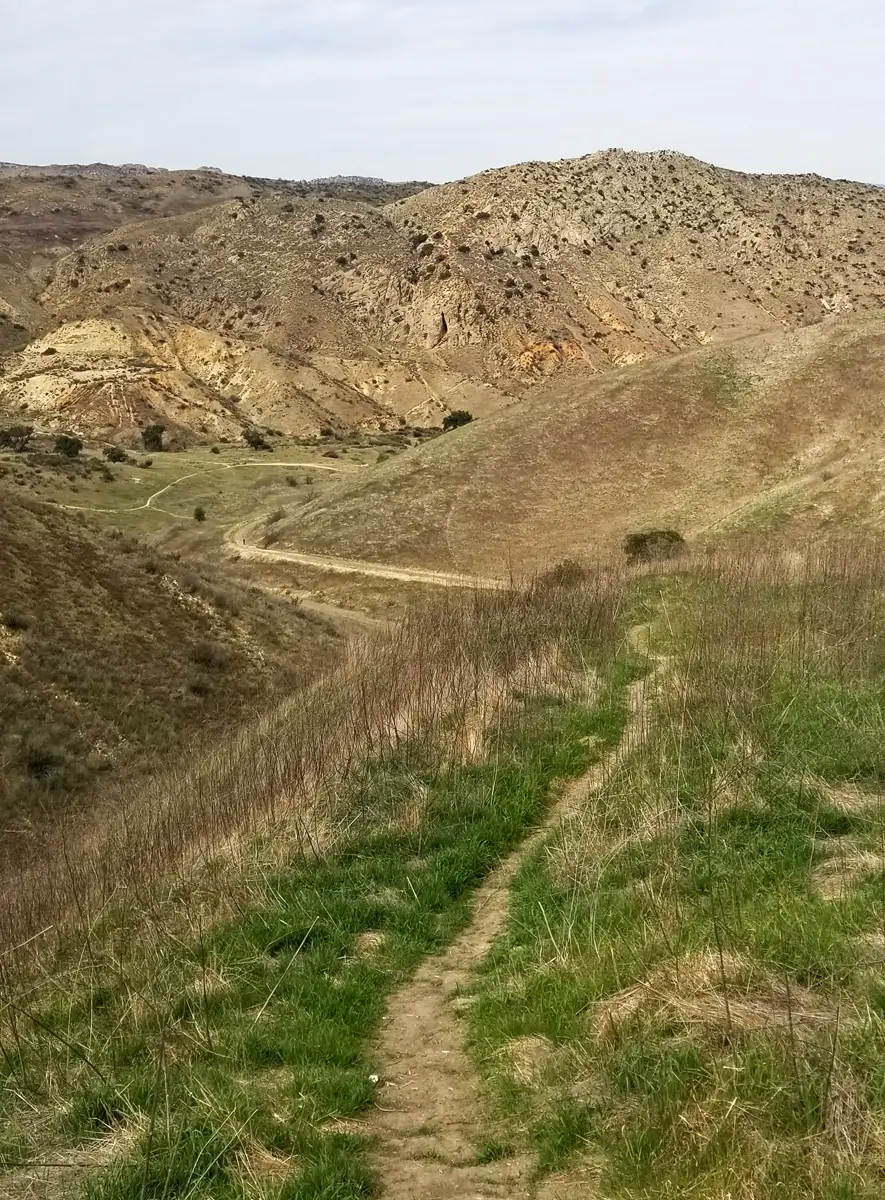
El Escorpion Trail starts as a wide dirt road cutting through grasslands dotted with oak trees. The path stays relatively flat for the first half-mile, winding west into Upper Las Virgenes Canyon Open Space Preserve. At 0.6 miles, a fence marks the boundary between Los Angeles and Ventura counties. Just beyond this point, the trail splits – take the right fork toward the rocky mountainside.
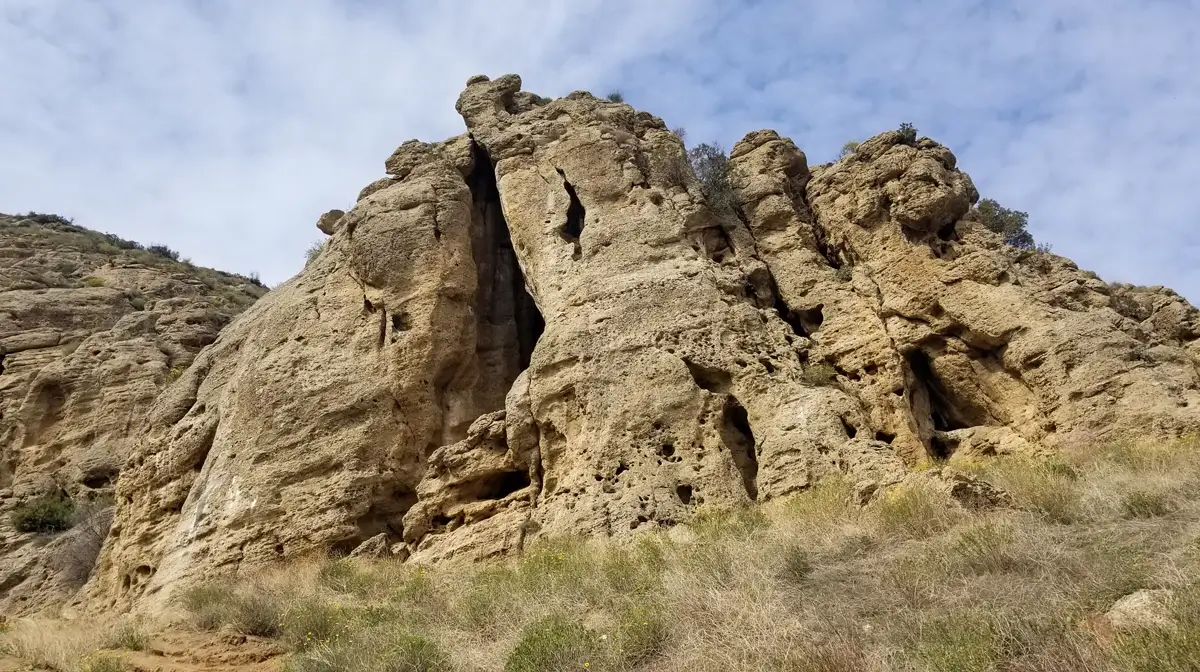
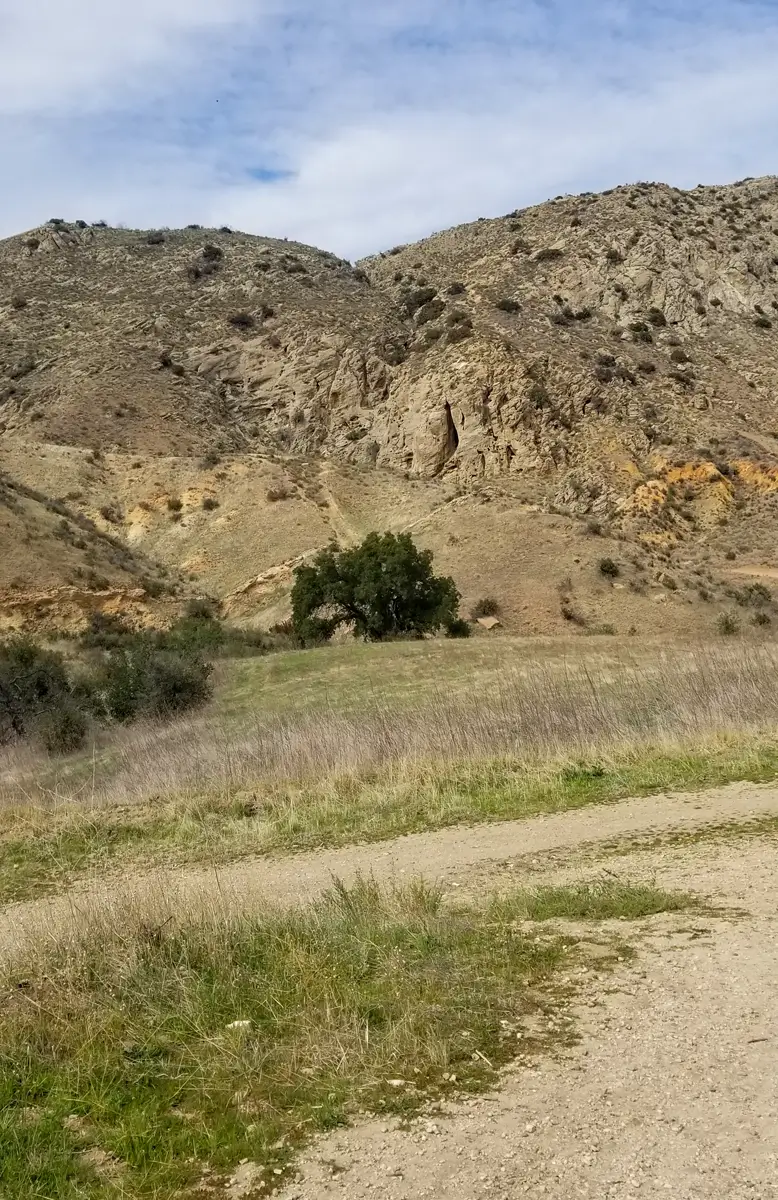
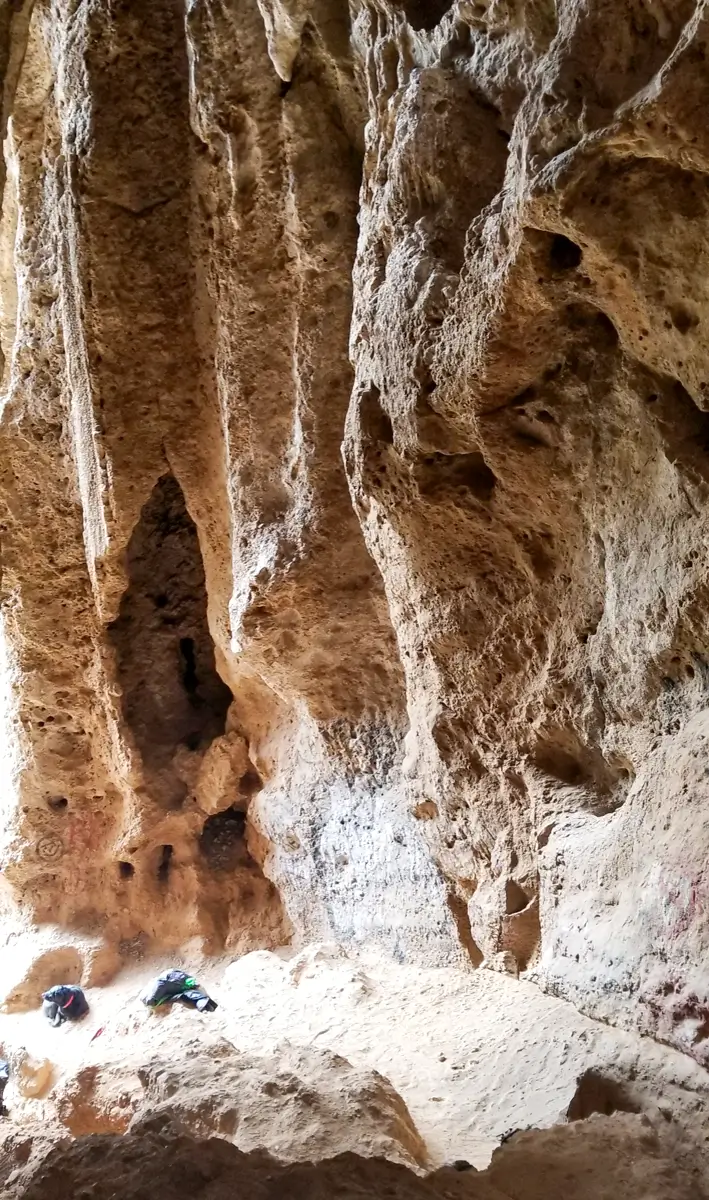
The cave reveals itself gradually. From a distance, it appears as a dark vertical slit in the canyon wall. As you approach on the sandy use trail, the scale becomes clear: a 30-foot opening that cuts straight up through sandstone like a chimney.
Inside the Cave
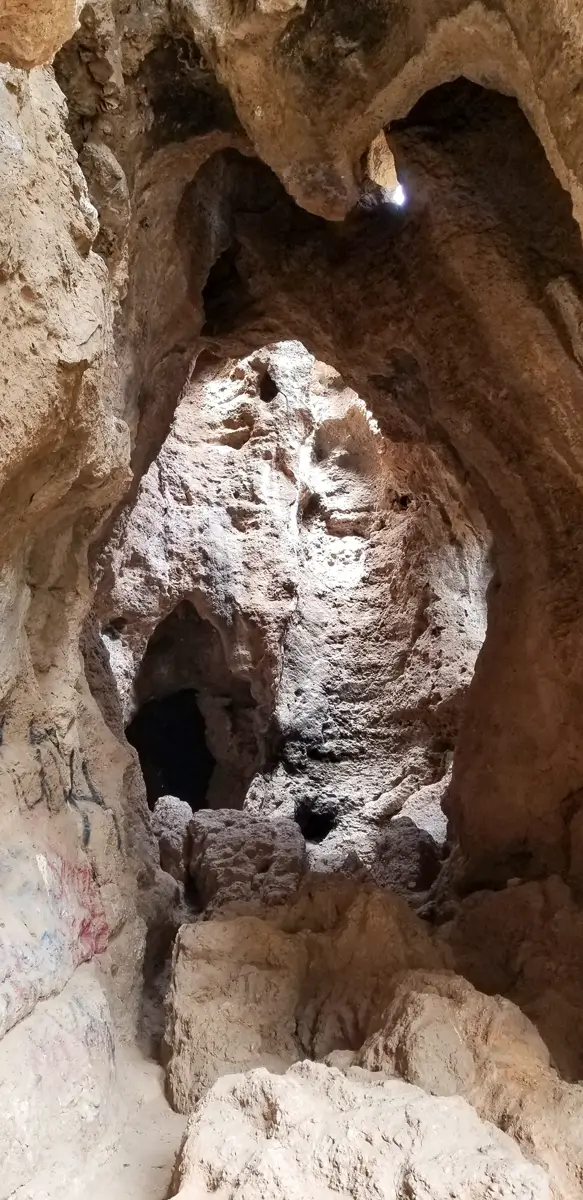
Wind whipping through the entrance creates eerie sounds that echo off the walls. The cave’s base is wide enough to stand comfortably, but the real experience begins when you start climbing. Metal cables bolted into the rock provide handholds for the ascent, though you’ll use your feet just as much as your hands to push yourself upward.
Inside, the ceiling stretches high and narrow above you. Dark crevasses branch off from the main chamber, and the temperature drops noticeably compared to the sun-baked trail outside. The sandstone walls show the erosion patterns that carved this space over millennia – smooth curves where water once flowed, rough patches where the rock resisted.
The cave has two exits: back down the way you came, or up through the top opening. Choosing the upper route commits you to continuing toward Castle Peak, as there’s no easy descent from the cave’s upper reaches.
Castle Peak and Beyond
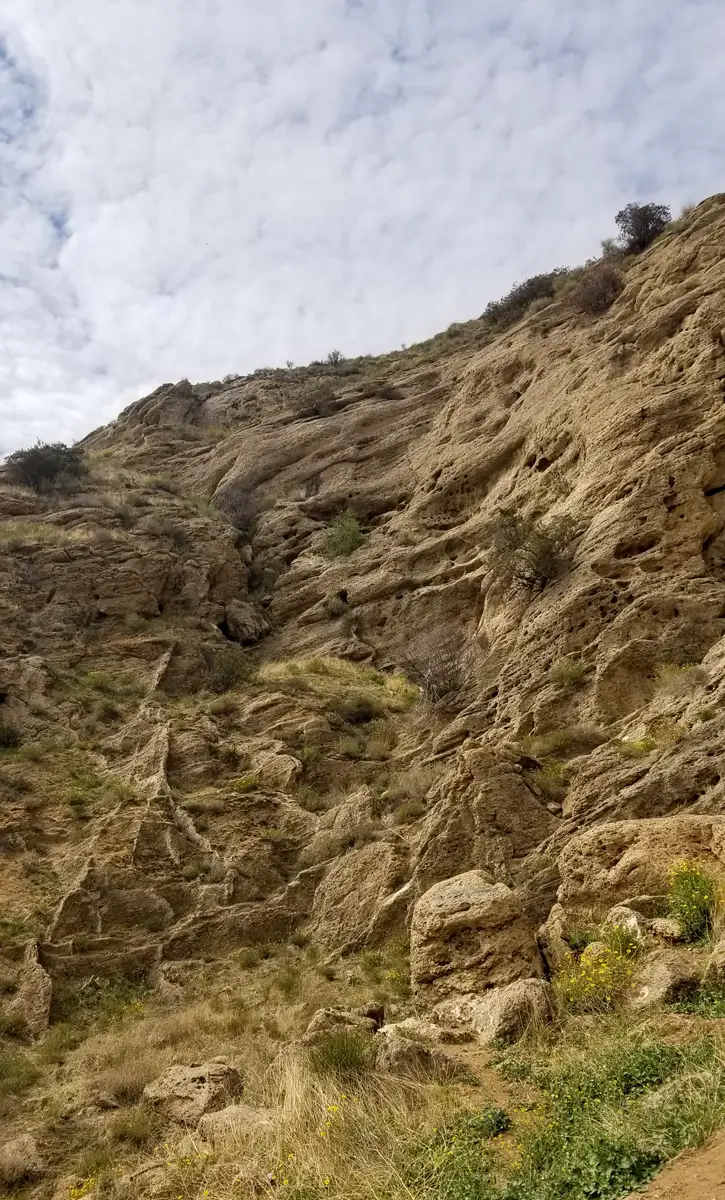
Scrambling out the cave’s top exit puts you on steep, unmaintained terrain. Faint trails weave between boulders as you work your way up to the ridgeline. This section requires careful foot placement and occasional hand use to navigate the rocky slope.
The ridgeline trail offers the hike’s best views – a 360-degree panorama taking in the Santa Monica Mountains, Santa Susana Mountains, and on clear days, the San Gabriel Mountains beyond the valley haze. Castle Peak itself is less a defined summit and more a collection of large boulders perched on the ridgetop. Scrambling to the highest point requires climbing over these rocks, but the view justifies the effort.
The Descent
The return route drops steeply from Castle Peak back toward El Escorpion Trail. The descent is swift but demands attention – the trail is loose and rocky in places. After regaining the main dirt road, it’s a straightforward walk back to the trailhead.
Cultural Context
For the Chumash, Castle Peak (originally Kas’elew) served as a ceremonial alignment point for solstice observations. The cave, according to oral histories, was home to a powerful shaman named Munits who met a tragic end. Walking this landscape connects you to thousands of years of human interaction with these hills – from indigenous ceremonies to Spanish mission land, and now public parkland.
The hike asks for respect. No graffiti mars the cave walls, and the lack of commercial development preserves the raw experience. You’re exploring a space that remains largely as it was discovered, which carries both freedom and responsibility.
What Others are Saying
Nearby Curious Los Angeles Destinations
No nearby destinations found within 5 miles.
Cave of Munits on Other Sites