
Bradbury Building
A Victorian light-filled atrium hidden behind a plain brick facade, famous as the setting for Blade Runner's climactic scenes.
- See
Bradbury Building Details
- Monday-Friday: 9:00 AM - 5:00 PM
- Saturday: 10:00 AM - 5:00 PM
- Sunday: Closed
Overview
Details
Experiencing Bradbury Building / Curious LA Field Notes
Quick Take
The Bradbury Building solves the riddle of how something completely unremarkable from the outside can contain one of the city's most jaw-dropping interiors. While most architectural landmarks announce themselves with grand facades, this 1893 office building saves all its energy for the moment you step inside and look up at five stories of light-bathed Victorian metalwork. Film buffs know it as the backdrop for Blade Runner's final confrontation, but the real draw is simpler: it's a functioning office building where you can walk in off the street and stand in a space that feels like stepping into a different century, completely free. For architecture fans, it's a rare chance to experience what Edward Bellamy's utopian novel imagined as the office building of the future, built 130 years ago.
An Unlikely Beginning
Lewis L. Bradbury made his fortune in Mexican gold mines and wanted one last monument before he died. In 1892, he rejected the plans from architect Sumner Hunt and turned instead to Hunt’s 32-year-old draftsman, George Wyman, who had no formal architectural training. Wyman hesitated until his wife suggested they consult the spirit world. Using a planchette similar to a Ouija board, Wyman’s deceased brother Mark allegedly spelled out: “Take Bradbury Building. It will make you famous.”
The message proved accurate. Bradbury died months before the building’s 1893 opening, but Wyman created a space so striking it’s still studied in architecture schools. Drawing from Edward Bellamy’s 1887 science fiction novel “Looking Backward,” which described a future society’s “vast hall full of light,” Wyman designed an interior that floods with sunshine through a peaked glass roof.
The Light Court
Walk through the archway entrance on Broadway and the transformation is instant. What looks like just another brown brick office building from the street opens into a soaring five-story atrium where light pours down from above. Glazed brick walls in rose and gold tones catch the sunshine. Black wrought-iron railings create delicate patterns against the brightness. Two open-cage elevators still operate using their original hydraulic systems, surrounded by ironwork so ornate it resembles hanging vines.
Belgian marble stairs lead up to the first landing, the farthest point visitors can reach without business in the building. From here you can look up through all five floors to the glass ceiling or down at the Mexican tile floors. The wrought iron was crafted in France and displayed at the 1893 Chicago World’s Fair before installation here.
Bradbury spared no expense. What started as a $175,000 budget ballooned to $500,000 by completion. Every material was chosen for quality: the glazed brick, the marble, the polished wood accents. Wyman painted all structural iron black to contrast with the warm tones of the walls and create what early reviews called “a sunset glow.”
A Film Star
The building’s cinematic fame began in the 1940s with film noir productions, but 1982’s Blade Runner cemented its place in pop culture. Director Ridley Scott chose the Bradbury for J.F. Sebastian’s apartment and the film’s climactic confrontation between Harrison Ford and Rutger Hauer. The building appears in over 100 films and shows, from Chinatown to The Artist, serving as everything from a dystopian apartment to a Victorian hotel.
Today the building houses LAPD’s Internal Affairs division, a co-working space called Bradbury Studios, and various private offices. A Blue Bottle Coffee occupies part of the ground floor. The building’s management understands its architectural significance and keeps the ground floor open to visitors during business hours.
Making Your Visit
The experience takes maybe 15 minutes. You walk in, you look around, you climb the stairs to the first landing, you take photos, you leave changed. The best light comes in late morning and early afternoon when sunshine streams through the skylight. The building sits across from Grand Central Market and two blocks from Angels Flight, making it easy to combine with other downtown landmarks.
What Others are Saying
Nearby Curious Los Angeles Destinations
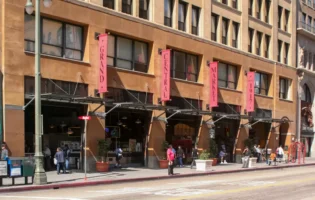
Grand Central Market
Downtown's oldest food hall serving up LA's multicultural flavors since 1917 in a historic Beaux-Arts landmark
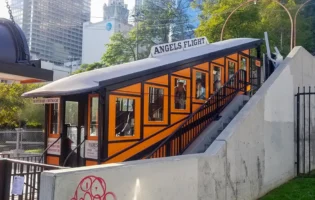
Angels Flight Railway
Historic 1901 funicular railway connecting downtown Los Angeles to Bunker Hill in a 298-foot journey up the city's steepest grade.
The Last Bookstore
California's largest new and used bookstore housed in a 1914 bank building with book tunnels, literary labyrinths, and artist studios.
The Museum of Contemporary Art, Los Angeles
Los Angeles's only museum dedicated exclusively to contemporary art, showcasing 8,000+ works from 1940 to today in a striking red…
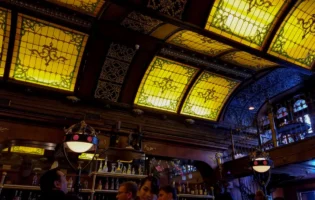
The Wolves
Belle Époque cocktail bar inside the historic Alexandria Hotel, featuring house-made ingredients and period-authentic 1900s design.
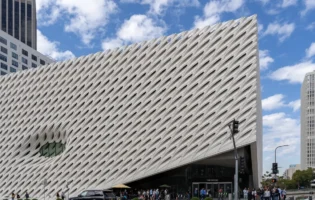
The Broad
Free contemporary art museum in downtown LA featuring postwar masterworks and Yayoi Kusama's Infinity Mirror Rooms.
Octavia Lab & DIY Memory Lab
Free public makerspace with 3D printers, laser cutters, recording studios, and tools for creating everything from music to fashion.
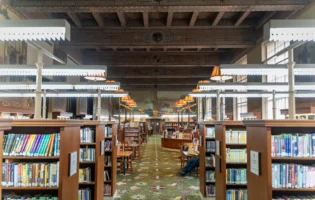
Los Angeles Central Library
Downtown's 1926 architectural landmark combining historic Art Deco design with modern library services across two connected buildings
Little Tokyo
Historic five-block cultural district celebrating Japanese American heritage through authentic dining, shopping, and annual festivals since 1885
Triforium
Towering 1970s sculpture adorned with 1,494 multicolored glass prisms intended to sync light and music but plagued by technical failures.
Bradbury Building on Other Sites