
Angels Flight Railway
Historic 1901 funicular railway connecting downtown Los Angeles to Bunker Hill in a 298-foot journey up the city's steepest grade.
- Do
- See
Angels Flight Railway Details
- Daily, 6:45 AM - 10:00 PM
Overview
Details
Experiencing Angels Flight Railway / Curious LA Field Notes
Quick Take
Angels Flight gives you something rare in car-centric Los Angeles: a century-old cable railway that's still doing the job it was built for. This isn't a tourist train that runs around a park. It's a working connection between two parts of downtown that happen to be separated by a steep hill. The one-minute ride costs less than a coffee and drops you right at Grand Central Market or the cultural venues on California Plaza. What makes it worth riding isn't just the novelty of LA's oldest surviving funicular—it's the way this small piece of infrastructure connects you to the city's layered history, from Gilded Age mansions to film noir to present-day downtown.
A Ride Through Time
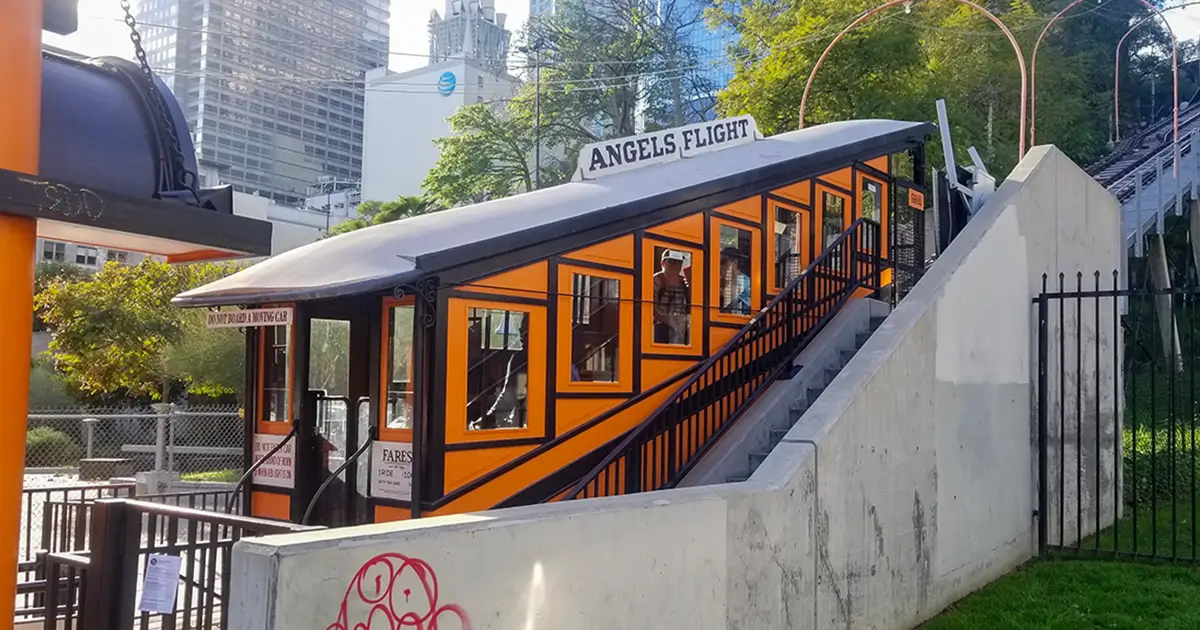
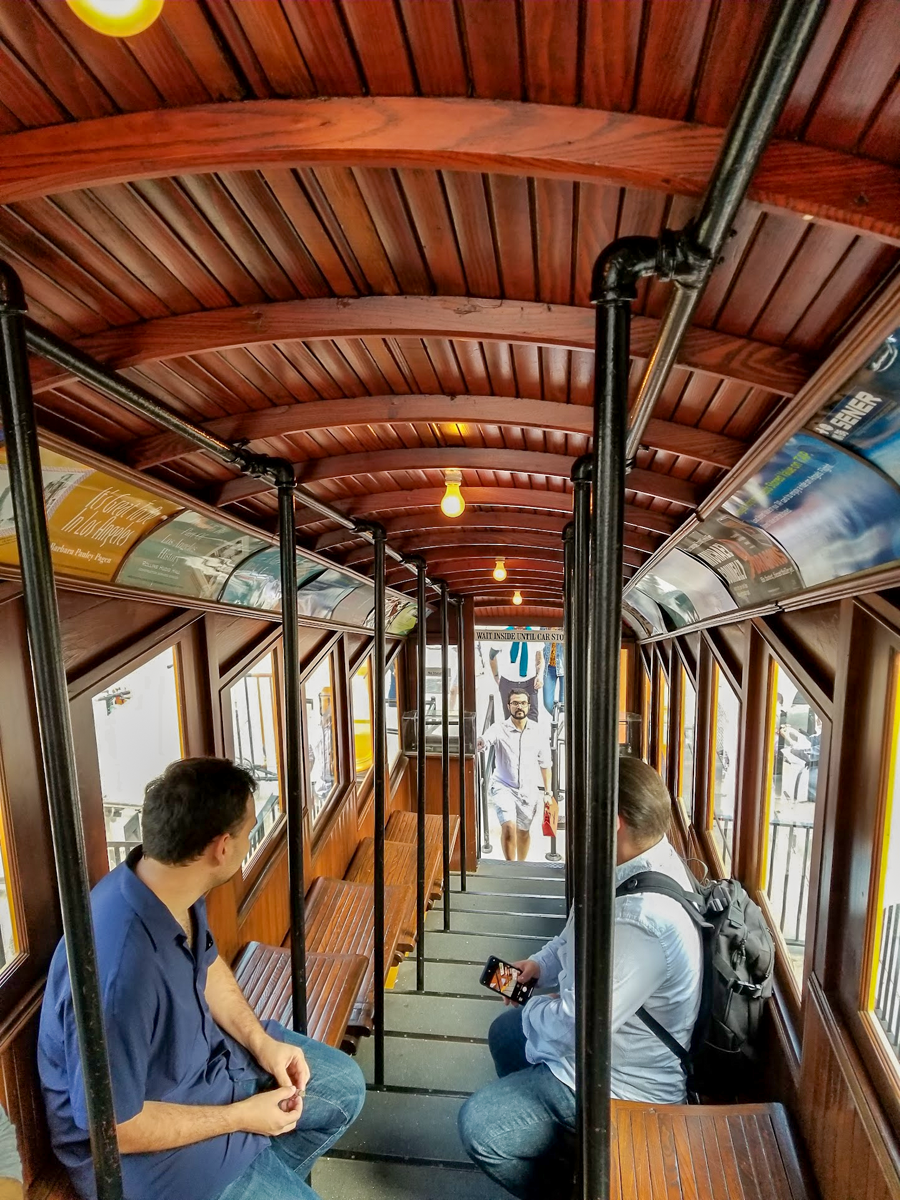
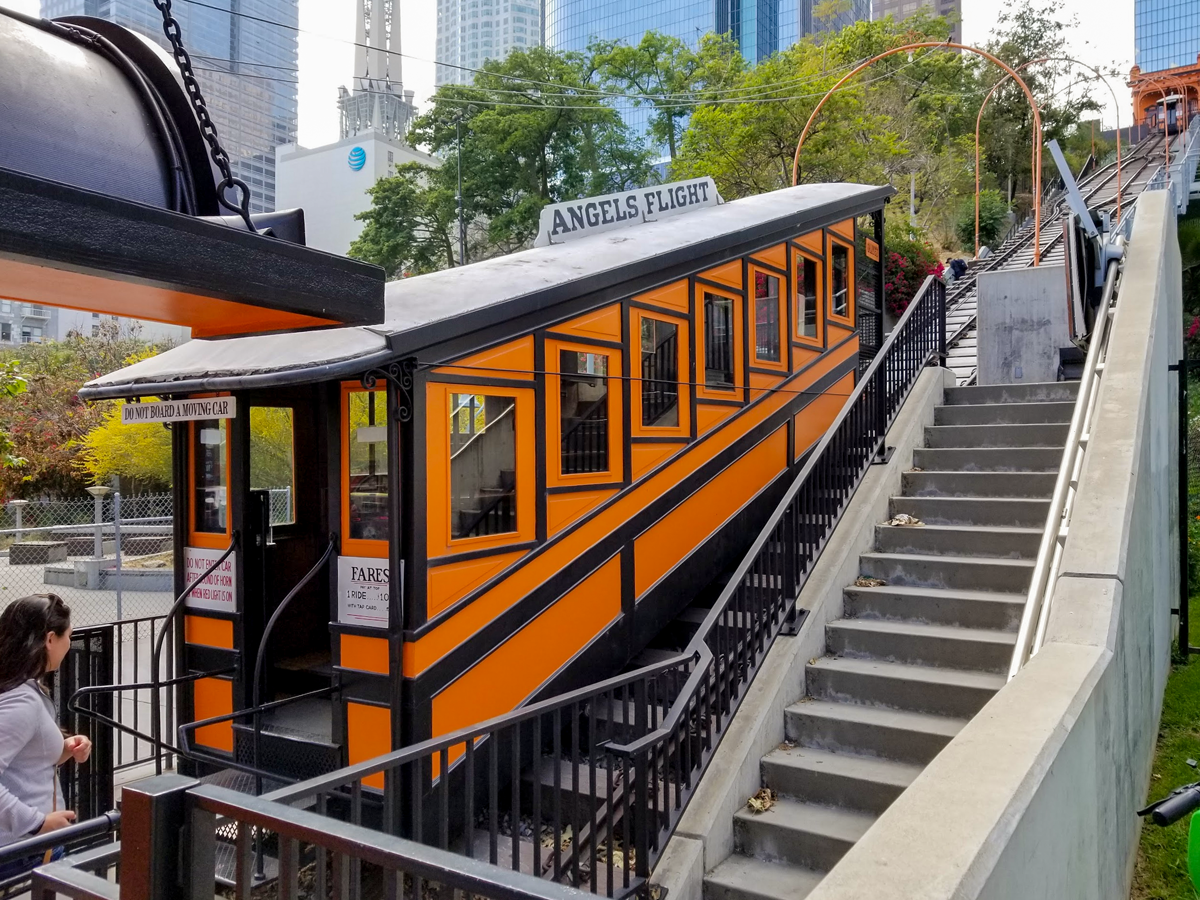
Stand at the Hill Street station and look up. The orange-and-black cars move at walking speed, passing each other midway up the 33-percent grade. Buy a ticket for $1.50—or use your Metro TAP card and pay 75 cents—and step into Olivet or Sinai, named after mountains from the Bible. The wooden benches date to the original 1901 construction. The windows frame downtown Los Angeles as you climb.
The ride lasts about a minute. That’s it. But those 60 seconds compress more than a century of Los Angeles transformation. When Colonel J.W. Eddy built this funicular on New Year’s Eve 1901, Bunker Hill was the city’s most fashionable address. Victorian mansions crowned the promontory. Doctors, bankers, and lawyers lived in Queen Anne homes with ornate details and expansive porches. The commercial district spread below on Hill Street, but getting between the two meant a steep, exhausting climb.
Eddy solved that problem with engineering borrowed from San Francisco and European mountain towns. Two cars on a shared cable, counterbalancing each other. When one descends, it helps pull the other up. Simple physics. The system worked so well that Angels Flight carried over 100 million passengers in its first 50 years, more per mile than any railway in the world. The fare stayed at one penny from 1901 to 1914.
From Mansions to Movies
The neighborhood changed around Angels Flight. By the 1920s, Bunker Hill’s elite had moved west to newer suburbs. The grand homes became boarding houses and cheap apartments. Film noir directors recognized the visual drama of those decaying Victorian buildings perched above the city. Angels Flight appears in movies as early as 1920. It became shorthand for Los Angeles’ layered past and uncertain future.
In 1969, city officials declared Bunker Hill blighted. The entire neighborhood came down in an urban renewal project that displaced thousands of residents. Angels Flight made its last run on May 18, 1969. The cars went into storage. The archways and station house followed. For 27 years, this piece of Los Angeles history sat in warehouses, waiting.
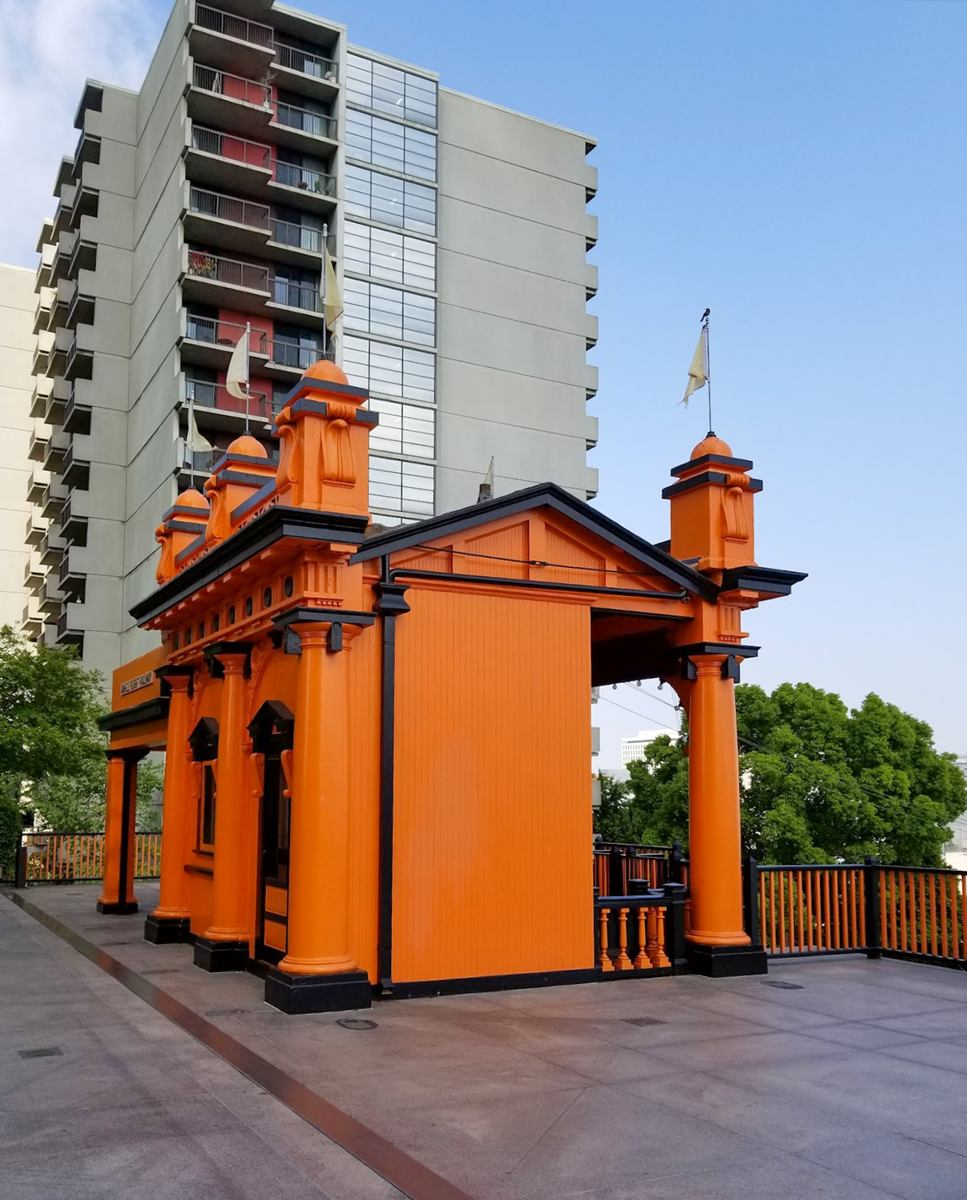
Community advocates pushed for its return. In 1996, Angels Flight reopened half a block south of its original location. The same cars. The same Victorian archway at the base. The route now runs from Hill Street to California Plaza instead of the old Olive Street terminus, but the experience remains remarkably similar to what passengers felt in 1901.
What You’ll Find Today
The lower station sits across from Grand Central Market, where vendors sell tacos, Thai food, oysters, and coffee from early morning until late evening. The upper station opens onto California Plaza, home to water gardens, outdoor art, and the Museum of Contemporary Art. On Fridays, Angels Flight partners with Grand Central Market vendors for “Friday Night Flights”—a drink or light bites plus a round-trip ride.
The experience draws locals rushing between meetings and tourists seeking that “La La Land” moment. Lines form during peak afternoon hours. Early mornings and evenings see fewer riders and better light for photos. The operators still hand out paper tickets, reproductions of the originals that work as souvenirs.
If you’d rather walk, a public staircase runs parallel to the tracks. It’s 181 steps from top to bottom, offering a different perspective on the same vertical journey. Many visitors ride up and walk down, or reverse the route depending on which direction feels less strenuous after lunch at the market.
Making the Connection
Angels Flight operates daily from 6:45 AM to 10:00 PM. Both stations are wheelchair accessible. The vintage cars accommodate wheelchairs and passengers with mobility challenges. TAP card holders get discounted fares, making this one of downtown’s genuine transit bargains.
Park at the Grand Central Market lot on Hill Street or use the nearby Pershing Square Metro station on the Red and Purple lines. Several paid lots sit within a block, typically running $10-15 for the day. Walking from other downtown attractions works well—the Walt Disney Concert Hall, The Broad museum, and The Last Bookstore are all within a few blocks.
What you’re riding isn’t just a quaint attraction. It’s a working piece of transportation infrastructure that happens to be 124 years old. That dual nature makes Angels Flight unusual. It serves commuters grabbing morning coffee and visitors exploring downtown with equal efficiency. The ride costs pocket change. The glimpse into how Angelenos once moved through their city has no price.
What Others are Saying
Nearby Curious Los Angeles Destinations
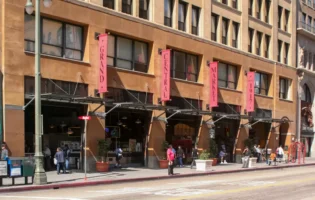
Grand Central Market
Downtown's oldest food hall serving up LA's multicultural flavors since 1917 in a historic Beaux-Arts landmark
The Museum of Contemporary Art, Los Angeles
Los Angeles's only museum dedicated exclusively to contemporary art, showcasing 8,000+ works from 1940 to today in a striking red…
Bradbury Building
A Victorian light-filled atrium hidden behind a plain brick facade, famous as the setting for Blade Runner's climactic scenes.
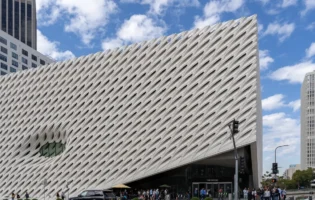
The Broad
Free contemporary art museum in downtown LA featuring postwar masterworks and Yayoi Kusama's Infinity Mirror Rooms.
Octavia Lab & DIY Memory Lab
Free public makerspace with 3D printers, laser cutters, recording studios, and tools for creating everything from music to fashion.
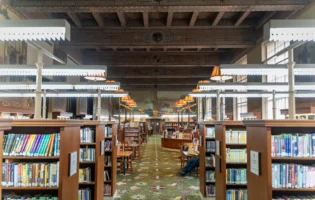
Los Angeles Central Library
Downtown's 1926 architectural landmark combining historic Art Deco design with modern library services across two connected buildings
The Last Bookstore
California's largest new and used bookstore housed in a 1914 bank building with book tunnels, literary labyrinths, and artist studios.
Bonaventure Hotel & BonaVista Lounge
Downtown's only revolving cocktail lounge inside five iconic cylindrical glass towers that redefined futuristic architecture in 1976.
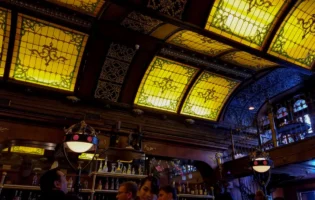
The Wolves
Belle Époque cocktail bar inside the historic Alexandria Hotel, featuring house-made ingredients and period-authentic 1900s design.
Cathedral of Our Lady of the Angels
Downtown's postmodern architectural statement serves five million Catholics with alabaster light, saint tapestries, and a crypt beneath.
Angels Flight Railway on Other Sites